4LY9 image
Deposition Date 2013-07-30
Release Date 2013-11-20
Last Version Date 2024-02-28
Entry Detail
PDB ID:
4LY9
Title:
Human GKRP complexed to AMG-1694 [(2R)-1,1,1-trifluoro-2-{4-[(2S)-2-{[(3S)-3-methylmorpholin-4-yl]methyl}-4-(thiophen-2-ylsulfonyl)piperazin-1-yl]phenyl}propan-2-ol] and sorbitol-6-phosphate
Biological Source:
Source Organism:
Homo sapiens (Taxon ID: 9606)
Host Organism:
Method Details:
Experimental Method:
Resolution:
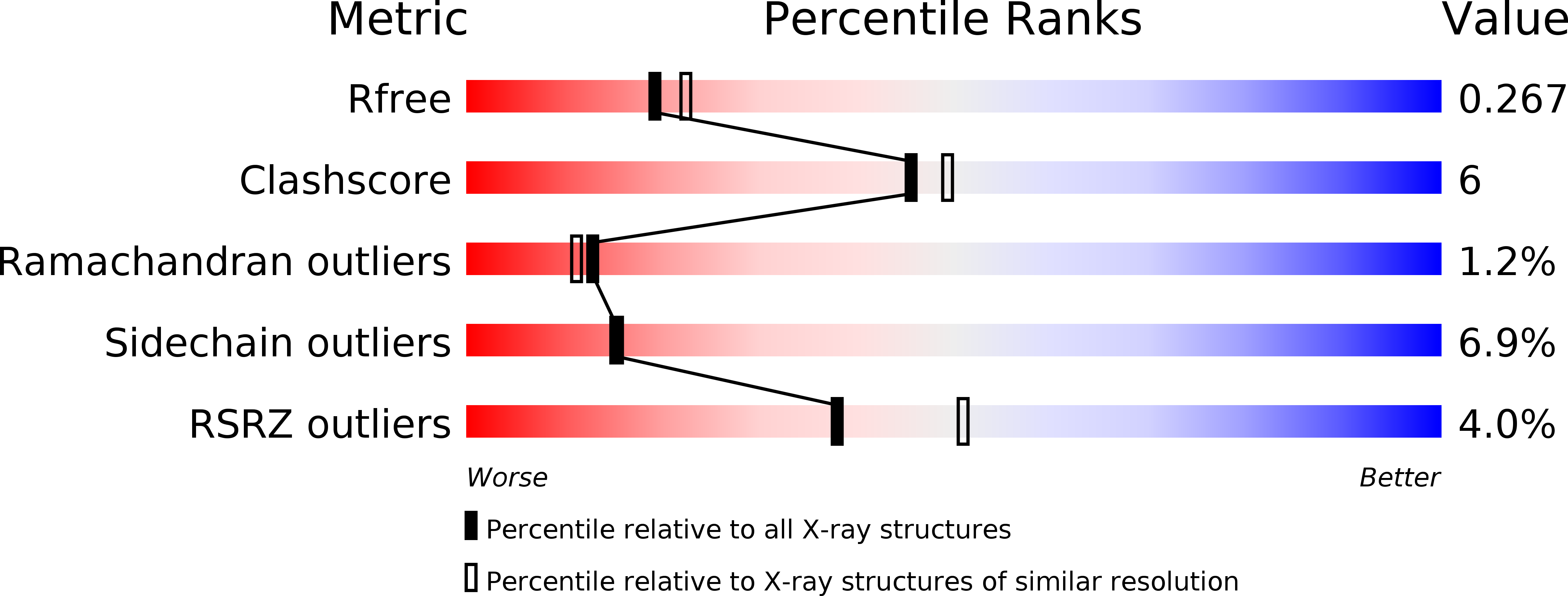
2.35 Å
R-Value Free:
0.26
R-Value Work:
0.21
R-Value Observed:
0.21
Space Group:
P 65
Macromolecular Entities
Structures with similar UniProt ID
Protein Blast
Polymer Type:polypeptide(L)
Molecule:Glucokinase regulatory protein
Gene (Uniprot):GCKR
Chain IDs:A, B
Chain Length:637
Number of Molecules:2
Biological Source:Homo sapiens
Primary Citation

Abstact

Glucose homeostasis is a vital and complex process, and its disruption can cause hyperglycaemia and type II diabetes mellitus. Glucokinase (GK), a key enzyme that regulates glucose homeostasis, converts glucose to glucose-6-phosphate in pancreatic β-cells, liver hepatocytes, specific hypothalamic neurons, and gut enterocytes. In hepatocytes, GK regulates glucose uptake and glycogen synthesis, suppresses glucose production, and is subject to the endogenous inhibitor GK regulatory protein (GKRP). During fasting, GKRP binds, inactivates and sequesters GK in the nucleus, which removes GK from the gluconeogenic process and prevents a futile cycle of glucose phosphorylation. Compounds that directly hyperactivate GK (GK activators) lower blood glucose levels and are being evaluated clinically as potential therapeutics for the treatment of type II diabetes mellitus. However, initial reports indicate that an increased risk of hypoglycaemia is associated with some GK activators. To mitigate the risk of hypoglycaemia, we sought to increase GK activity by blocking GKRP. Here we describe the identification of two potent small-molecule GK-GKRP disruptors (AMG-1694 and AMG-3969) that normalized blood glucose levels in several rodent models of diabetes. These compounds potently reversed the inhibitory effect of GKRP on GK activity and promoted GK translocation both in vitro (isolated hepatocytes) and in vivo (liver). A co-crystal structure of full-length human GKRP in complex with AMG-1694 revealed a previously unknown binding pocket in GKRP distinct from that of the phosphofructose-binding site. Furthermore, with AMG-1694 and AMG-3969 (but not GK activators), blood glucose lowering was restricted to diabetic and not normoglycaemic animals. These findings exploit a new cellular mechanism for lowering blood glucose levels with reduced potential for hypoglycaemic risk in patients with type II diabetes mellitus.

Legend

Protein

Chemical

Disease

Primary Citation of related structures
Feedback Form
Name
Email
Institute
Feedback