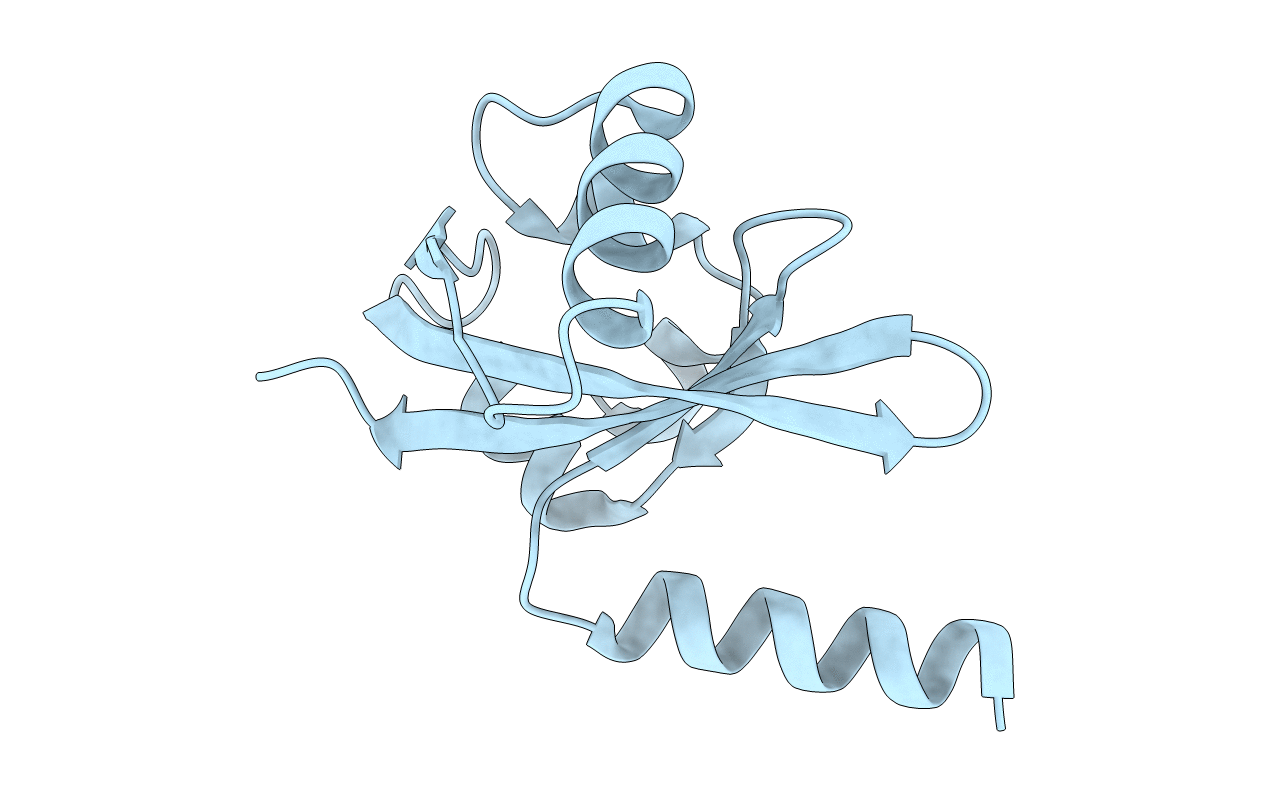
4L9E image
Deposition Date 2013-06-18
Release Date 2014-02-12
Last Version Date 2023-09-20
Entry Detail
PDB ID:
4L9E
Keywords:
Title:
Structure of PpsR Q-PAS1 from Rb. sphaeroides
Biological Source:
Source Organism:
Host Organism:
Method Details:
Experimental Method:
Resolution:
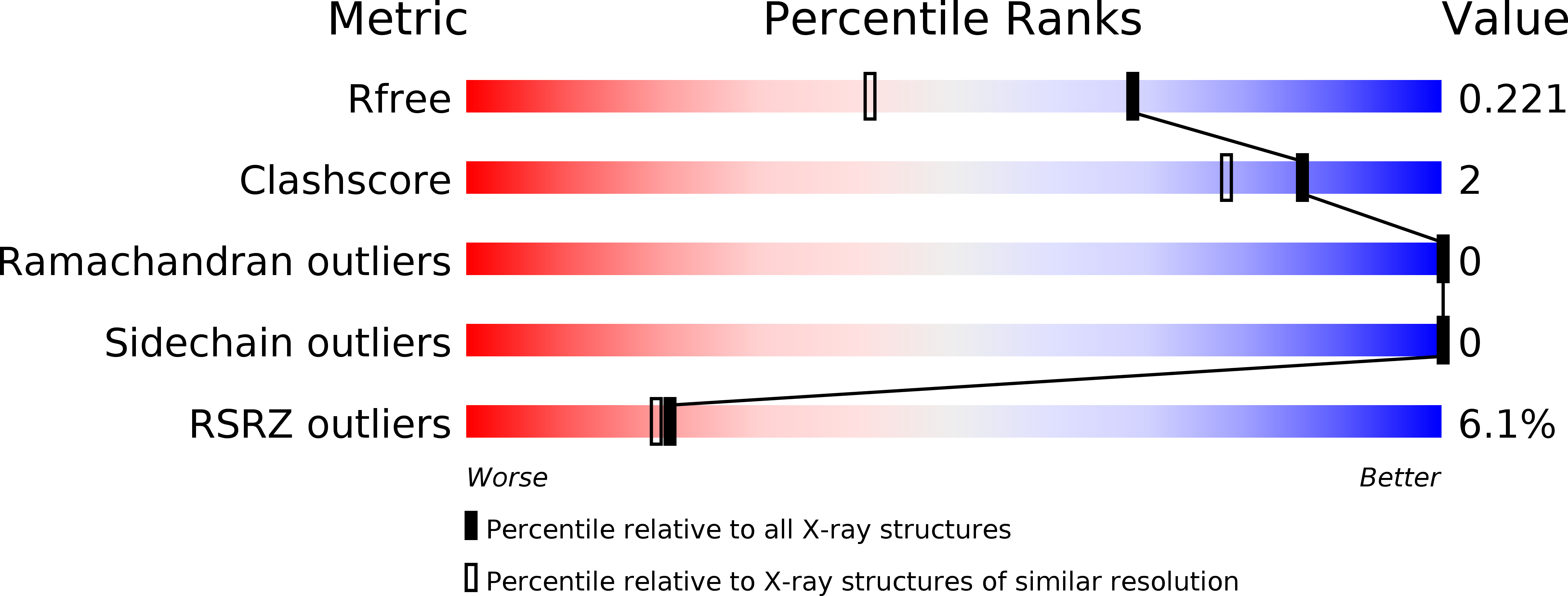
1.65 Å
R-Value Free:
0.21
R-Value Work:
0.19
R-Value Observed:
0.19
Space Group:
P 61 2 2
Macromolecular Entities
Structures with similar UniProt ID
Protein Blast
Polymer Type:polypeptide(L)
Molecule:Transcriptional regulator, PpsR
Gene (Uniprot):ppsR
Chain IDs:A
Chain Length:139
Number of Molecules:1
Biological Source:Rhodobacter sphaeroides
Primary Citation
Multi-PAS domain-mediated protein oligomerization of PpsR from Rhodobacter sphaeroides.
Acta Crystallogr.,Sect.D 70 863 876 (2014)
PMID: 24598755 DOI: 10.1107/S1399004713033634

Abstact

Per-ARNT-Sim (PAS) domains are essential modules of many multi-domain signalling proteins that mediate protein interaction and/or sense environmental stimuli. Frequently, multiple PAS domains are present within single polypeptide chains, where their interplay is required for protein function. Although many isolated PAS domain structures have been reported over the last decades, only a few structures of multi-PAS proteins are known. Therefore, the molecular mechanism of multi-PAS domain-mediated protein oligomerization and function is poorly understood. The transcription factor PpsR from Rhodobacter sphaeroides is such a multi-PAS domain protein that, in addition to its three PAS domains, contains a glutamine-rich linker and a C-terminal helix-turn-helix DNA-binding motif. Here, crystal structures of two N-terminally and C-terminally truncated PpsR variants that comprise a single (PpsRQ-PAS1) and two (PpsRN-Q-PAS1) PAS domains, respectively, are presented and the multi-step strategy required for the phasing of a triple PAS domain construct (PpsRΔHTH) is illustrated. While parts of the biologically relevant dimerization interface can already be observed in the two shorter constructs, the PpsRΔHTH structure reveals how three PAS domains enable the formation of multiple oligomeric states (dimer, tetramer and octamer), highlighting that not only the PAS cores but also their α-helical extensions are essential for protein oligomerization. The results demonstrate that the long helical glutamine-rich linker of PpsR results from a direct fusion of the N-cap of the PAS1 domain with the C-terminal extension of the N-domain that plays an important role in signal transduction.

Legend

Protein

Chemical

Disease

Primary Citation of related structures
Feedback Form
Name
Email
Institute
Feedback