4L7X image
Deposition Date 2013-06-14
Release Date 2013-07-24
Last Version Date 2025-03-26
Entry Detail
PDB ID:
4L7X
Title:
Crystal structure of the DIDO PHD finger in complex with H3K4me3
Biological Source:
Source Organism:
Homo sapiens (Taxon ID: 9606)
Host Organism:
Method Details:
Experimental Method:
Resolution:
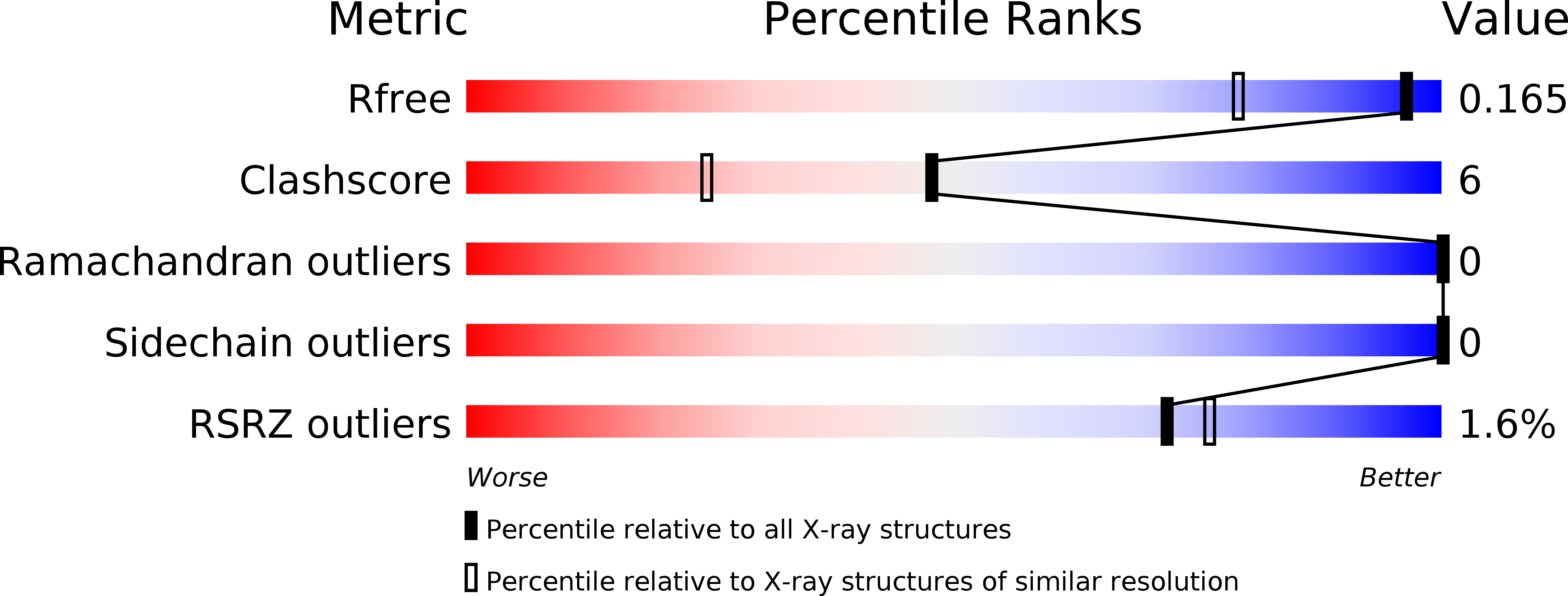
1.35 Å
R-Value Free:
0.14
R-Value Work:
0.13
R-Value Observed:
0.13
Space Group:
P 41 21 2
Macromolecular Entities
Structures with similar UniProt ID
Protein Blast
Polymer Type:polypeptide(L)
Molecule:Death-inducer obliterator 1
Gene (Uniprot):DIDO1
Chain IDs:A
Chain Length:63
Number of Molecules:1
Biological Source:Homo sapiens
Structures with similar UniProt ID
Protein Blast
Polymer Type:polypeptide(L)
Molecule:Histone H3 peptide
Chain IDs:B (auth: U)
Chain Length:12
Number of Molecules:1
Biological Source:Homo sapiens
Modified Residue
Compound ID Chain ID Parent Comp ID Details 2D Image
M3L B LYS N-TRIMETHYLLYSINE
Ligand Molecules
Primary Citation
Dido3 PHD Modulates Cell Differentiation and Division.
Cell Rep 4 148 158 (2013)
PMID: 23831028 DOI: 10.1016/j.celrep.2013.06.014

Abstact

Death Inducer Obliterator 3 (Dido3) is implicated in the maintenance of stem cell genomic stability and tumorigenesis. Here, we show that Dido3 regulates the expression of stemness genes in embryonic stem cells through its plant homeodomain (PHD) finger. Binding of Dido3 PHD to histone H3K4me3 is disrupted by threonine phosphorylation that triggers Dido3 translocation from chromatin to the mitotic spindle. The crystal structure of Dido3 PHD in complex with H3K4me3 reveals an atypical aromatic-cage-like binding site that contains a histidine residue. Biochemical, structural, and mutational analyses of the binding mechanism identified the determinants of specificity and affinity and explained the inability of homologous PHF3 to bind H3K4me3. Together, our findings reveal a link between the transcriptional control in embryonic development and regulation of cell division.

Legend

Protein

Chemical

Disease

Primary Citation of related structures
Feedback Form
Name
Email
Institute
Feedback