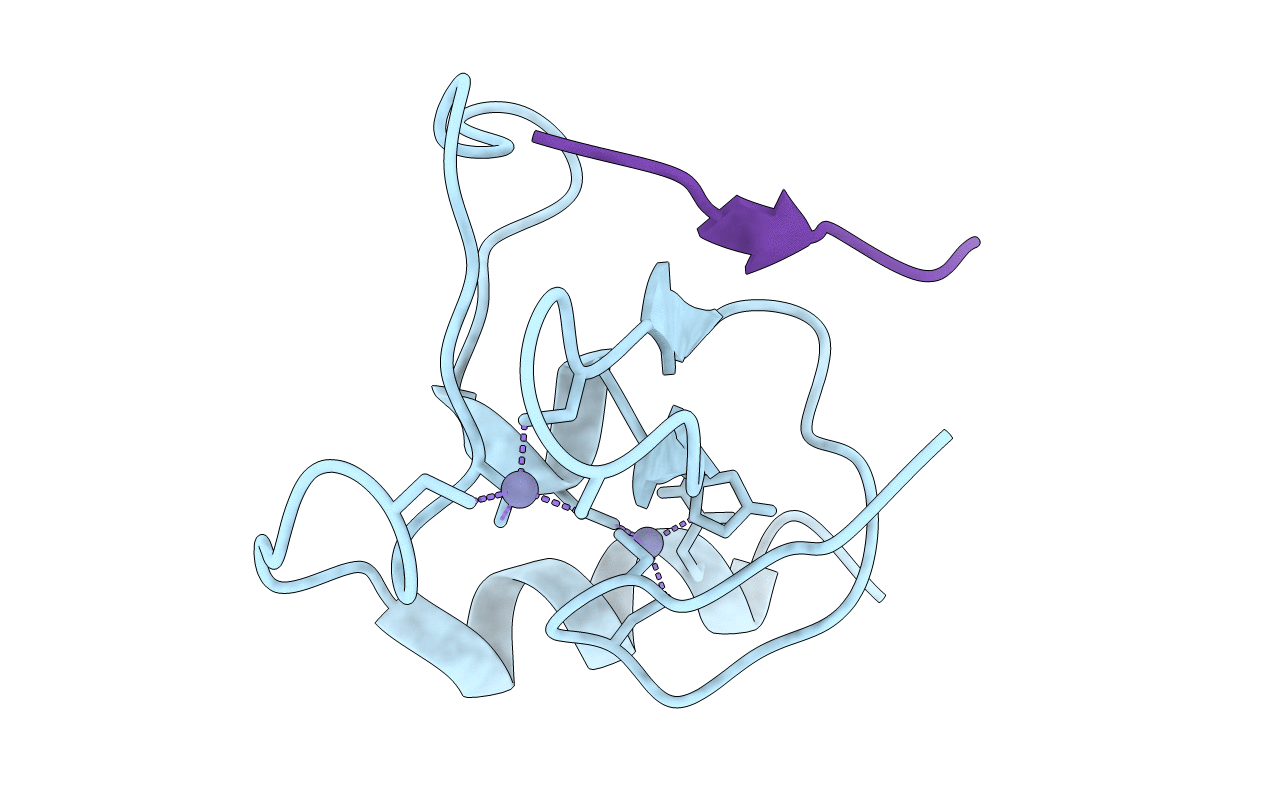
4L58 image
Deposition Date 2013-06-10
Release Date 2013-06-26
Last Version Date 2025-03-26
Entry Detail
PDB ID:
4L58
Keywords:
Title:
Crystal structure of the MLL5 PHD finger in complex with H3K4me3
Biological Source:
Source Organism:
Homo sapiens (Taxon ID: 9606)
Host Organism:
Method Details:
Experimental Method:
Resolution:
1.48 Å
R-Value Free:
0.14
R-Value Work:
0.12
R-Value Observed:
0.12
Space Group:
P 21 21 21

Macromolecular Entities
Structures with similar UniProt ID
Protein Blast
Polymer Type:polypeptide(L)
Molecule:Histone-lysine N-methyltransferase MLL5
Gene (Uniprot):KMT2E
Chain IDs:A
Chain Length:69
Number of Molecules:1
Biological Source:Homo sapiens
Structures with similar UniProt ID
Protein Blast
Polymer Type:polypeptide(L)
Molecule:Histone H3 peptide
Chain IDs:B
Chain Length:12
Number of Molecules:1
Biological Source:Homo sapiens
Modified Residue
Compound ID Chain ID Parent Comp ID Details 2D Image
M3L B LYS N-TRIMETHYLLYSINE
Ligand Molecules
Primary Citation
Molecular basis for chromatin binding and regulation of MLL5.
Proc.Natl.Acad.Sci.USA 110 11296 11301 (2013)
PMID: 23798402 DOI: 10.1073/pnas.1310156110

Abstact

The human mixed-lineage leukemia 5 (MLL5) protein mediates hematopoietic cell homeostasis, cell cycle, and survival; however, the molecular basis underlying MLL5 activities remains unknown. Here, we show that MLL5 is recruited to gene-rich euchromatic regions via the interaction of its plant homeodomain finger with the histone mark H3K4me3. The 1.48-Å resolution crystal structure of MLL5 plant homeodomain in complex with the H3K4me3 peptide reveals a noncanonical binding mechanism, whereby K4me3 is recognized through a single aromatic residue and an aspartate. The binding induces a unique His-Asp swapping rearrangement mediated by a C-terminal α-helix. Phosphorylation of H3T3 and H3T6 abrogates the association with H3K4me3 in vitro and in vivo, releasing MLL5 from chromatin in mitosis. This regulatory switch is conserved in the Drosophila ortholog of MLL5, UpSET, and suggests the developmental control for targeting of H3K4me3. Together, our findings provide first insights into the molecular basis for the recruitment, exclusion, and regulation of MLL5 at chromatin.

Legend

Protein

Chemical

Disease

Primary Citation of related structures
Feedback Form
Name
Email
Institute
Feedback