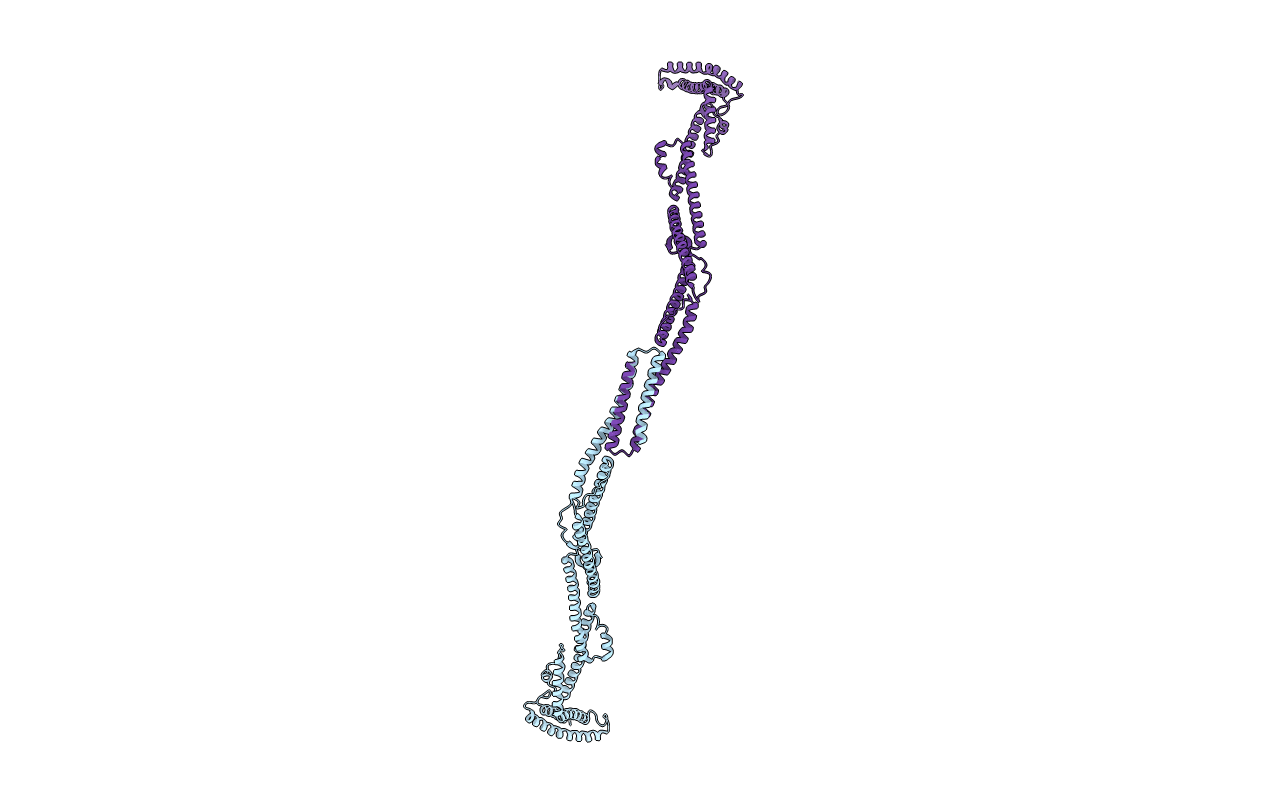
4L3I image
Deposition Date 2013-06-06
Release Date 2013-07-17
Last Version Date 2024-11-06
Entry Detail
PDB ID:
4L3I
Title:
Structure of the microtubule associated protein PRC1 (Protein Regulator of Cytokinesis 1)
Biological Source:
Source Organism:
Homo sapiens (Taxon ID: 9606)
Host Organism:
Method Details:
Experimental Method:
Resolution:
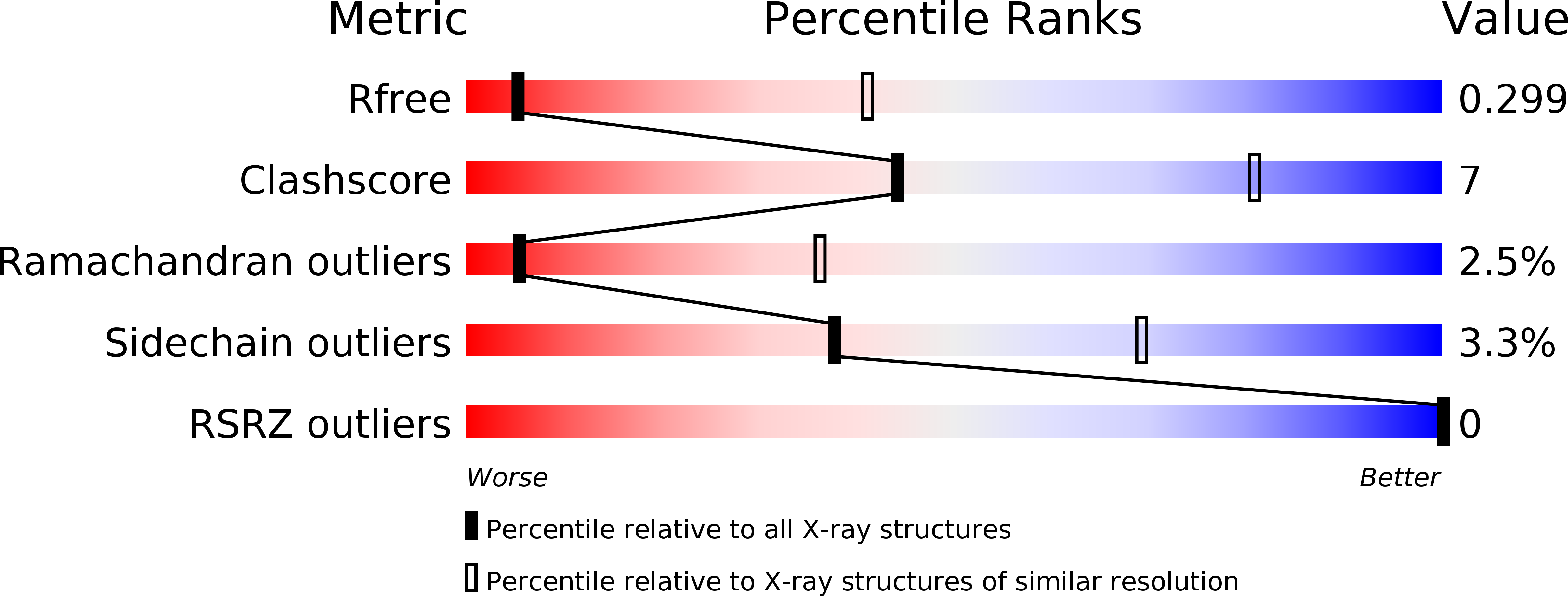
3.60 Å
R-Value Free:
0.29
R-Value Work:
0.25
R-Value Observed:
0.26
Space Group:
P 1 21 1
Macromolecular Entities
Structures with similar UniProt ID
Protein Blast
Polymer Type:polypeptide(L)
Molecule:Protein regulator of cytokinesis 1
Gene (Uniprot):PRC1
Chain IDs:A, B
Chain Length:490
Number of Molecules:2
Biological Source:Homo sapiens
Modified Residue
Compound ID Chain ID Parent Comp ID Details 2D Image
MSE A MET SELENOMETHIONINE
Ligand Molecules
Primary Citation
Marking and Measuring Single Microtubules by PRC1 and Kinesin-4.
Cell(Cambridge,Mass.) 154 377 390 (2013)
PMID: 23870126 DOI: 10.1016/j.cell.2013.06.021

Abstact

Error-free cell division depends on the assembly of the spindle midzone, a specialized array of overlapping microtubules that emerges between segregating chromosomes during anaphase. The molecular mechanisms by which a subset of dynamic microtubules from the metaphase spindle are selected and organized into a stable midzone array are poorly understood. Here, we show using in vitro reconstitution assays that PRC1 and kinesin-4, two microtubule-associated proteins required for midzone assembly, can tag microtubule plus ends. Remarkably, the size of these tags is proportional to filament length. We determine the crystal structure of the PRC1 homodimer and map the protein-protein interactions needed for tagging microtubule ends. Importantly, length-dependent microtubule plus-end-tagging by PRC1 is also observed in dividing cells. Our findings suggest how biochemically similar microtubules can be differentially marked, based on length, for selective regulation during the formation of specialized arrays, such as those required for cytokinesis.

Legend

Protein

Chemical

Disease

Primary Citation of related structures
Feedback Form
Name
Email
Institute
Feedback