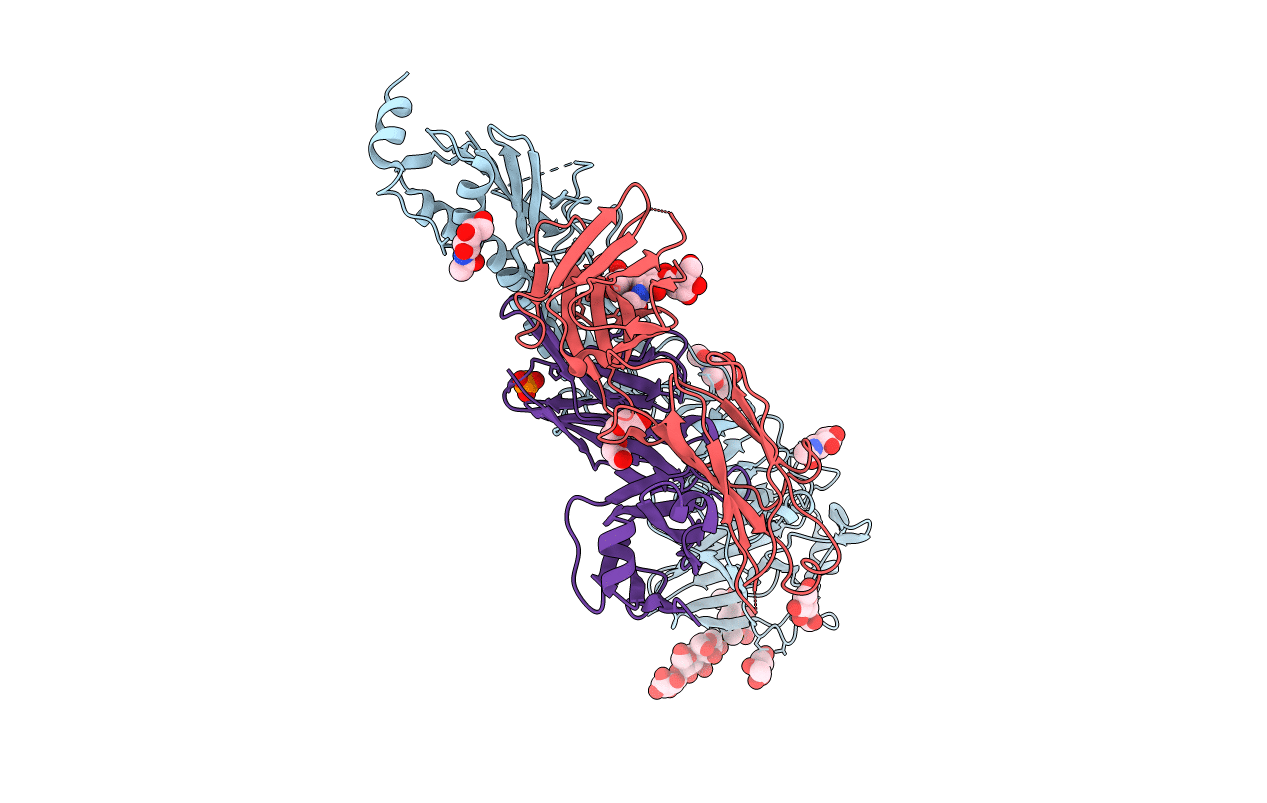
4KVN image
Deposition Date 2013-05-22
Release Date 2013-08-07
Last Version Date 2024-11-20
Entry Detail
PDB ID:
4KVN
Keywords:
Title:
Crystal structure of Fab 39.29 in complex with Influenza Hemagglutinin A/Perth/16/2009 (H3N2)
Biological Source:
Source Organism:
Influenza A virus (Taxon ID: 654811)
Homo sapiens (Taxon ID: 9606)
Host Organism:
Method Details:
Experimental Method:
Resolution:
3.10 Å
R-Value Free:
0.24
R-Value Work:
0.20
R-Value Observed:
0.20
Space Group:
I 21 3

Macromolecular Entities
Structures with similar UniProt ID
Protein Blast
Polymer Type:polypeptide(L)
Molecule:Hemagglutinin
Gene (Uniprot):HA
Chain IDs:A
Chain Length:505
Number of Molecules:1
Biological Source:Influenza A virus
Polymer Type:polypeptide(L)
Molecule:Human IgG Heavy Chain
Chain IDs:B (auth: H)
Chain Length:227
Number of Molecules:1
Biological Source:Homo sapiens
Polymer Type:polypeptide(L)
Molecule:Human IgG Light Chain
Chain IDs:C (auth: L)
Chain Length:215
Number of Molecules:1
Biological Source:Homo sapiens
Modified Residue
Compound ID Chain ID Parent Comp ID Details 2D Image
ASN A ASN GLYCOSYLATION SITE
Primary Citation
A Novel In vivo Human Plasmablast Enrichment Technique Allows Rapid Identification of Therapeutic Anti-Influenza A Antibodies
Cell Host Microbe 14 93 103 (2013)
PMID: 23870317 DOI: 10.1016/j.chom.2013.06.004

Abstact

Recent advances enabling the cloning of human immunoglobulin G genes have proven effective for discovering monoclonal antibodies with therapeutic potential. However, these antibody-discovery methods are often arduous and identify only a few candidates from numerous antibody-secreting plasma cells or plasmablasts. We describe an in vivo enrichment technique that identifies broadly neutralizing human antibodies with high frequency. For this technique, human peripheral blood mononuclear cells from vaccinated donors are activated and enriched in an antigen-specific manner for the production of numerous antigen-specific plasmablasts. Using this technology, we identified four broadly neutralizing influenza A antibodies by screening only 840 human antibodies. Two of these antibodies neutralize every influenza A human isolate tested and perform better than the current anti-influenza A therapeutic, oseltamivir, in treating severe influenza infection in mice and ferrets. Furthermore, these antibodies elicit robust in vivo synergism when combined with oseltamivir, thus highlighting treatment strategies that could benefit influenza-infected patients.

Legend

Protein

Chemical

Disease

Primary Citation of related structures
Feedback Form
Name
Email
Institute
Feedback