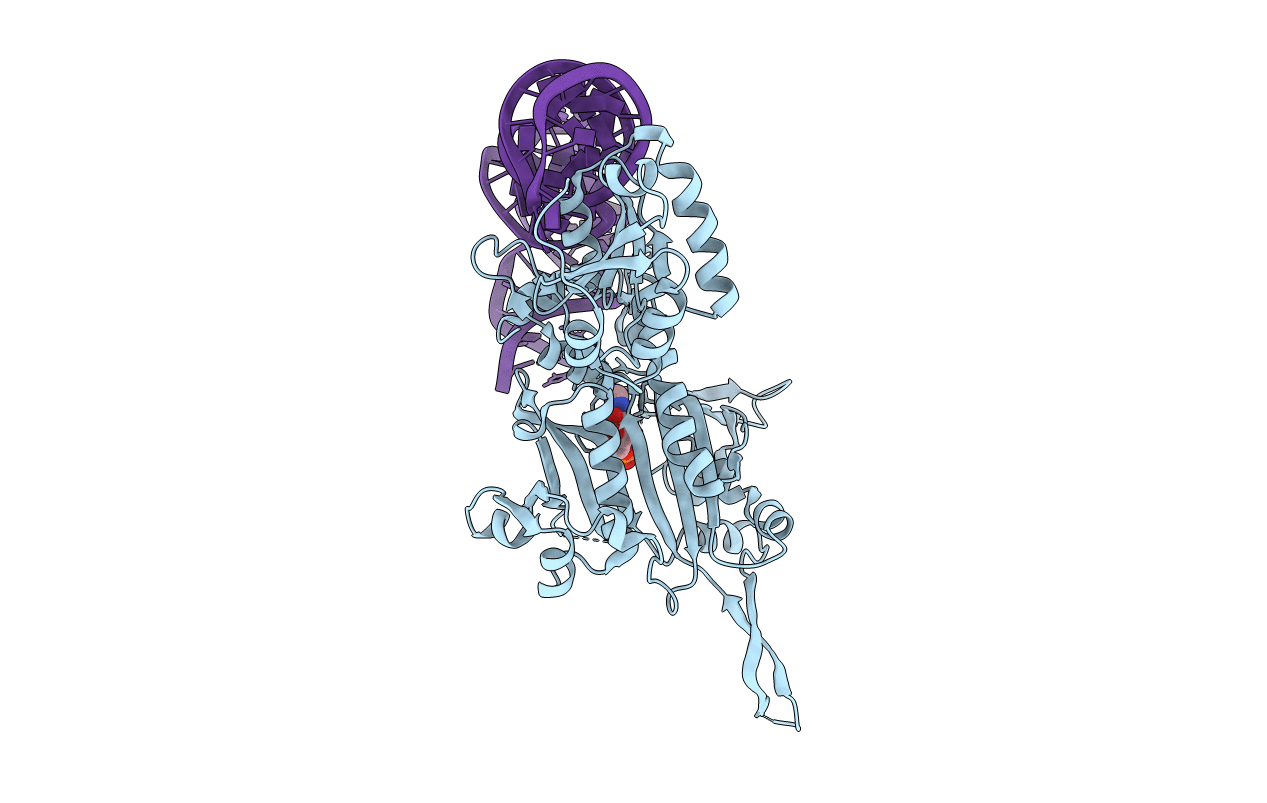
4KR2 image
Deposition Date 2013-05-16
Release Date 2014-05-21
Last Version Date 2023-11-08
Entry Detail
PDB ID:
4KR2
Keywords:
Title:
Glycyl-tRNA synthetase in complex with tRNA-Gly
Biological Source:
Source Organism:
Homo sapiens (Taxon ID: 9606)
Host Organism:
Method Details:
Experimental Method:
Resolution:
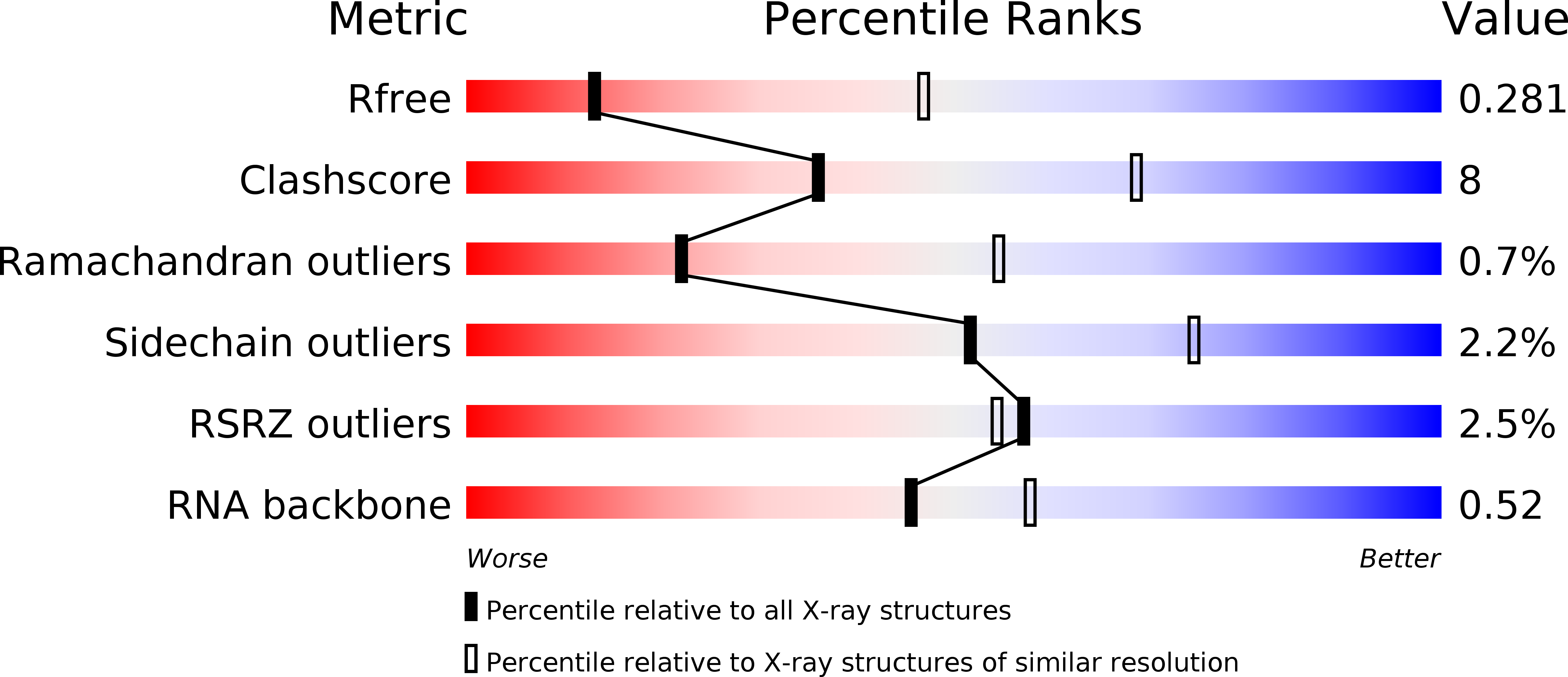
3.29 Å
R-Value Free:
0.27
R-Value Work:
0.23
R-Value Observed:
0.23
Space Group:
P 21 21 2
Macromolecular Entities
Structures with similar UniProt ID
Protein Blast
Polymer Type:polypeptide(L)
Molecule:Glycine--tRNA ligase
Gene (Uniprot):GARS1
Chain IDs:A
Chain Length:637
Number of Molecules:1
Biological Source:Homo sapiens
Polymer Type:polyribonucleotide
Molecule:Gly-tRNA-CCC
Chain IDs:B (auth: C)
Chain Length:74
Number of Molecules:1
Biological Source:Homo sapiens
Modified Residue
Compound ID Chain ID Parent Comp ID Details 2D Image
GTP B G GUANOSINE-5'-TRIPHOSPHATE
Ligand Molecules
Primary Citation
Cocrystal Structures of Glycyl-tRNA Synthetase in Complex with tRNA Suggest Multiple Conformational States in Glycylation
J.Biol.Chem. 289 20359 20369 (2014)
PMID: 24898252 DOI: 10.1074/jbc.M114.557249

Abstact

Aminoacyl-tRNA synthetases are an ancient enzyme family that specifically charges tRNA molecules with cognate amino acids for protein synthesis. Glycyl-tRNA synthetase (GlyRS) is one of the most intriguing aminoacyl-tRNA synthetases due to its divergent quaternary structure and abnormal charging properties. In the past decade, mutations of human GlyRS (hGlyRS) were also found to be associated with Charcot-Marie-Tooth disease. However, the mechanisms of traditional and alternative functions of hGlyRS are poorly understood due to a lack of studies at the molecular basis. In this study we report crystal structures of wild type and mutant hGlyRS in complex with tRNA and with small substrates and describe the molecular details of enzymatic recognition of the key tRNA identity elements in the acceptor stem and the anticodon loop. The cocrystal structures suggest that insertions 1 and 3 work together with the active site in a cooperative manner to facilitate efficient substrate binding. Both the enzyme and tRNA molecules undergo significant conformational changes during glycylation. A working model of multiple conformations for hGlyRS catalysis is proposed based on the crystallographic and biochemical studies. This study provides insights into the catalytic pathway of hGlyRS and may also contribute to our understanding of Charcot-Marie-Tooth disease.

Legend

Protein

Chemical

Disease

Primary Citation of related structures
Feedback Form
Name
Email
Institute
Feedback