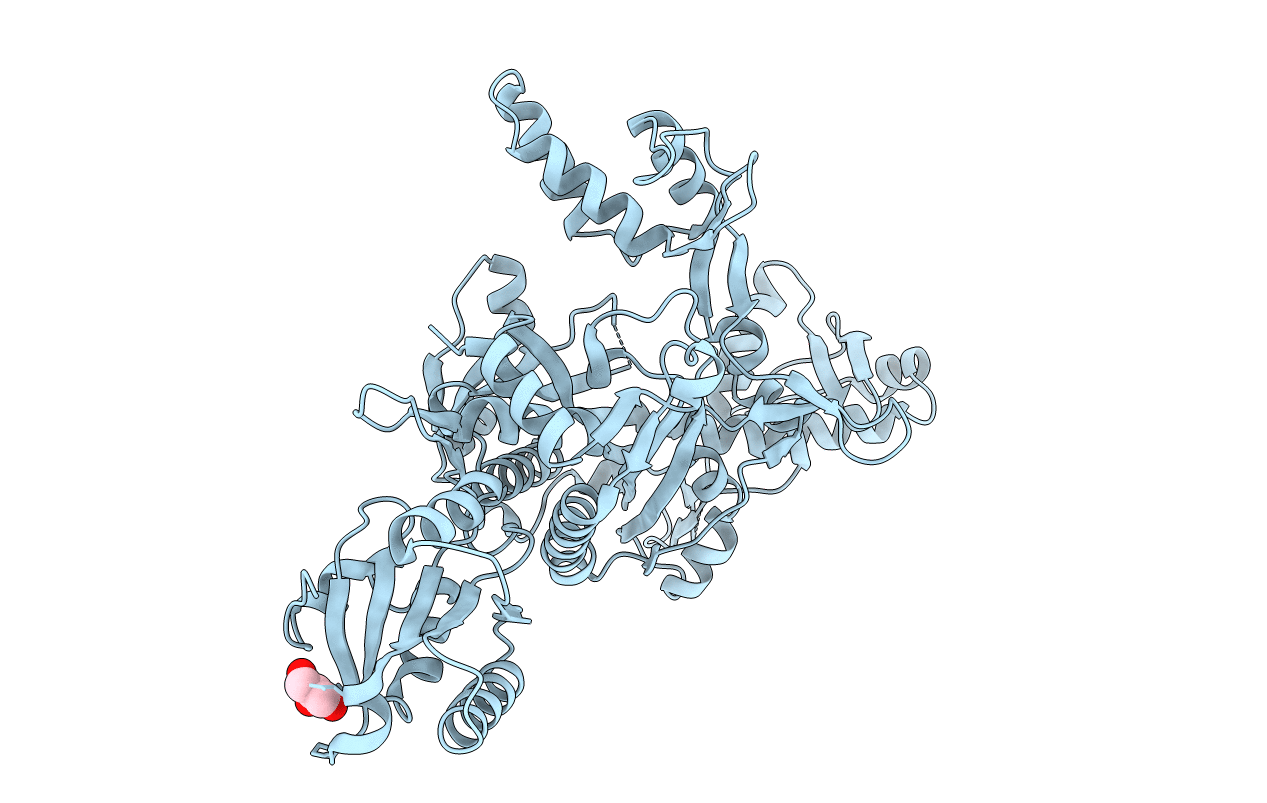
4KQE image
Deposition Date 2013-05-15
Release Date 2014-05-21
Last Version Date 2023-11-08
Entry Detail
PDB ID:
4KQE
Keywords:
Title:
The mutant structure of the human glycyl-tRNA synthetase E71G
Biological Source:
Source Organism:
Homo sapiens (Taxon ID: 9606)
Host Organism:
Method Details:
Experimental Method:
Resolution:
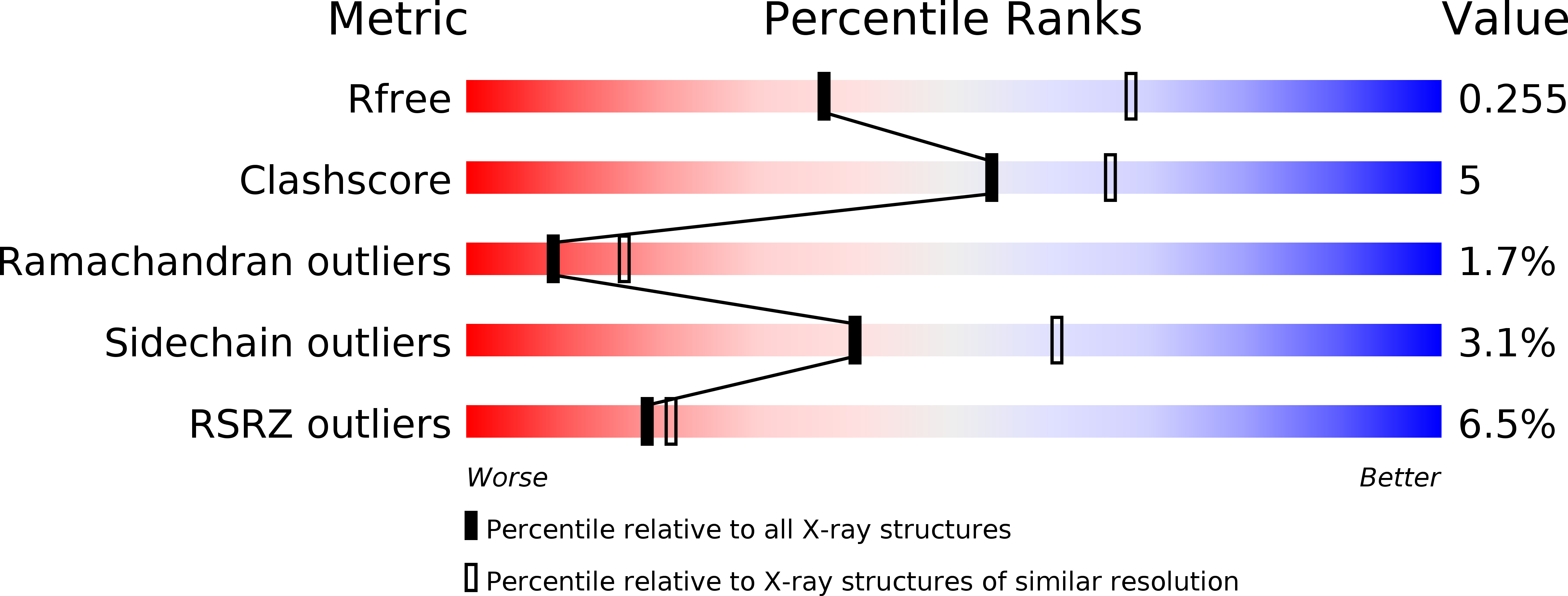
2.74 Å
R-Value Free:
0.25
R-Value Work:
0.21
R-Value Observed:
0.21
Space Group:
P 43 21 2
Macromolecular Entities
Structures with similar UniProt ID
Protein Blast
Polymer Type:polypeptide(L)
Molecule:Glycine--tRNA ligase
Gene (Uniprot):GARS1
Mutagens:E71G
Chain IDs:A
Chain Length:693
Number of Molecules:1
Biological Source:Homo sapiens
Ligand Molecules
Primary Citation
Large Conformational Changes of Insertion 3 in Human Glycyl-tRNA Synthetase (hGlyRS) during Catalysis
J.Biol.Chem. 291 5740 5752 (2016)
PMID: 26797133 DOI: 10.1074/jbc.M115.679126

Abstact

Glycyl-tRNA synthetase (GlyRS) is the enzyme that covalently links glycine to cognate tRNA for translation. It is of great research interest because of its nonconserved quaternary structures, unique species-specific aminoacylation properties, and noncanonical functions in neurological diseases, but none of these is fully understood. We report two crystal structures of human GlyRS variants, in the free form and in complex with tRNA(Gly) respectively, and reveal new aspects of the glycylation mechanism. We discover that insertion 3 differs considerably in conformation in catalysis and that it acts like a "switch" and fully opens to allow tRNA to bind in a cross-subunit fashion. The flexibility of the protein is supported by molecular dynamics simulation, as well as enzymatic activity assays. The biophysical and biochemical studies suggest that human GlyRS may utilize its flexibility for both the traditional function (regulate tRNA binding) and alternative functions (roles in diseases).

Legend

Protein

Chemical

Disease

Primary Citation of related structures
Feedback Form
Name
Email
Institute
Feedback