4KMG image
Deposition Date 2013-05-08
Release Date 2014-03-26
Last Version Date 2024-11-06
Entry Detail
PDB ID:
4KMG
Title:
Crystal structure of cytochrome c6B from Synechococcus sp. WH8102
Biological Source:
Source Organism:
Host Organism:
Method Details:
Experimental Method:
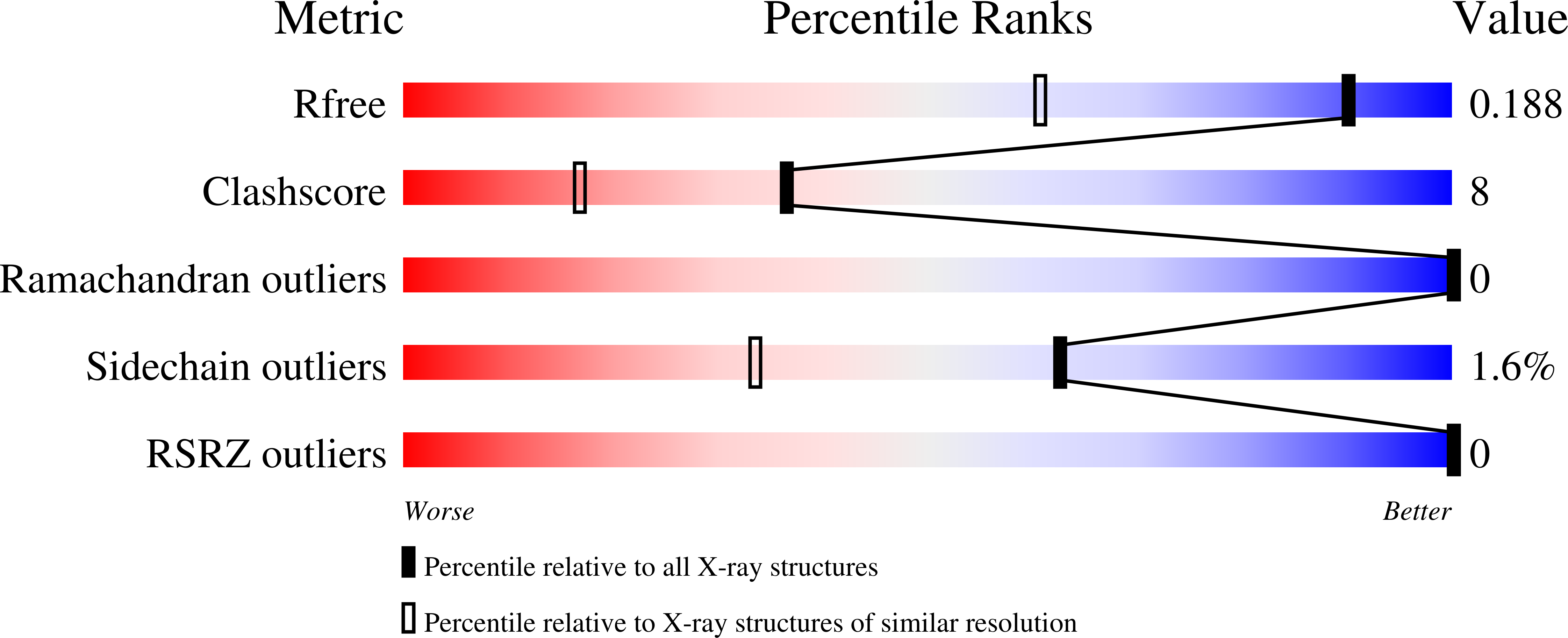
Resolution:
1.40 Å
R-Value Free:
0.18
R-Value Work:
0.12
R-Value Observed:
0.12
Space Group:
C 1 2 1
Macromolecular Entities
Structures with similar UniProt ID
Protein Blast
Polymer Type:polypeptide(L)
Molecule:Cytochrome C6 (Soluble cytochrome F) (Cytochrome c553)
Gene (Uniprot):petJ
Chain IDs:A
Chain Length:88
Number of Molecules:1
Biological Source:Synechococcus sp.
Primary Citation
Cytochrome c6B of Synechococcus sp. WH 8102 - Crystal structure and basic properties of novel c6-like family representative.
Biochem.Biophys.Res.Commun. 443 1131 1135 (2014)
PMID: 24216109 DOI: 10.1016/j.bbrc.2013.10.167

Abstact

Cytochromes c are soluble electron carriers of relatively low molecular weight, containing single heme moiety. In cyanobacteria cytochrome c6 participates in electron transfer from cytochrome b6f complex to photosystem I. Recent phylogenetic analysis revealed the existence of a few families of proteins homologous to the previously mentioned. Cytochrome c6A from Arabidopsis thaliana was identified as a protein responsible for disulfide bond formation in response to intracellular redox state changes and c550 is well known element of photosystem II. However, function of cytochromes marked as c6B, c6C and cM as well as the physiological process in which they take a part still remain unidentified. Here we present the first structural and biophysical analysis of cytochrome from the c6B family from mesophilic cyanobacteria Synechococcus sp. WH 8102. Purified protein was crystallized and its structure was refined at 1.4 Å resolution. Overall architecture of this polypeptide resembles typical I-class cytochromes c. The main features, that distinguish described protein from cytochrome c6, are slightly red-shifted α band of UV-Vis spectrum as well as relatively low midpoint potential (113.2±2.2 mV). Although, physiological function of cytochrome c6B has yet to be determined its properties probably exclude the participation of this protein in electron trafficking between b6f complex and photosystem I.

Legend

Protein

Chemical

Disease

Primary Citation of related structures
Feedback Form
Name
Email
Institute
Feedback