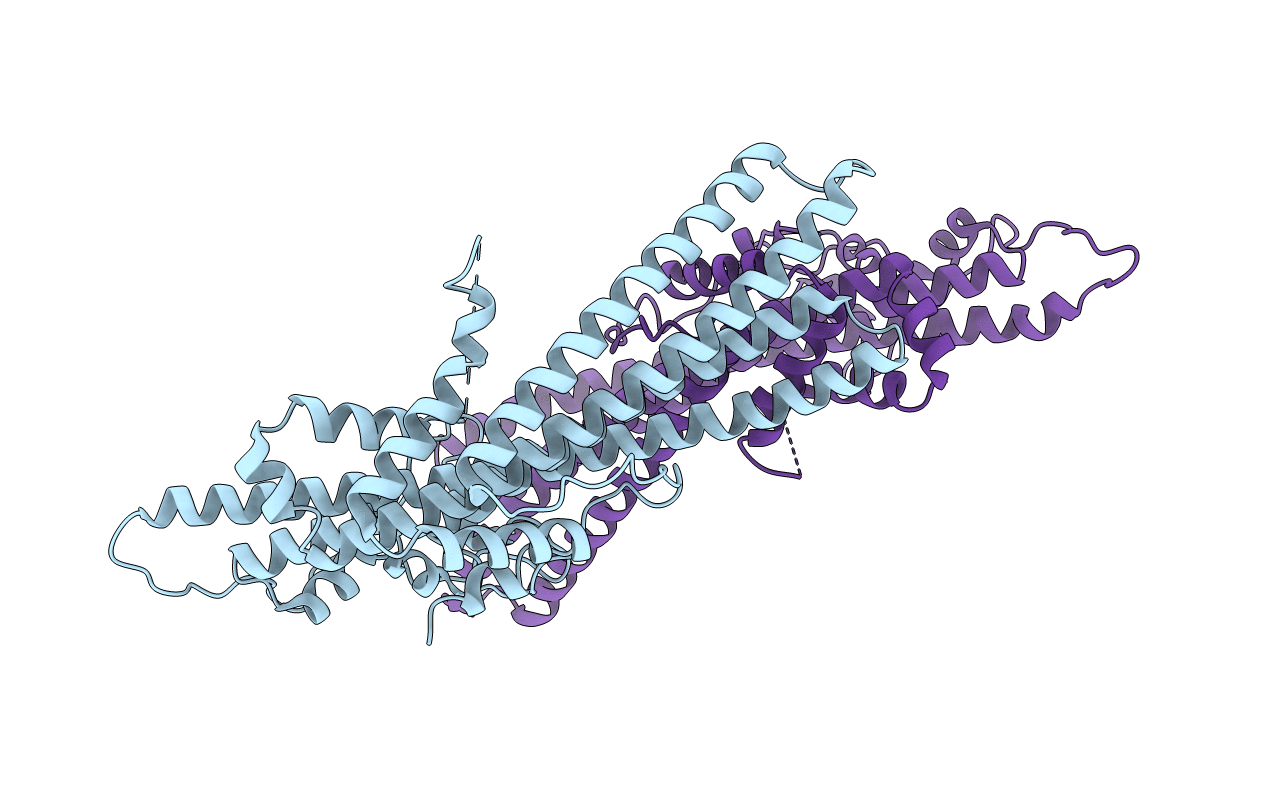
4K7K image
Deposition Date 2013-04-17
Release Date 2013-10-16
Last Version Date 2024-02-28
Entry Detail
PDB ID:
4K7K
Title:
Crystal structures of CusC review conformational changes accompanying folding and transmembrane channel formation
Biological Source:
Source Organism:
Host Organism:
Method Details:
Experimental Method:
Resolution:
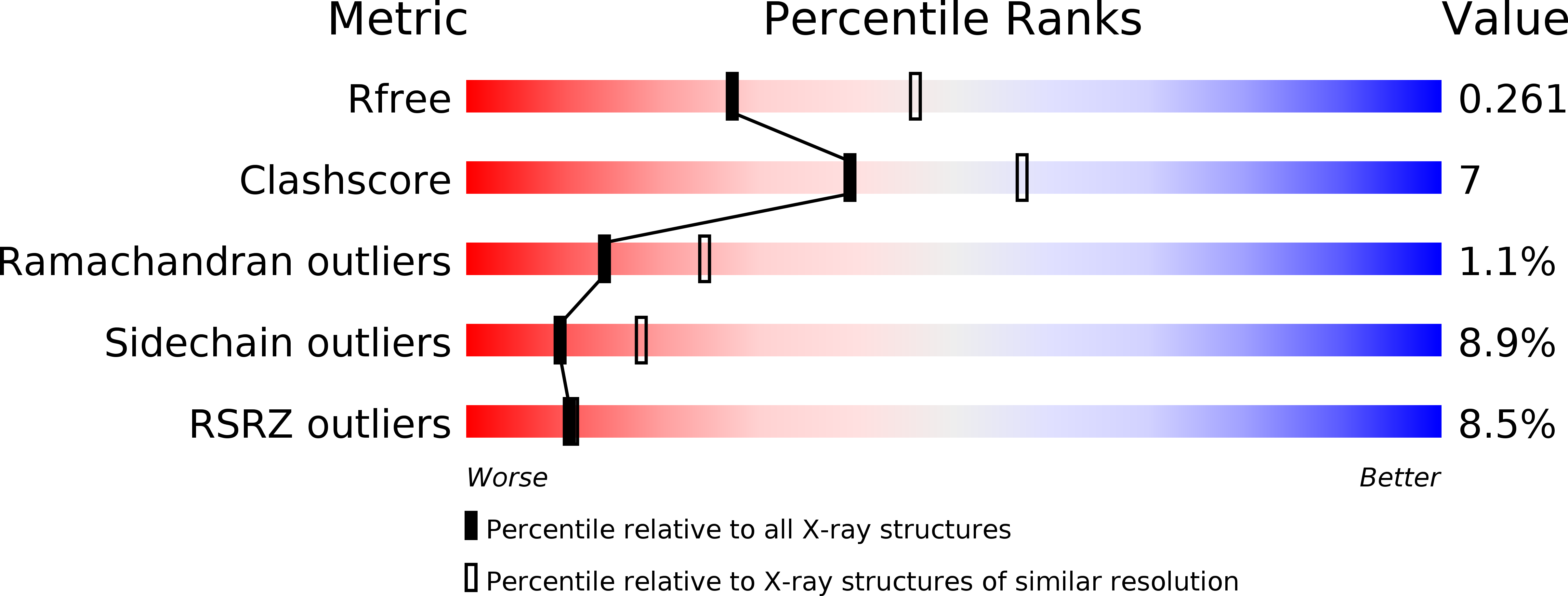
2.53 Å
R-Value Free:
0.26
R-Value Work:
0.20
R-Value Observed:
0.21
Space Group:
P 1 21 1
Macromolecular Entities
Structures with similar UniProt ID
Protein Blast
Polymer Type:polypeptide(L)
Molecule:Cation efflux system protein CusC
Gene (Uniprot):cusC
Chain IDs:A, B
Chain Length:446
Number of Molecules:2
Biological Source:Escherichia coli
Primary Citation
Crystal Structures of CusC Review Conformational Changes Accompanying Folding and Transmembrane Channel Formation.
J.Mol.Biol. 426 403 411 (2014)
PMID: 24099674 DOI: 10.1016/j.jmb.2013.09.042

Abstact

Gram-negative bacteria, such as Escherichia coli, frequently utilize tripartite efflux complexes in the RND (resistance-nodulation-cell division) family to expel diverse toxic compounds from the cell. These complexes span both the inner and outer membranes of the bacterium via an α-helical, inner membrane transporter; a periplasmic membrane fusion protein; and a β-barrel, outer membrane channel. One such efflux system, CusCBA, is responsible for extruding biocidal Cu(I) and Ag(I) ions. To remove these toxic ions, the CusC outer membrane channel must form a β-barrel structural domain, which creates a pore and spans the entire outer membrane. We here report the crystal structures of wild-type CusC, as well as two CusC mutants, suggesting that the first N-terminal cysteine residue plays an important role in protein-membrane interactions and is critical for the insertion of this channel protein into the outer membrane. These structures provide insight into the mechanisms on CusC folding and transmembrane channel formation. It is found that the interactions between CusC and membrane may be crucial for controlling the opening and closing of this β-barrel, outer membrane channel.

Legend

Protein

Chemical

Disease

Primary Citation of related structures
Feedback Form
Name
Email
Institute
Feedback