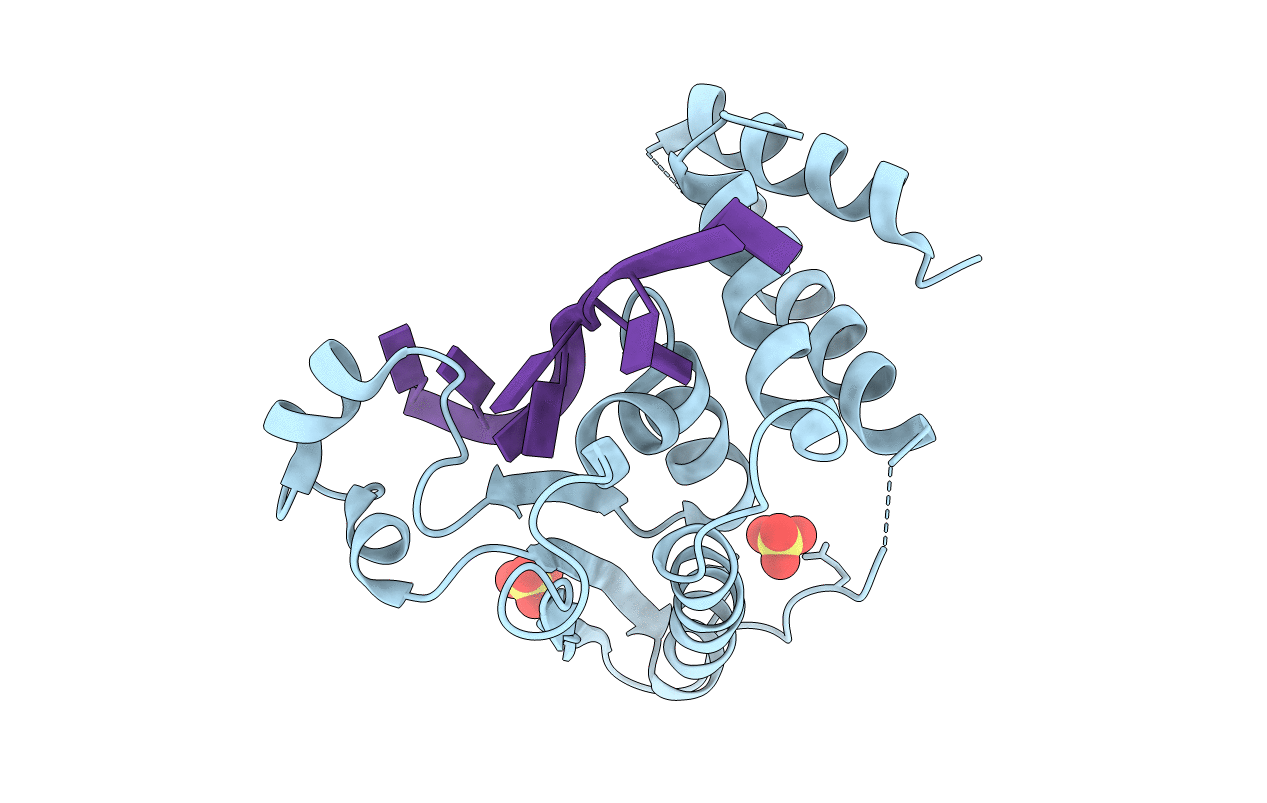
4JVH image
Deposition Date 2013-03-25
Release Date 2013-05-08
Last Version Date 2024-11-06
Entry Detail
PDB ID:
4JVH
Title:
Structure of the star domain of quaking protein in complex with RNA
Biological Source:
Source Organism:
Homo sapiens (Taxon ID: 9606)
Host Organism:
Method Details:
Experimental Method:
Resolution:
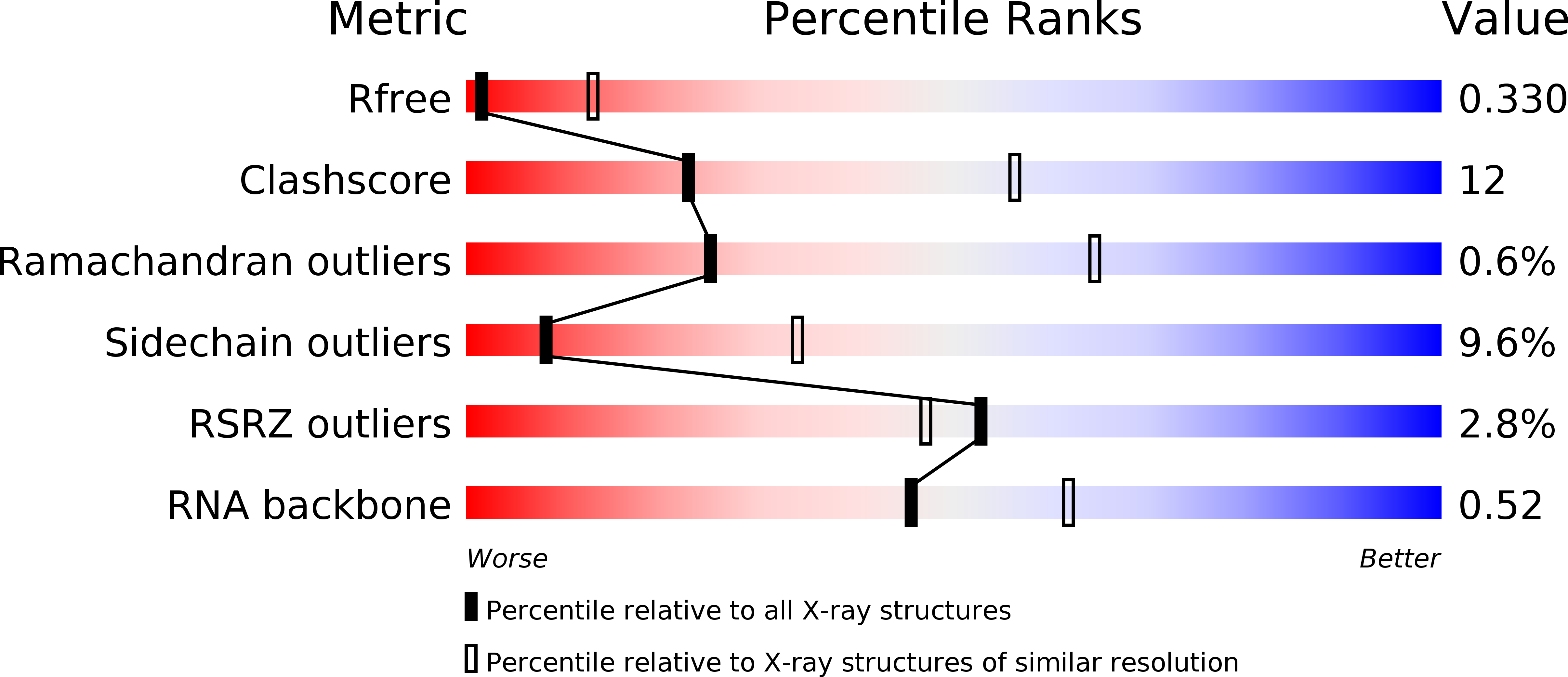
3.50 Å
R-Value Free:
0.31
R-Value Work:
0.24
R-Value Observed:
0.24
Space Group:
P 61 2 2
Macromolecular Entities
Structures with similar UniProt ID
Protein Blast
Polymer Type:polypeptide(L)
Molecule:Protein quaking
Gene (Uniprot):QKI
Chain IDs:A
Chain Length:209
Number of Molecules:1
Biological Source:Homo sapiens
Polymer Type:polyribonucleotide
Molecule:RNA (5'-R(*UP*UP*CP*AP*CP*UP*AP*AP*CP*AP*A)-3')
Chain IDs:B (auth: D)
Chain Length:11
Number of Molecules:1
Biological Source:
Modified Residue
Compound ID Chain ID Parent Comp ID Details 2D Image
MSE A MET SELENOMETHIONINE
Ligand Molecules
Primary Citation
Structure-function studies of STAR family Quaking proteins bound to their in vivo RNA target sites.
Genes Dev. 27 928 940 (2013)
PMID: 23630077 DOI: 10.1101/gad.216531.113

Abstact

Mammalian Quaking (QKI) and its Caenorhabditis elegans homolog, GLD-1 (defective in germ line development), are evolutionarily conserved RNA-binding proteins, which post-transcriptionally regulate target genes essential for developmental processes and myelination. We present X-ray structures of the STAR (signal transduction and activation of RNA) domain, composed of Qua1, K homology (KH), and Qua2 motifs of QKI and GLD-1 bound to high-affinity in vivo RNA targets containing YUAAY RNA recognition elements (RREs). The KH and Qua2 motifs of the STAR domain synergize to specifically interact with bases and sugar-phosphate backbones of the bound RRE. Qua1-mediated homodimerization generates a scaffold that enables concurrent recognition of two RREs, thereby plausibly targeting tandem RREs present in many QKI-targeted transcripts. Structure-guided mutations reduced QKI RNA-binding affinity in vitro and in vivo, and expression of QKI mutants in human embryonic kidney cells (HEK293) significantly decreased the abundance of QKI target mRNAs. Overall, our studies define principles underlying RNA target selection by STAR homodimers and provide insights into the post-transcriptional regulatory function of mammalian QKI proteins.

Legend

Protein

Chemical

Disease

Primary Citation of related structures
Feedback Form
Name
Email
Institute
Feedback