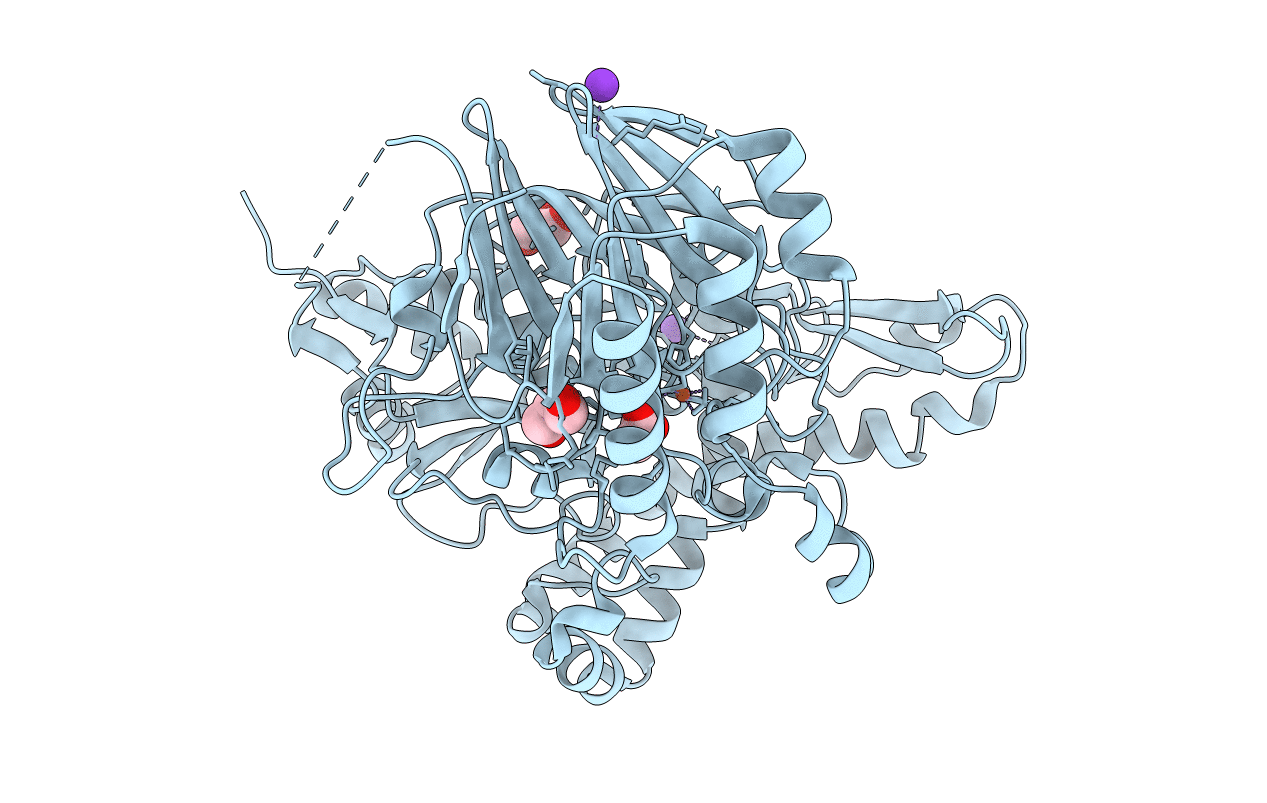
4JO0 image
Deposition Date 2013-03-16
Release Date 2013-09-11
Last Version Date 2024-02-28
Entry Detail
PDB ID:
4JO0
Keywords:
Title:
Crystal Structure of CmlA, a diiron beta-hydroxylase from Streptomyces venezuelae
Biological Source:
Source Organism:
Host Organism:
Method Details:
Experimental Method:
Resolution:
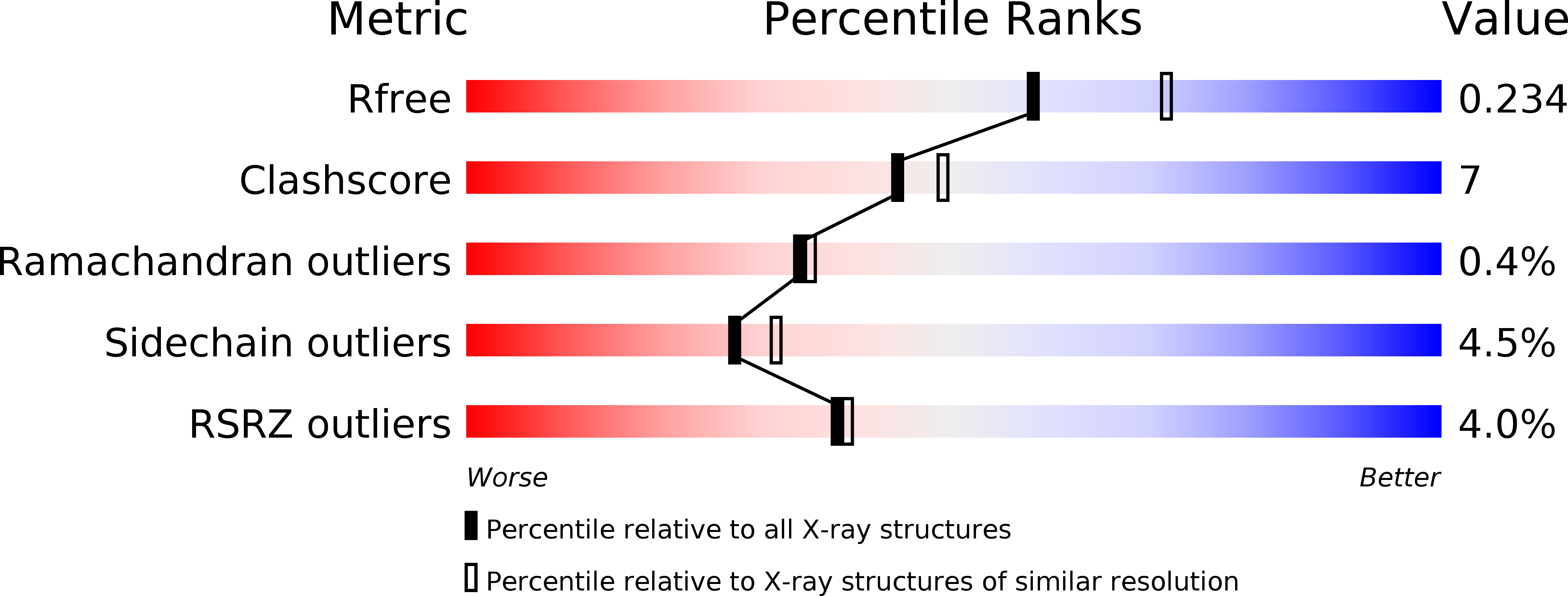
2.17 Å
R-Value Free:
0.23
R-Value Work:
0.20
R-Value Observed:
0.20
Space Group:
P 43 21 2
Macromolecular Entities
Structures with similar UniProt ID
Protein Blast
Polymer Type:polypeptide(L)
Molecule:CmlA
Gene (Uniprot):cmlA
Chain IDs:A
Chain Length:534
Number of Molecules:1
Biological Source:Streptomyces venezuelae
Primary Citation
Structure of a Dinuclear Iron Cluster-Containing beta-Hydroxylase Active in Antibiotic Biosynthesis.
Biochemistry 52 6662 6671 (2013)
PMID: 23980641 DOI: 10.1021/bi400845b

Abstact

A family of dinuclear iron cluster-containing oxygenases that catalyze β-hydroxylation tailoring reactions in natural product biosynthesis by nonribosomal peptide synthetase (NRPS) systems was recently described [Makris, T. M., Chakrabarti, M., Münck, E., and Lipscomb, J. D. (2010) Proc. Natl. Acad. Sci. U.S.A. 107, 15391-15396]. Here, the 2.17 Å X-ray crystal structure of the archetypal enzyme from the family, CmlA, is reported. CmlA catalyzes β-hydroxylation of l-p-aminophenylalanine during chloramphenicol biosynthesis. The fold of the N-terminal domain of CmlA is unlike any previously reported, but the C-terminal domain has the αββα fold of the metallo-β-lactamase (MBL) superfamily. The diiron cluster bound in the C-terminal domain is coordinated by an acetate, three His residues, two Asp residues, one Glu residue, and a bridging oxo moiety. One of the Asp ligands forms an unusual monodentate bridge. No other oxygen-activating diiron enzyme utilizes this ligation or the MBL protein fold. The N-terminal domain facilitates dimerization, but using computational docking and a sequence-based structural comparison to homologues, we hypothesize that it likely serves additional roles in NRPS recognition and the regulation of O2 activation.

Legend

Protein

Chemical

Disease

Primary Citation of related structures
Feedback Form
Name
Email
Institute
Feedback