4JMU image
Deposition Date 2013-03-14
Release Date 2013-10-30
Last Version Date 2024-02-28
Entry Detail
PDB ID:
4JMU
Title:
Crystal structure of HIV matrix residues 1-111 in complex with inhibitor
Biological Source:
Method Details:
Experimental Method:
Resolution:
2.00 Å
R-Value Free:
0.25
R-Value Work:
0.19
Space Group:
H 3 2
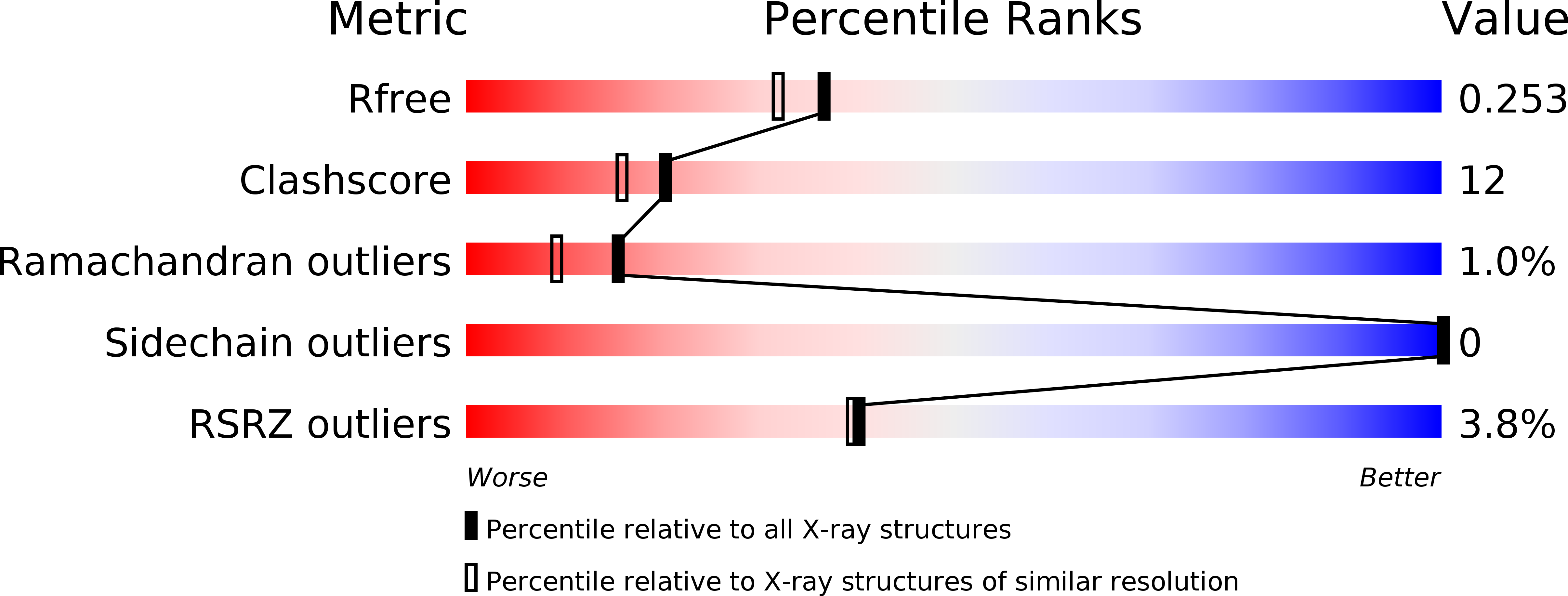
Macromolecular Entities
Structures with similar UniProt ID
Protein Blast
Polymer Type:polypeptide(L)
Molecule:Gag-Pol polyprotein
Gene (Uniprot):gag-pol
Chain IDs:A
Chain Length:112
Number of Molecules:1
Biological Source:Human immunodeficiency virus type 1 (NEW YORK-5 ISOLATE)
Primary Citation
Enantiomeric Atropisomers Inhibit HCV Polymerase and/or HIV Matrix: Characterizing Hindered Bond Rotations and Target Selectivity.
J.Med.Chem. 57 1944 1951 (2014)
PMID: 24024973 DOI: 10.1021/jm401202a

Abstact

An anthranilic acid series of allosteric thumb pocket 2 HCV NS5B polymerase inhibitors exhibited hindered rotation along a covalent bond axis, and the existence of atropisomer chirality was confirmed by NMR, HPLC analysis on chiral supports, and computational studies. A thorough understanding of the concerted rotational properties and the influence exerted by substituents involved in this steric phenomenon was attained through biophysical studies on a series of truncated analogues. The racemization half-life of a compound within this series was determined to be 69 min, which was consistent with a class 2 atropisomer (intermediate conformational exchange). It was further found by X-ray crystallography that one enantiomer of a compound bound to the intended HCV NS5B polymerase target whereas the mirror image atropisomer was able to bind to an unrelated HIV matrix target. Analogues were then identified that selectively inhibited the former. These studies highlight that atropisomer chirality can lead to distinct entities with specific properties, and the phenomenon of atropisomerism in drug discovery should be evaluated and appropriately managed.

Legend

Protein

Chemical

Disease

Primary Citation of related structures
Feedback Form
Name
Email
Institute
Feedback