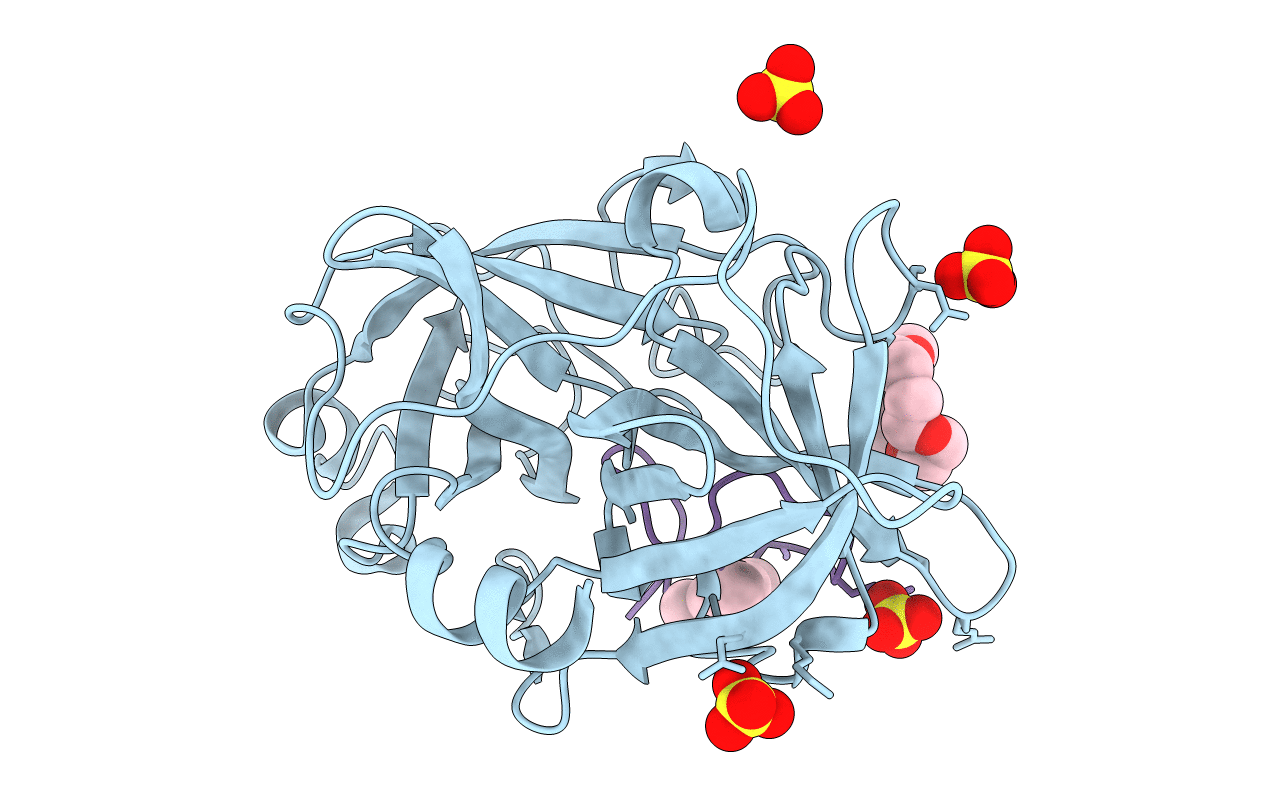
4JK5 image
Deposition Date 2013-03-09
Release Date 2013-07-17
Last Version Date 2024-11-20
Entry Detail
PDB ID:
4JK5
Title:
Human urokinase-type Plasminogen Activator (uPA) in complex with a bicyclic peptide inhibitor (UK18-D-Ser)
Biological Source:
Source Organism:
Host Organism:
Method Details:
Experimental Method:
Resolution:
1.55 Å
R-Value Free:
0.21
R-Value Work:
0.14
R-Value Observed:
0.14
Space Group:
H 3

Macromolecular Entities
Structures with similar UniProt ID
Protein Blast
Polymer Type:polypeptide(L)
Molecule:Urokinase-type plasminogen activator
Gene (Uniprot):PLAU
Mutagens:C122A, N145Q
Chain IDs:A
Chain Length:245
Number of Molecules:1
Biological Source:Homo sapiens
Polymer Type:polypeptide(L)
Molecule:bicyclic peptide UK18-D-Ser, uPA inhibitor
Chain IDs:B
Chain Length:18
Number of Molecules:1
Biological Source:Synthetic construct
Peptide-like Molecules
PRD_000926
Primary Citation
Improving binding affinity and stability of Peptide ligands by substituting glycines with d-amino acids.
Chembiochem 14 1316 1322 (2013)
PMID: 23828687 DOI: 10.1002/cbic.201300228

Abstact

Improving the binding affinity and/or stability of peptide ligands often requires testing of large numbers of variants to identify beneficial mutations. Herein we propose a type of mutation that promises a high success rate. In a bicyclic peptide inhibitor of the cancer-related protease urokinase-type plasminogen activator (uPA), we observed a glycine residue that has a positive ϕ dihedral angle when bound to the target. We hypothesized that replacing it with a D-amino acid, which favors positive ϕ angles, could enhance the binding affinity and/or proteolytic resistance. Mutation of this specific glycine to D-serine in the bicyclic peptide indeed improved inhibitory activity (1.75-fold) and stability (fourfold). X-ray-structure analysis of the inhibitors in complex with uPA showed that the peptide backbone conformation was conserved. Analysis of known cyclic peptide ligands showed that glycine is one of the most frequent amino acids, and that glycines with positive ϕ angles are found in many protein-bound peptides. These results suggest that the glycine-to-D-amino acid mutagenesis strategy could be broadly applied.

Legend

Protein

Chemical

Disease

Primary Citation of related structures
Feedback Form
Name
Email
Institute
Feedback