4JB0 image
Deposition Date 2013-02-19
Release Date 2013-04-17
Last Version Date 2024-02-28
Entry Detail
PDB ID:
4JB0
Title:
Rhodopseudomonas palustris (strain CGA009) Rp1789 transport protein
Biological Source:
Source Organism:
Host Organism:
Method Details:
Experimental Method:
Resolution:
1.91 Å
R-Value Free:
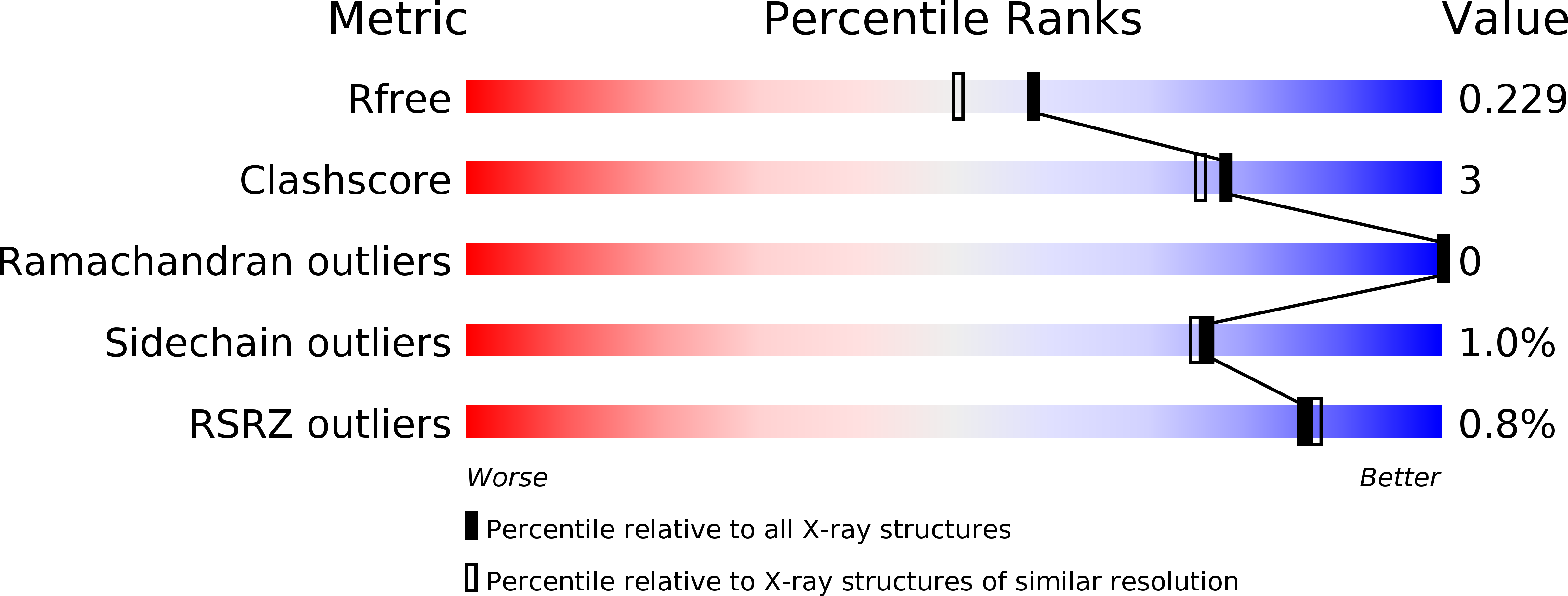
0.22
R-Value Work:
0.17
R-Value Observed:
0.17
Space Group:
P 21 21 21
Macromolecular Entities
Structures with similar UniProt ID
Protein Blast
Polymer Type:polypeptide(L)
Molecule:branched-chain amino acid transport system substrate-binding protein
Gene (Uniprot):TX73_009200
Chain IDs:A
Chain Length:370
Number of Molecules:1
Biological Source:Rhodopseudomonas palustris
Primary Citation
The CouPSTU and TarPQM Transporters in Rhodopseudomonas palustris: Redundant, Promiscuous Uptake Systems for Lignin-Derived Aromatic Substrates.
Plos One 8 e59844 e59844 (2013)
PMID: 23555803 DOI: 10.1371/journal.pone.0059844

Abstact

The biodegradation of lignin, one of the most abundant carbon compounds on Earth, has important biotechnological applications in the derivation of useful products from lignocellulosic wastes. The purple photosynthetic bacterium Rhodopseudomonas palustris is able to grow photoheterotrophically under anaerobic conditions on a range of phenylpropeneoid lignin monomers, including coumarate, ferulate, caffeate, and cinnamate. RPA1789 (CouP) is the periplasmic binding-protein component of an ABC system (CouPSTU; RPA1789, RPA1791-1793), which has previously been implicated in the active transport of this class of aromatic substrate. Here, we show using both intrinsic tryptophan fluorescence and isothermal titration calorimetry that CouP binds a range of phenylpropeneoid ligands with K d values in the nanomolar range. The crystal structure of CouP with ferulate as the bound ligand shows H-bond interactions between the 4-OH group of the aromatic ring with His309 and Gln305. H-bonds are also made between the carboxyl group on the ferulate side chain and Arg197, Ser222, and Thr102. An additional transport system (TarPQM; RPA1782-1784), a member of the tripartite ATP-independent periplasmic (TRAP) transporter family, is encoded at the same locus as rpa1789 and several other genes involved in coumarate metabolism. We show that the periplasmic binding-protein of this system (TarP; RPA1782) also binds coumarate, ferulate, caffeate, and cinnamate with nanomolar K d values. Thus, we conclude that R. palustris uses two redundant but energetically distinct primary and secondary transporters that both employ high-affinity periplasmic binding-proteins to maximise the uptake of lignin-derived aromatic substrates from the environment. Our data provide a detailed thermodynamic and structural basis for understanding the interaction of lignin-derived aromatic substrates with proteins and will be of use in the further exploitation of the flexible metabolism of R. palustris for anaerobic aromatic biotransformations.

Legend

Protein

Chemical

Disease

Primary Citation of related structures
Feedback Form
Name
Email
Institute
Feedback