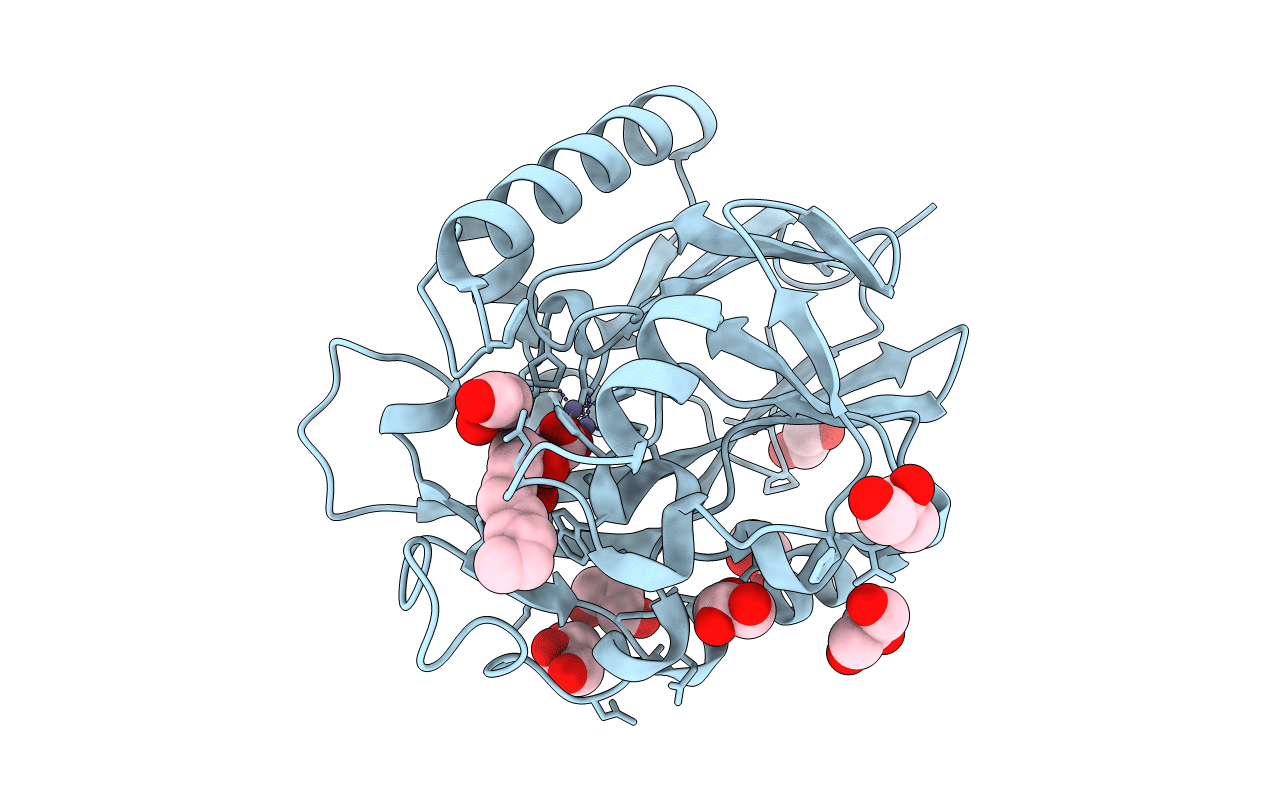
4J5H image
Deposition Date 2013-02-08
Release Date 2013-06-26
Last Version Date 2024-02-28
Entry Detail
PDB ID:
4J5H
Title:
Crystal Structure of B. thuringiensis AiiA mutant F107W with N-decanoyl-L-homoserine bound at the active site
Biological Source:
Source Organism:
Host Organism:
Method Details:
Experimental Method:
Resolution:
1.45 Å
R-Value Free:
0.15
R-Value Work:
0.12
R-Value Observed:
0.12
Space Group:
P 21 21 21
Macromolecular Entities
Structures with similar UniProt ID
Protein Blast
Polymer Type:polypeptide(L)
Molecule:N-acyl homoserine lactonase
Gene (Uniprot):aiiA
Mutagens:F107W
Chain IDs:A
Chain Length:254
Number of Molecules:1
Biological Source:Bacillus thuringiensis
Primary Citation
A phenylalanine clamp controls substrate specificity in the quorum-quenching metallo-gamma-lactonase from Bacillus thuringiensis.
Biochemistry 52 1603 1610 (2013)
PMID: 23387521 DOI: 10.1021/bi400050j

Abstact

Autoinducer inactivator A (AiiA) is a metal-dependent N-acyl homoserine lactone hydrolase that displays broad substrate specificity but shows a preference for substrates with long N-acyl substitutions. Previously, crystal structures of AiiA in complex with the ring-opened product N-hexanoyl-l-homoserine revealed binding interactions near the metal center but did not identify a binding pocket for the N-acyl chains of longer substrates. Here we report the crystal structure of an AiiA mutant, F107W, determined in the presence and absence of N-decanoyl-l-homoserine. F107 is located in a hydrophobic cavity adjacent to the previously identified ligand binding pocket, and the F107W mutation results in the formation of an unexpected interaction with the ring-opened product. Notably, the structure reveals a previously unidentified hydrophobic binding pocket for the substrate's N-acyl chain. Two aromatic residues, F64 and F68, form a hydrophobic clamp, centered around the seventh carbon in the product-bound structure's decanoyl chain, making an interaction that would also be available for longer substrates, but not for shorter substrates. Steady-state kinetics using substrates of various lengths with AiiA bearing mutations at the hydrophobic clamp, including insertion of a redox-sensitive cysteine pair, confirms the importance of this hydrophobic feature for substrate preference. Identifying the specificity determinants of AiiA will aid the development of more selective quorum-quenching enzymes as tools and as potential therapeutics.

Legend

Protein

Chemical

Disease

Primary Citation of related structures
Feedback Form
Name
Email
Institute
Feedback