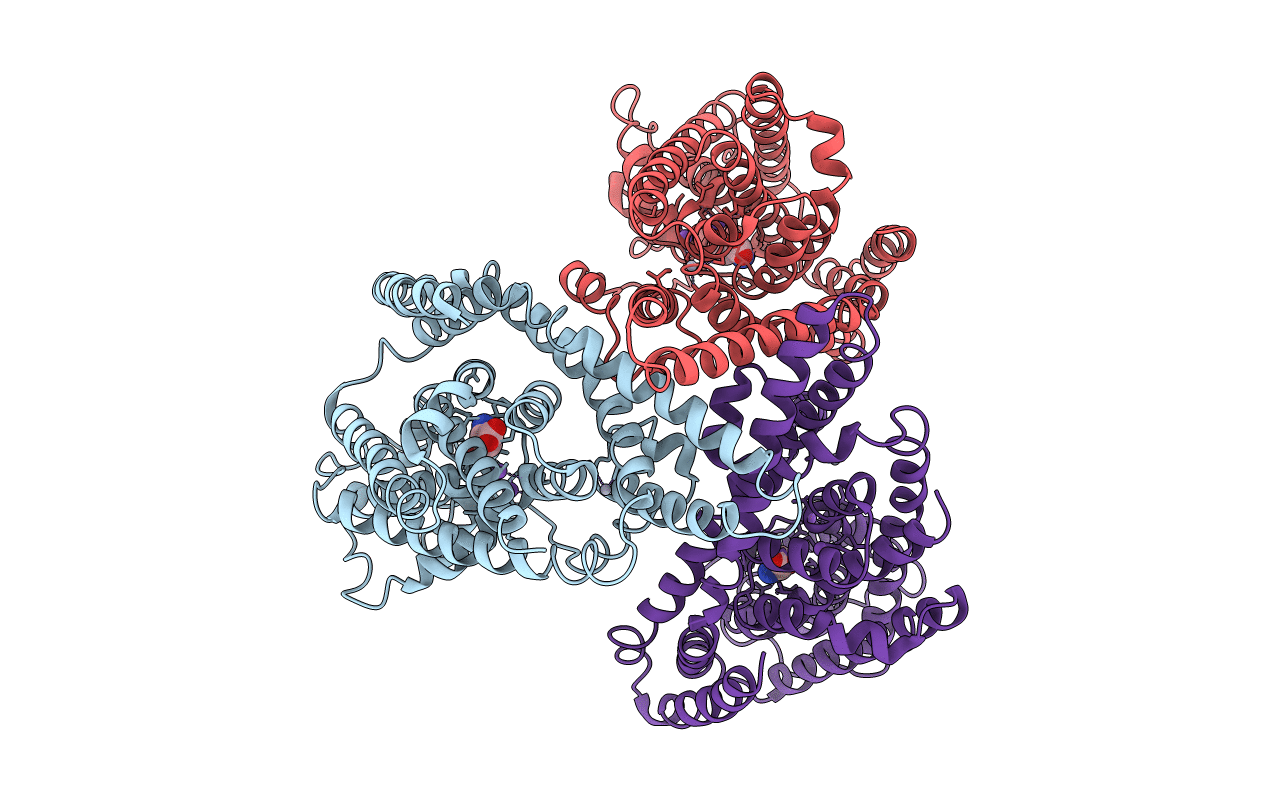
4IZM image
Deposition Date 2013-01-30
Release Date 2013-04-10
Last Version Date 2024-02-28
Entry Detail
PDB ID:
4IZM
Title:
Crystal structure of GltPh L66C-S300C mutant crosslinked with divalent mercury
Biological Source:
Source Organism:
Host Organism:
Method Details:
Experimental Method:
Resolution:
4.50 Å
R-Value Free:
0.29
R-Value Work:
0.25
R-Value Observed:
0.25
Space Group:
P 61

Macromolecular Entities
Structures with similar UniProt ID
Protein Blast
Polymer Type:polypeptide(L)
Molecule:425aa long hypothetical proton glutamate symport protein
Gene (Uniprot):PH1295
Mutagens:D37H, K40H, L66C, K125H, K132H, K264H, K223H, S300C, C321A, E368H
Chain IDs:A, B, C
Chain Length:421
Number of Molecules:3
Biological Source:Pyrococcus horikoshii
Primary Citation
Binding thermodynamics of a glutamate transporter homolog.
Nat.Struct.Mol.Biol. 20 634 640 (2013)
PMID: 23563139 DOI: 10.1038/nsmb.2548

Abstact

Glutamate transporters catalyze concentrative uptake of the neurotransmitter into glial cells and neurons. Their transport cycle involves binding and release of the substrate on the extra- and intracellular sides of the plasma membranes and translocation of the substrate-binding site across the lipid bilayers. The energy of the ionic gradients, mainly sodium, fuels the cycle. Here, we used a cross-linking approach to trap a glutamate transporter homolog from Pyrococcus horikoshii in key conformational states with the substrate-binding site facing either the extracellular or the intracellular side of the membrane to study binding thermodynamics. We show that the chemical potential of sodium ions in solution is exclusively coupled to substrate binding and release, not to substrate translocation. Despite the transporter's structural symmetry, the binding mechanisms are distinct on the opposite sides of the membrane and more complex than the current models suggest.

Legend

Protein

Chemical

Disease

Primary Citation of related structures
Feedback Form
Name
Email
Institute
Feedback