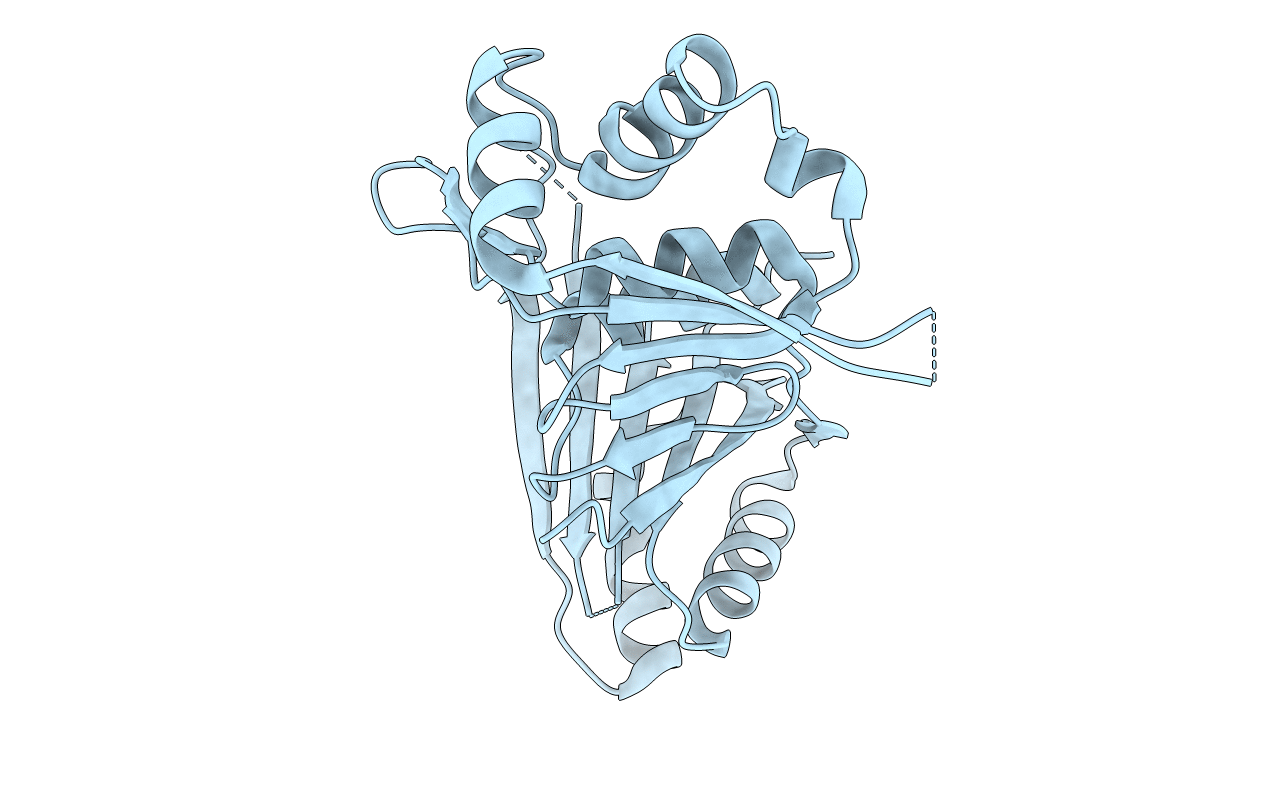
4IT3 image
Deposition Date 2013-01-17
Release Date 2013-10-16
Last Version Date 2024-10-30
Entry Detail
PDB ID:
4IT3
Keywords:
Title:
Crystal Structure of Iml3 from S. cerevisiae
Biological Source:
Source Organism:
Host Organism:
Method Details:
Experimental Method:
Resolution:
2.50 Å
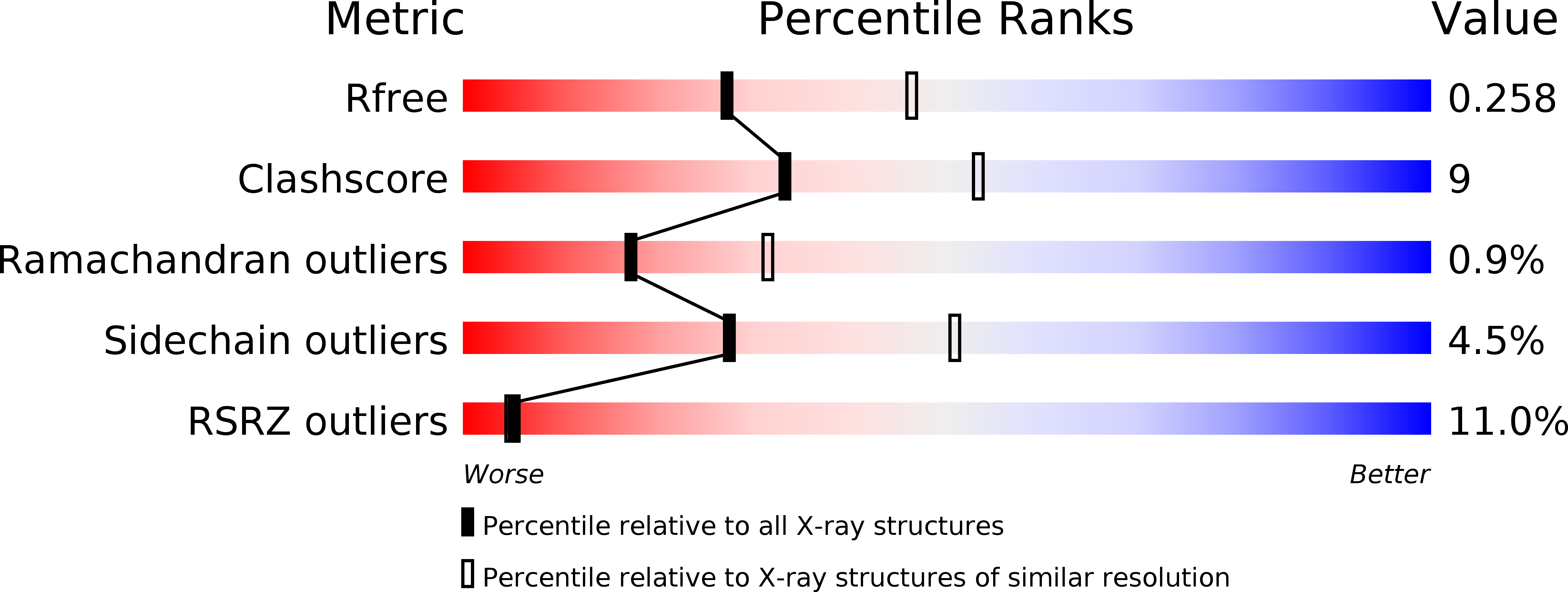
R-Value Free:
0.25
R-Value Work:
0.22
R-Value Observed:
0.22
Space Group:
P 63 2 2
Macromolecular Entities
Structures with similar UniProt ID
Protein Blast
Polymer Type:polypeptide(L)
Molecule:Central kinetochore subunit IML3
Gene (Uniprot):IML3
Chain IDs:A
Chain Length:248
Number of Molecules:1
Biological Source:Saccharomyces cerevisiae
Modified Residue
Compound ID Chain ID Parent Comp ID Details 2D Image
MSE A MET SELENOMETHIONINE
Primary Citation
An iml3-chl4 heterodimer links the core centromere to factors required for accurate chromosome segregation.
Cell Rep 5 29 36 (2013)
PMID: 24075991 DOI: 10.1016/j.celrep.2013.08.036

Abstact

Accurate segregation of genetic material in eukaryotes relies on the kinetochore, a multiprotein complex that connects centromeric DNA with microtubules. In yeast and humans, two proteins-Mif2/CENP-C and Chl4/CNEP-N-interact with specialized centromeric nucleosomes and establish distinct but cross-connecting axes of chromatin-microtubule linkage. Proteins recruited by Chl4/CENP-N include a subset that regulates chromosome transmission fidelity. We show that Chl4 and a conserved member of this subset, Iml3, both from Saccharomyces cerevisiae, form a stable protein complex that interacts with Mif2 and Sgo1. We have determined the structures of an Iml3 homodimer and an Iml3-Chl4 heterodimer, which suggest a mechanism for regulating the assembly of this functional axis of the kinetochore. We propose that at the core centromere, the Chl4-Iml3 complex participates in recruiting factors, such as Sgo1, that influence sister chromatid cohesion and encourage sister kinetochore biorientation.

Legend

Protein

Chemical

Disease

Primary Citation of related structures
Feedback Form
Name
Email
Institute
Feedback