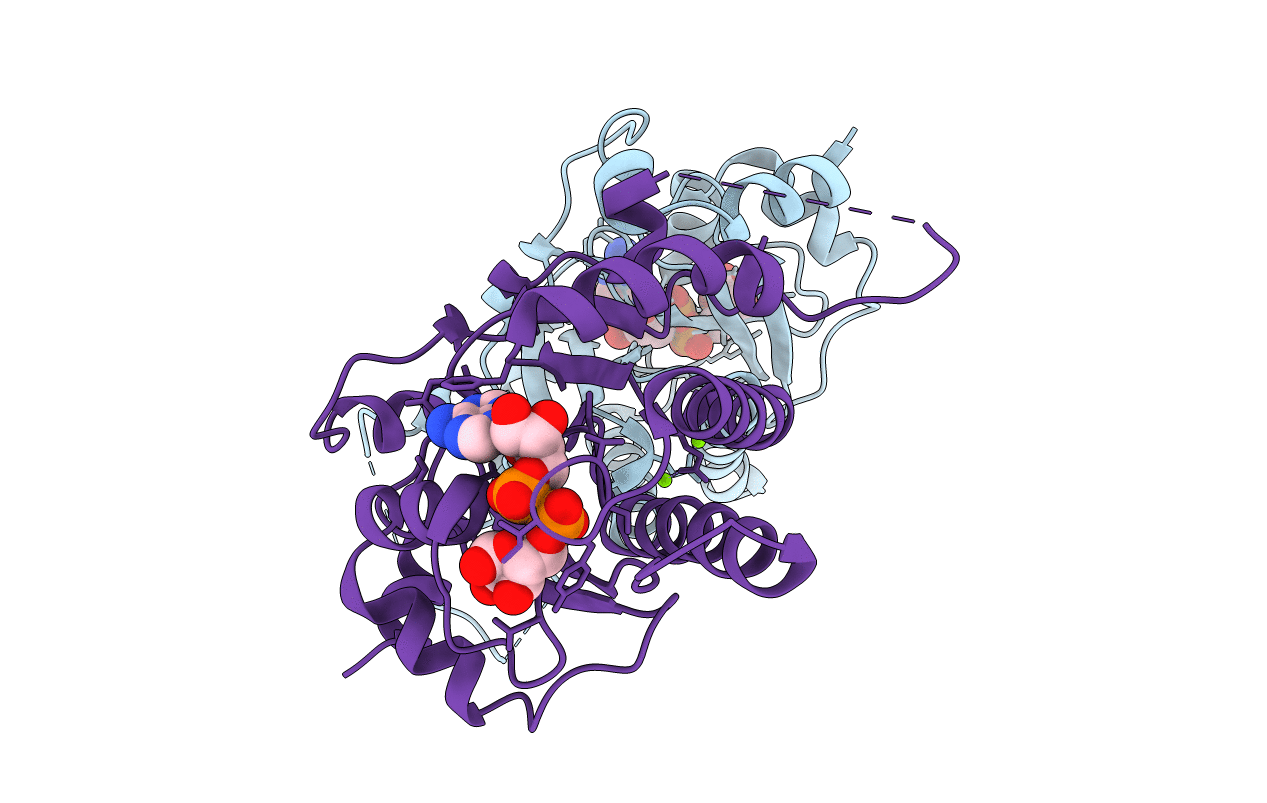
4IQY image
Deposition Date 2013-01-14
Release Date 2013-03-06
Last Version Date 2023-09-20
Entry Detail
PDB ID:
4IQY
Keywords:
Title:
Crystal structure of the human protein-proximal ADP-ribosyl-hydrolase MacroD2
Biological Source:
Source Organism:
Homo sapiens (Taxon ID: 9606)
Host Organism:
Method Details:
Experimental Method:
Resolution:
1.55 Å
R-Value Free:
0.18
R-Value Work:
0.15
R-Value Observed:
0.15
Space Group:
P 1
Macromolecular Entities
Structures with similar UniProt ID
Protein Blast
Polymer Type:polypeptide(L)
Molecule:O-acetyl-ADP-ribose deacetylase MACROD2
Gene (Uniprot):MACROD2
Chain IDs:A, B
Chain Length:240
Number of Molecules:2
Biological Source:Homo sapiens
Primary Citation
A family of macrodomain proteins reverses cellular mono-ADP-ribosylation.
Nat.Struct.Mol.Biol. 20 508 514 (2013)
PMID: 23474712 DOI: 10.1038/nsmb.2523

Abstact

ADP-ribosylation is a reversible post-translational modification with wide-ranging biological functions in all kingdoms of life. A variety of enzymes use NAD(+) to transfer either single or multiple ADP-ribose (ADPr) moieties onto distinct amino acid substrates, often in response to DNA damage or other stresses. Poly-ADPr-glycohydrolase readily reverses poly-ADP-ribosylation induced by the DNA-damage sensor PARP1 and other enzymes, but it does not remove the most proximal ADPr linked to the target amino acid. Searches for enzymes capable of fully reversing cellular mono-ADP-ribosylation back to the unmodified state have proved elusive, which leaves a gap in the understanding of this modification. Here, we identify a family of macrodomain enzymes present in viruses, yeast and animals that reverse cellular ADP-ribosylation by acting on mono-ADP-ribosylated substrates. Our discoveries establish the complete reversibility of PARP-catalyzed cellular ADP-ribosylation as a regulatory modification.

Legend

Protein

Chemical

Disease

Primary Citation of related structures
Feedback Form
Name
Email
Institute
Feedback