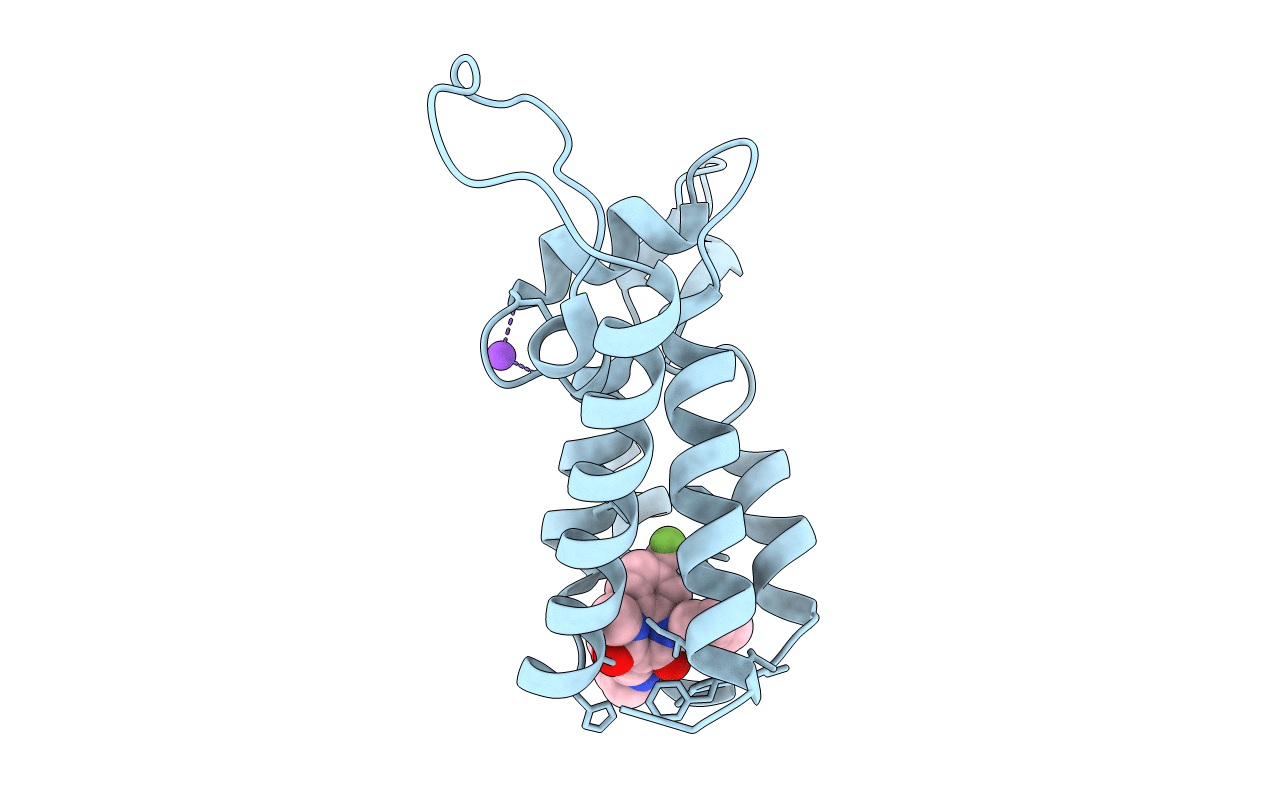
4INB image
Deposition Date 2013-01-04
Release Date 2013-02-27
Last Version Date 2024-02-28
Entry Detail
PDB ID:
4INB
Title:
Crystal Structure of the N-Terminal Domain of HIV-1 Capsid in Complex With benzodiazepine Inhibitor
Biological Source:
Source Organism:
Host Organism:
Method Details:
Experimental Method:
Resolution:
1.80 Å
R-Value Free:
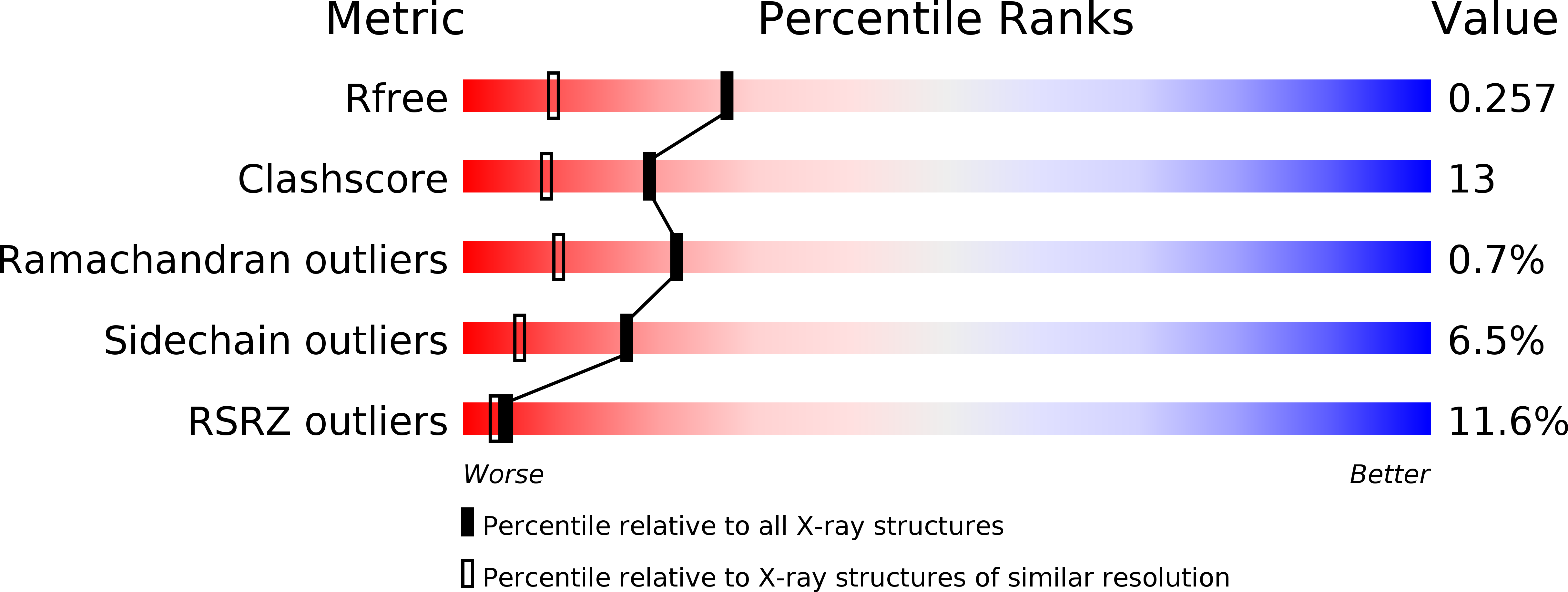
0.26
R-Value Work:
0.23
Space Group:
C 2 2 21
Macromolecular Entities
Structures with similar UniProt ID
Protein Blast
Polymer Type:polypeptide(L)
Molecule:Gag protein
Chain IDs:A
Chain Length:146
Number of Molecules:1
Biological Source:Human immunodeficiency virus 1
Primary Citation
Monitoring Binding of HIV-1 Capsid Assembly Inhibitors Using (19) F Ligand-and (15) N Protein-Based NMR and X-ray Crystallography: Early Hit Validation of a Benzodiazepine Series.
Chemmedchem 8 405 414 (2013)
PMID: 23401268 DOI: 10.1002/cmdc.201200580

Abstact

The emergence of resistance to existing classes of antiretroviral drugs underlines the need to find novel human immunodeficiency virus (HIV)-1 targets for drug discovery. The viral capsid protein (CA) represents one such potential target. Recently, a series of benzodiazepine inhibitors was identified via high-throughput screening using an in vitro capsid assembly assay (CAA). Here, we demonstrate how a combination of NMR and X-ray co-crystallography allowed for the rapid characterization of the early hits from this inhibitor series. Ligand-based (19)F NMR was used to confirm inhibitor binding specificity and reversibility as well as to identify the N-terminal domain of the capsid (CA(NTD)) as its molecular target. Protein-based NMR ((1)H and (15)N chemical shift perturbation analysis) identified key residues within the CA(NTD) involved in inhibitor binding, while X-ray co-crystallography confirmed the inhibitor binding site and its binding mode. Based on these results, two conformationally restricted cyclic inhibitors were designed to further validate the possible binding modes. These studies were crucial to early hit confirmation and subsequent lead optimization.

Legend

Protein

Chemical

Disease

Primary Citation of related structures
Feedback Form
Name
Email
Institute
Feedback