4IN9 image
Deposition Date 2013-01-04
Release Date 2013-05-15
Last Version Date 2023-09-20
Entry Detail
PDB ID:
4IN9
Keywords:
Title:
Structure of karilysin MMP-like catalytic domain in complex with inhibitory tetrapeptide SWFP
Biological Source:
Source Organism:
Host Organism:
Method Details:
Experimental Method:
Resolution:
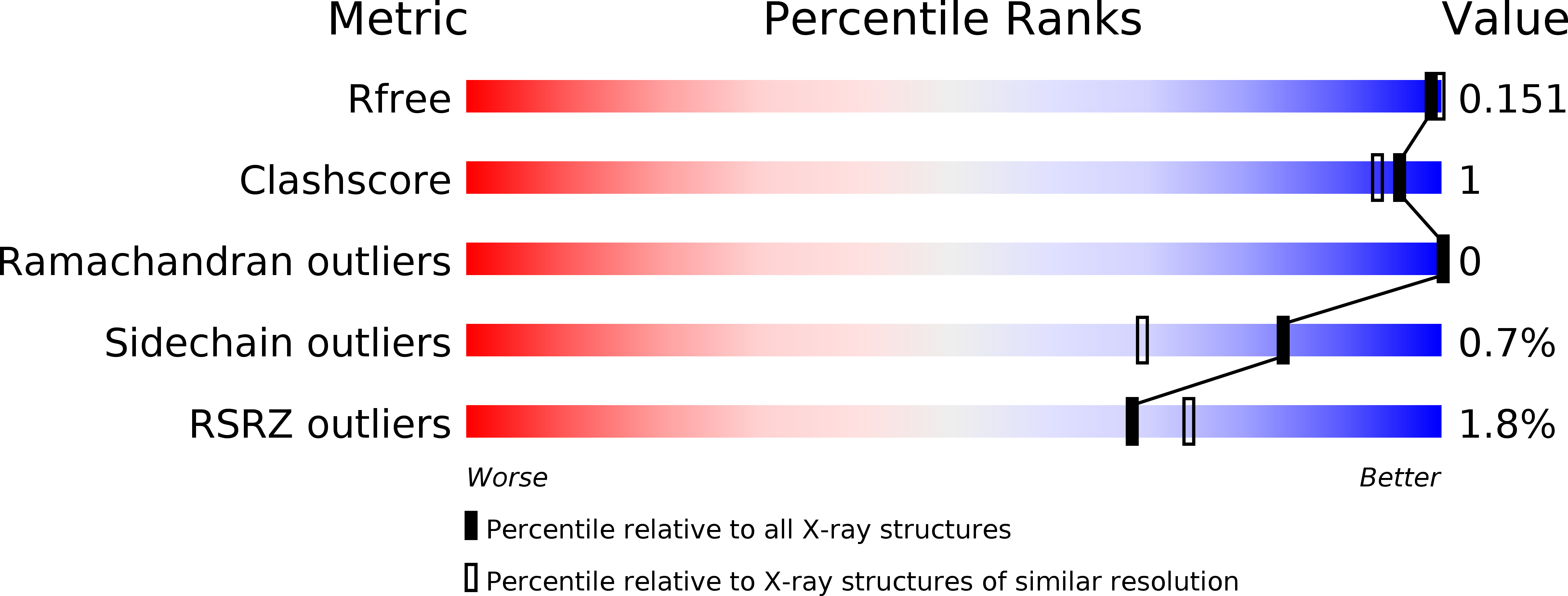
1.55 Å
R-Value Free:
0.17
R-Value Work:
0.14
R-Value Observed:
0.14
Space Group:
I 4
Macromolecular Entities
Structures with similar UniProt ID
Protein Blast
Polymer Type:polypeptide(L)
Molecule:Karilysin protease
Gene (Uniprot):kly
Chain IDs:A
Chain Length:166
Number of Molecules:1
Biological Source:Tannerella forsythia
Polymer Type:polypeptide(L)
Molecule:Peptide SER-TRP-PHE-PRO
Chain IDs:B
Chain Length:4
Number of Molecules:1
Biological Source:synthetic construct
Primary Citation
Structure of the catalytic domain of the Tannerella forsythia matrix metallopeptidase karilysin in complex with a tetrapeptidic inhibitor.
Acta Crystallogr.,Sect.F 69 472 476 (2013)
PMID: 23695557 DOI: 10.1107/S1744309113007392

Abstact

Karilysin is the only metallopeptidase identified as a virulence factor in the odontopathogen Tannerella forsythia owing to its deleterious effect on the host immune response during bacterial infection. The very close structural and sequence-based similarity of its catalytic domain (Kly18) to matrix metalloproteinases suggests that karilysin was acquired by horizontal gene transfer from an animal host. Previous studies by phage display identified peptides with the consensus sequence XWFPXXXGGG (single-letter amino-acid codes; X represents any residue) as karilysin inhibitors with low-micromolar binding affinities. Subsequent refinement revealed that inhibition comparable to that of longer peptides could be achieved using the tetrapeptide SWFP. To analyze its binding, the high-resolution crystal structure of the complex between Kly18 and SWFP was determined and it was found that the peptide binds to the primed side of the active-site cleft in a substrate-like manner. The catalytic zinc ion is clamped by the α-amino group and the carbonyl O atom of the serine, thus distantly mimicking the general manner of binding of hydroxamate inhibitors to metallopeptidases and contributing, together with three zinc-binding histidines from the protein scaffold, to an octahedral-minus-one metal-coordination sphere. The tryptophan side chain penetrates the deep partially water-filled specificity pocket of Kly18. Together with previous serendipitous product complexes of Kly18, the present results provide the structural determinants of inhibition of karilysin and open the field for the design of novel inhibitory strategies aimed at the treatment of human periodontal disease based on a peptidic hit molecule.

Legend

Protein

Chemical

Disease

Primary Citation of related structures
Feedback Form
Name
Email
Institute
Feedback