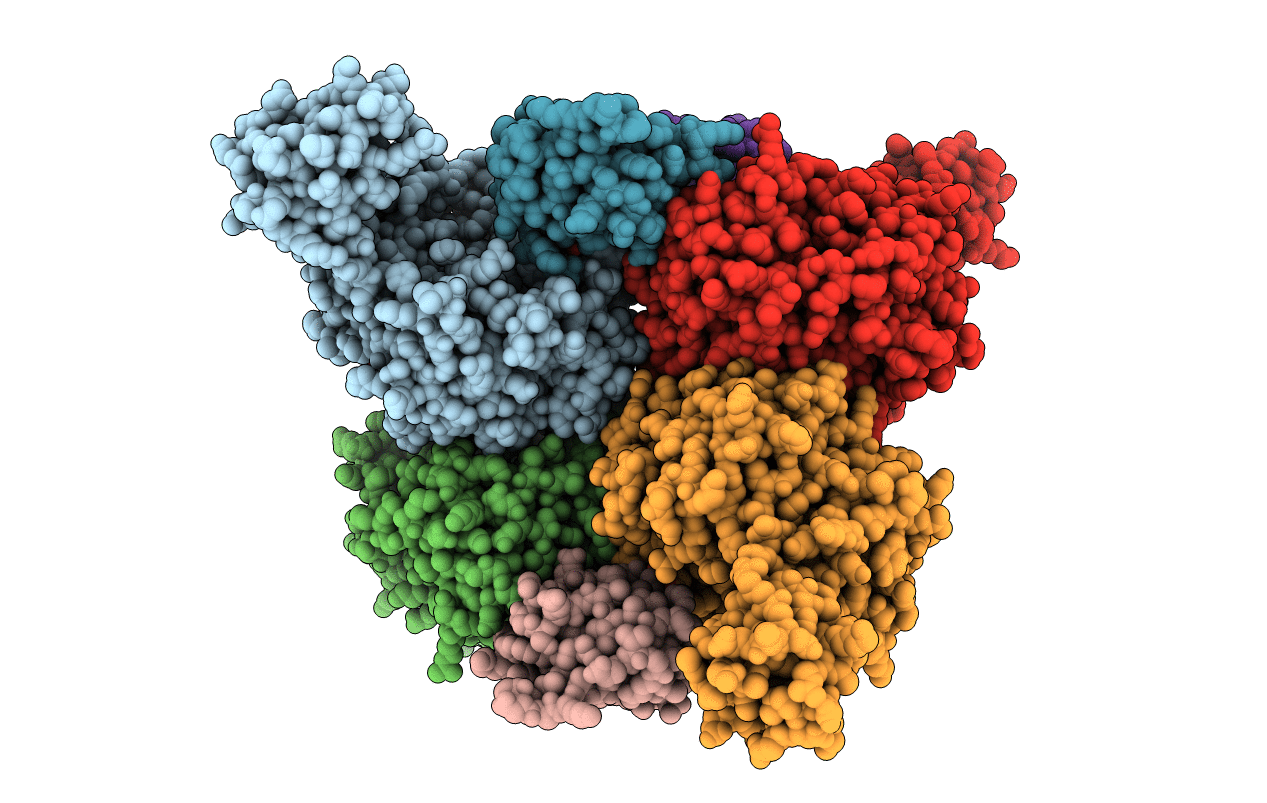
4HR7 image
Deposition Date 2012-10-26
Release Date 2013-03-13
Last Version Date 2023-09-20
Entry Detail
PDB ID:
4HR7
Title:
Crystal Structure of Biotin Carboxyl Carrier Protein-Biotin Carboxylase Complex from E.coli
Biological Source:
Source Organism:
Host Organism:
Method Details:
Experimental Method:
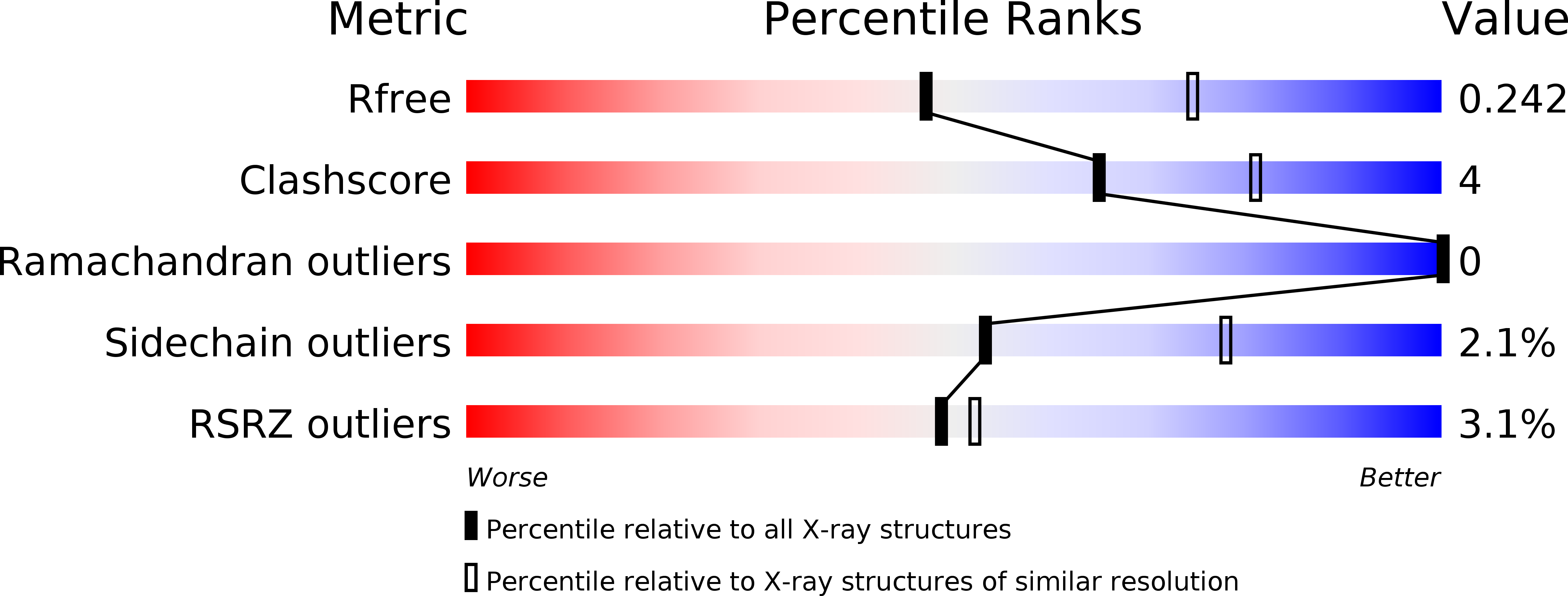
Resolution:
2.50 Å
R-Value Free:
0.22
R-Value Work:
0.19
R-Value Observed:
0.19
Space Group:
C 1 2 1
Macromolecular Entities
Structures with similar UniProt ID
Protein Blast
Polymer Type:polypeptide(L)
Molecule:Biotin carboxylase
Gene (Uniprot):accC
Chain IDs:A, C, E, F
Chain Length:449
Number of Molecules:4
Biological Source:Escherichia coli
Structures with similar UniProt ID
Protein Blast
Polymer Type:polypeptide(L)
Molecule:Biotin carboxyl carrier protein of acetyl-CoA carboxylase
Gene (Uniprot):accB
Chain IDs:B, D, G, H (auth: I)
Chain Length:176
Number of Molecules:4
Biological Source:Escherichia coli
Primary Citation
The three-dimensional structure of the biotin carboxylase-biotin carboxyl carrier protein complex of E. coli acetyl-CoA carboxylase.
Structure 21 650 657 (2013)
PMID: 23499019 DOI: 10.1016/j.str.2013.02.001

Abstact

Acetyl-coenzyme A (acetyl-CoA) carboxylase is a biotin-dependent, multifunctional enzyme that catalyzes the regulated step in fatty acid synthesis. The Escherichia coli enzyme is composed of a homodimeric biotin carboxylase (BC), biotinylated biotin carboxyl carrier protein (BCCP), and an α2β2 heterotetrameric carboxyltransferase. This enzyme complex catalyzes two half-reactions to form malonyl-coenzyme A. BC and BCCP participate in the first half-reaction, whereas carboxyltransferase and BCCP are involved in the second. Three-dimensional structures have been reported for the individual subunits; however, the structural basis for how BCCP reacts with the carboxylase or transferase is unknown. Therefore, we report here the crystal structure of E. coli BCCP complexed with BC to a resolution of 2.49 Å. The protein-protein complex shows a unique quaternary structure and two distinct interfaces for each BCCP monomer. These BCCP binding sites are unique compared to phylogenetically related biotin-dependent carboxylases and therefore provide novel targets for developing antibiotics against bacterial acetyl-CoA carboxylase.

Legend

Protein

Chemical

Disease

Primary Citation of related structures
Feedback Form
Name
Email
Institute
Feedback