4HLW image
Deposition Date 2012-10-17
Release Date 2013-01-23
Last Version Date 2024-02-28
Entry Detail
PDB ID:
4HLW
Keywords:
Title:
Targeting the Binding Function 3 (BF3) Site of the Human Androgen Receptor Through Virtual Screening. 2. Development of 2-((2-phenoxyethyl) thio)-1H-benzoimidazole derivatives.
Biological Source:
Source Organism:
Homo sapiens (Taxon ID: 9606)
Host Organism:
Method Details:
Experimental Method:
Resolution:
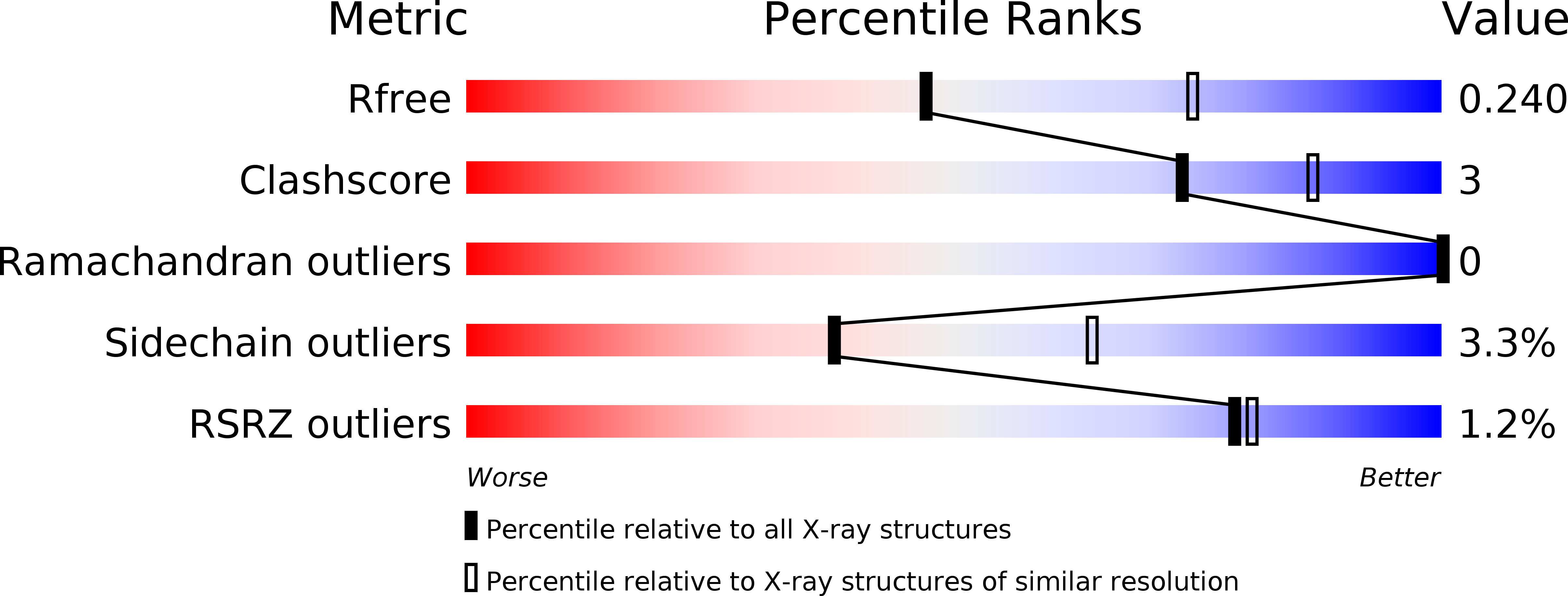
2.50 Å
R-Value Free:
0.23
R-Value Work:
0.17
R-Value Observed:
0.17
Space Group:
P 21 21 21
Macromolecular Entities
Structures with similar UniProt ID
Protein Blast
Polymer Type:polypeptide(L)
Molecule:Androgen receptor
Gene (Uniprot):AR
Chain IDs:A
Chain Length:256
Number of Molecules:1
Biological Source:Homo sapiens
Primary Citation
Targeting the Binding Function 3 (BF3) Site of the Androgen Receptor Through Virtual Screening. 2. Development of 2-((2-phenoxyethyl) thio)-1H-benzimidazole Derivatives.
J.Med.Chem. 56 1136 1148 (2013)
PMID: 23301637 DOI: 10.1021/jm3015712

Abstact

The human androgen receptor (AR) is a proven therapeutic target in prostate cancer. All current antiandrogens, such as Bicalutamide, Flutamide, Nilutamide, and Enzalutamide, target the buried hydrophobic androgen binding pocket of this protein. However, effective resistance mechanisms against these therapeutics exist such as mutations occurring at the target site. To overcome these limitations, the surface pocket of the AR called binding function 3 (BF3) was characterized as an alternative target for small molecule therapeutics. A number of AR inhibitors directly targeting the BF3 were previously identified by us (J. Med. Chem. 2011 . 54 , 8563). In the current study, based on the prior results, we have developed structure-activity relationships that allowed designing a series of 2-((2-phenoxyethyl)thio)-1H-benzimidazole and 2-((2-phenoxyethyl)thio)-1H-indole as lead BF3 inhibitors. Some of the developed BF3 ligands demonstrated significant antiandrogen potency against LNCaP and Enzalutamide-resistant prostate cancer cell lines.

Legend

Protein

Chemical

Disease

Primary Citation of related structures
Feedback Form
Name
Email
Institute
Feedback