4H88 image
Deposition Date 2012-09-21
Release Date 2013-07-31
Last Version Date 2024-11-27
Entry Detail
PDB ID:
4H88
Keywords:
Title:
Structure of POM1 FAB fragment complexed with mouse PrPc Fragment 120-230
Biological Source:
Source Organism:
Mus musculus (Taxon ID: 10090)
Host Organism:
Method Details:
Experimental Method:
Resolution:
1.90 Å
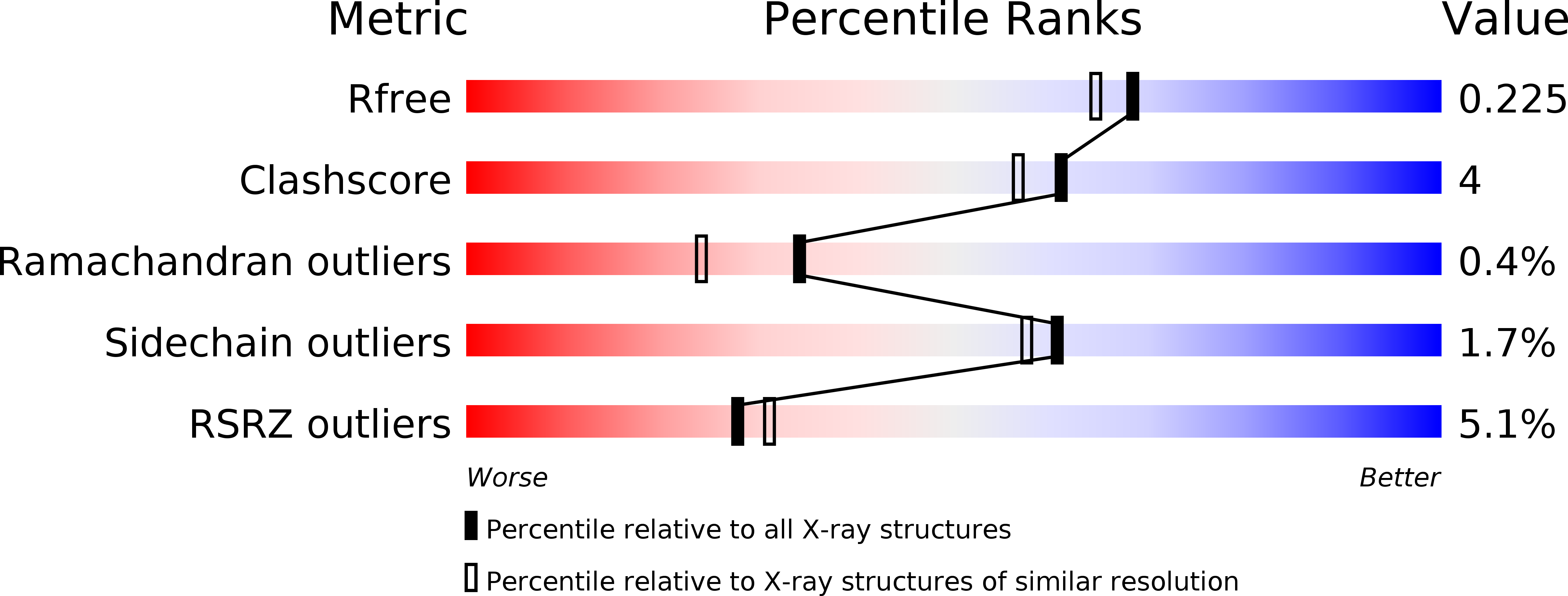
R-Value Free:
0.23
R-Value Work:
0.19
R-Value Observed:
0.20
Space Group:
C 1 2 1
Macromolecular Entities
Structures with similar UniProt ID
Protein Blast
Polymer Type:polypeptide(L)
Molecule:Major prion protein
Gene (Uniprot):Prnp
Chain IDs:A
Chain Length:111
Number of Molecules:1
Biological Source:Mus musculus
Polymer Type:polypeptide(L)
Molecule:POM1 FAB CHAIN H
Chain IDs:B (auth: H)
Chain Length:218
Number of Molecules:1
Biological Source:Mus musculus
Polymer Type:polypeptide(L)
Molecule:POM1 FAB CHAIN L
Chain IDs:C (auth: L)
Chain Length:213
Number of Molecules:1
Biological Source:Mus musculus
Ligand Molecules
Primary Citation
The toxicity of antiprion antibodies is mediated by the flexible tail of the prion protein.
Nature 501 102 106 (2013)
PMID: 23903654 DOI: 10.1038/nature12402

Abstact

Prion infections cause lethal neurodegeneration. This process requires the cellular prion protein (PrP(C); ref. 1), which contains a globular domain hinged to a long amino-proximal flexible tail. Here we describe rapid neurotoxicity in mice and cerebellar organotypic cultured slices exposed to ligands targeting the α1 and α3 helices of the PrP(C) globular domain. Ligands included seven distinct monoclonal antibodies, monovalent Fab1 fragments and recombinant single-chain variable fragment miniantibodies. Similar to prion infections, the toxicity of globular domain ligands required neuronal PrP(C), was exacerbated by PrP(C) overexpression, was associated with calpain activation and was antagonized by calpain inhibitors. Neurodegeneration was accompanied by a burst of reactive oxygen species, and was suppressed by antioxidants. Furthermore, genetic ablation of the superoxide-producing enzyme NOX2 (also known as CYBB) protected mice from globular domain ligand toxicity. We also found that neurotoxicity was prevented by deletions of the octapeptide repeats within the flexible tail. These deletions did not appreciably compromise globular domain antibody binding, suggesting that the flexible tail is required to transmit toxic signals that originate from the globular domain and trigger oxidative stress and calpain activation. Supporting this view, various octapeptide ligands were not only innocuous to both cerebellar organotypic cultured slices and mice, but also prevented the toxicity of globular domain ligands while not interfering with their binding. We conclude that PrP(C) consists of two functionally distinct modules, with the globular domain and the flexible tail exerting regulatory and executive functions, respectively. Octapeptide ligands also prolonged the life of mice expressing the toxic PrP(C) mutant, PrP(Δ94-134), indicating that the flexible tail mediates toxicity in two distinct PrP(C)-related conditions. Flexible tail-mediated toxicity may conceivably play a role in further prion pathologies, such as familial Creutzfeldt-Jakob disease in humans bearing supernumerary octapeptides.

Legend

Protein

Chemical

Disease

Primary Citation of related structures
Feedback Form
Name
Email
Institute
Feedback