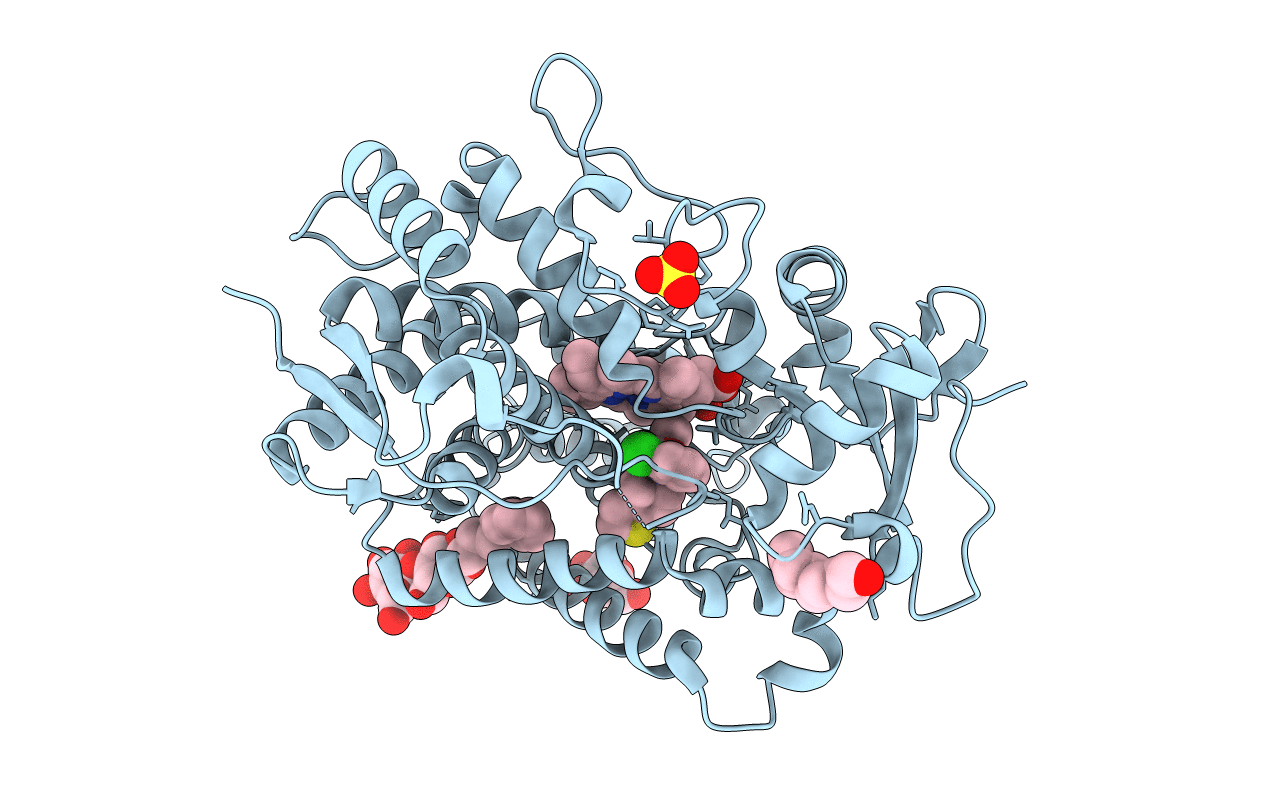
4H1N image
Deposition Date 2012-09-10
Release Date 2013-01-16
Last Version Date 2023-09-13
Entry Detail
PDB ID:
4H1N
Keywords:
Title:
Crystal Structure of P450 2B4 F297A Mutant in Complex with Anti-platelet Drug Clopidogrel
Biological Source:
Source Organism:
Host Organism:
Method Details:
Experimental Method:
Resolution:
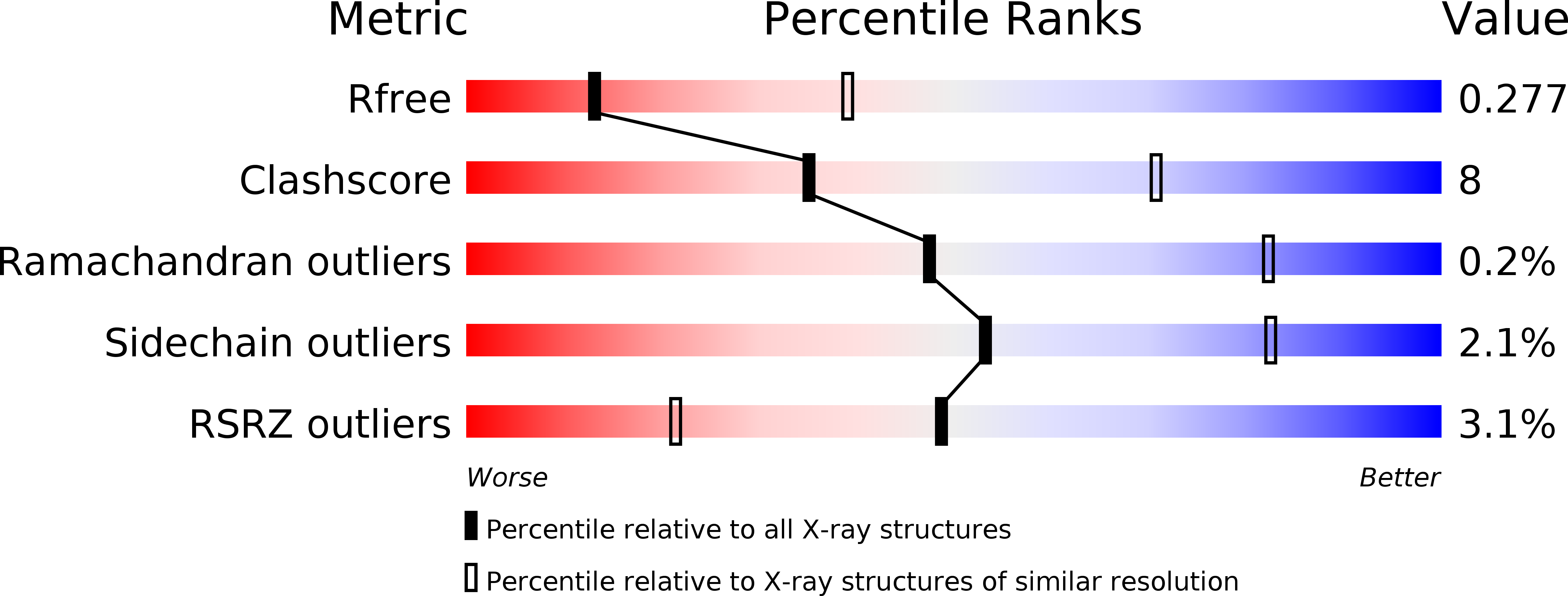
2.99 Å
R-Value Free:
0.28
R-Value Work:
0.23
R-Value Observed:
0.23
Space Group:
P 31 2 1
Macromolecular Entities
Structures with similar UniProt ID
Protein Blast
Polymer Type:polypeptide(L)
Molecule:Cytochrome P450 2B4
Gene (Uniprot):CYP2B4
Mutagens:H226Y, F297A
Chain IDs:A
Chain Length:479
Number of Molecules:1
Biological Source:Oryctolagus cuniculus
Primary Citation
X-ray crystal structure of the cytochrome P450 2B4 active site mutant F297A in complex with clopidogrel: Insights into compensatory rearrangements of the binding pocket.
Arch.Biochem.Biophys. 530 64 72 (2013)
PMID: 23296089 DOI: 10.1016/j.abb.2012.12.016

Abstact

Prior X-ray crystal structures of cytochrome P450 2B4 revealed the pivotal role of rearrangement of the side chains of residues F206 and F297 in the active site in accommodating various inhibitors or substrates. To explore the role of these residues, 2B4 F206A and F297A were created by site-directed mutagenesis and characterized functionally. The structure of F297A with clopidogrel demonstrated the reorientation of the ligand such that the methyl ester group is oriented toward the heme, whereas the thiophene moiety now extends to the additional void in the F297A mutant. Most interestingly, movement of the I helix and several amino acid side chains within the active site was observed in apparent response to the altered binding orientation. Results of flexible docking using the 2B4 wild type or the F297A-virtual mutant positioned either the thiophene or chlorophenyl group closer to heme. However, docking of clopidogrel using the real F297A mutant or a virtual mutant with the I-helix re-positioned oriented clopidogrel preferentially with either the methyl ester or the chlorophenyl group closest to heme. The study provides insight into how the altered active site adapts to accommodate and interact with the substrate in a distinct orientation while maintaining the overall closed protein conformation.

Legend

Protein

Chemical

Disease

Primary Citation of related structures
Feedback Form
Name
Email
Institute
Feedback