4GZN image
Deposition Date 2012-09-06
Release Date 2012-10-17
Last Version Date 2024-02-28
Entry Detail
PDB ID:
4GZN
Title:
Mouse ZFP57 zinc fingers in complex with methylated DNA
Biological Source:
Source Organism:
Mus musculus (Taxon ID: 10090)
Host Organism:
Method Details:
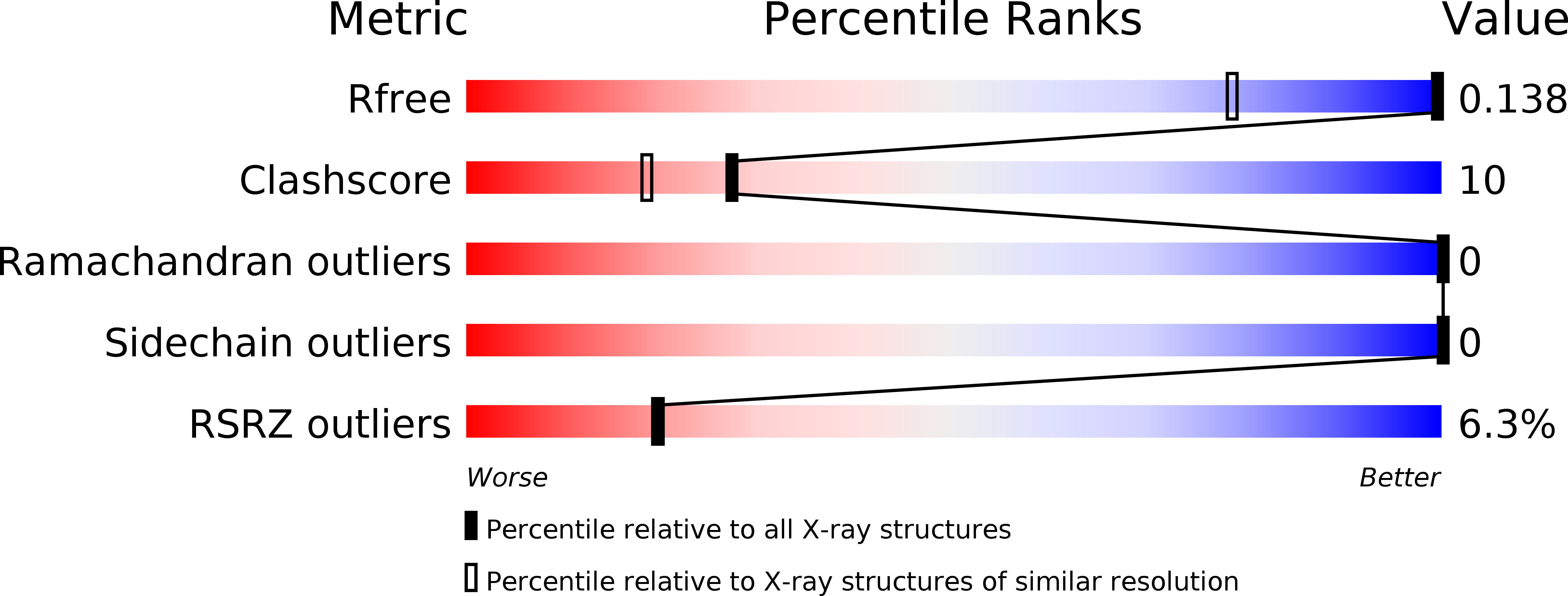
Experimental Method:
Resolution:
0.99 Å
R-Value Free:
0.13
R-Value Work:
0.13
R-Value Observed:
0.13
Space Group:
C 2 2 21
Macromolecular Entities
Polymer Type:polydeoxyribonucleotide
Molecule:DNA (5'-D(*TP*AP*TP*TP*GP*CP*(5CM)P*GP*CP*AP*G)-3')
Chain IDs:A
Chain Length:11
Number of Molecules:1
Biological Source:
Polymer Type:polydeoxyribonucleotide
Molecule:DNA (5'-D(*AP*CP*TP*GP*(5CM)P*GP*GP*CP*AP*AP*T)-3')
Chain IDs:B
Chain Length:11
Number of Molecules:1
Biological Source:
Structures with similar UniProt ID
Protein Blast
Polymer Type:polypeptide(L)
Molecule:Zinc finger protein 57
Gene (Uniprot):Zfp57
Chain IDs:C
Chain Length:60
Number of Molecules:1
Biological Source:Mus musculus
Modified Residue
Compound ID Chain ID Parent Comp ID Details 2D Image
5CM A DC ?
Primary Citation
An atomic model of Zfp57 recognition of CpG methylation within a specific DNA sequence.
Genes Dev. 26 2374 2379 (2012)
PMID: 23059534 DOI: 10.1101/gad.202200.112

Abstact

Zinc finger transcription factor Zfp57 recognizes the methylated CpG within the TGCCGC element. We determined the structure of the DNA-binding domain of Zfp57, consisting of two adjacent zinc fingers, in complex with fully methylated DNA at 1.0 Å resolution. The first zinc finger contacts the 5' half (TGC), and the second recognizes the 3' half (CGC) of the recognition sequence. Zfp57 recognizes the two 5-methylcytosines (5mCs) asymmetrically: One involves hydrophobic interactions with Arg178, which also interacts with the neighboring 3' guanine and forms a 5mC-Arg-G interaction, while the other involves a layer of ordered water molecules. Two point mutations in patients with transient neonatal diabetes abolish DNA-binding activity. Zfp57 has reduced binding affinity for unmodified DNA and the oxidative products of 5mC.

Legend

Protein

Chemical

Disease

Primary Citation of related structures
Feedback Form
Name
Email
Institute
Feedback