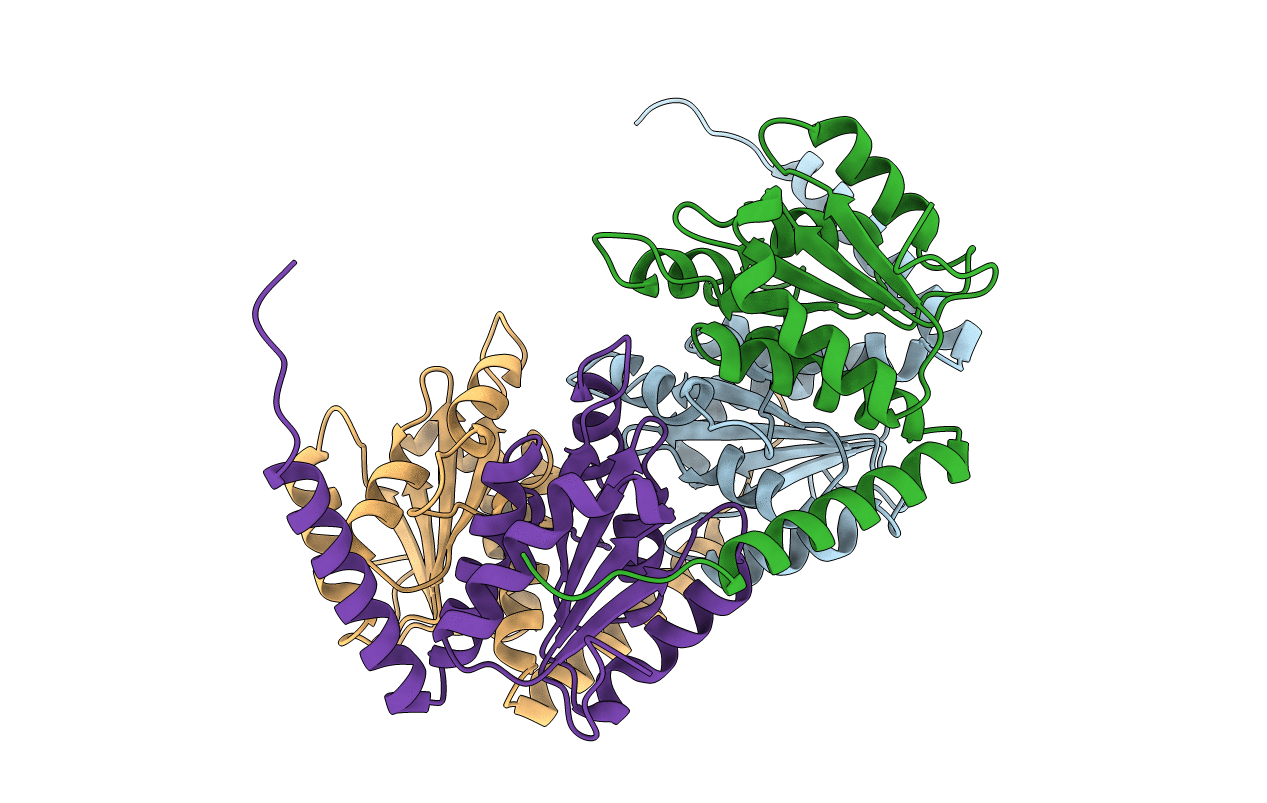
4GRD image
Deposition Date 2012-08-24
Release Date 2012-09-12
Last Version Date 2024-05-29
Entry Detail
PDB ID:
4GRD
Keywords:
Title:
Crystal structure of Phosphoribosylaminoimidazole carboxylase catalytic subunit from Burkholderia cenocepacia J2315
Biological Source:
Source Organism:
Host Organism:
Method Details:
Experimental Method:
Resolution:
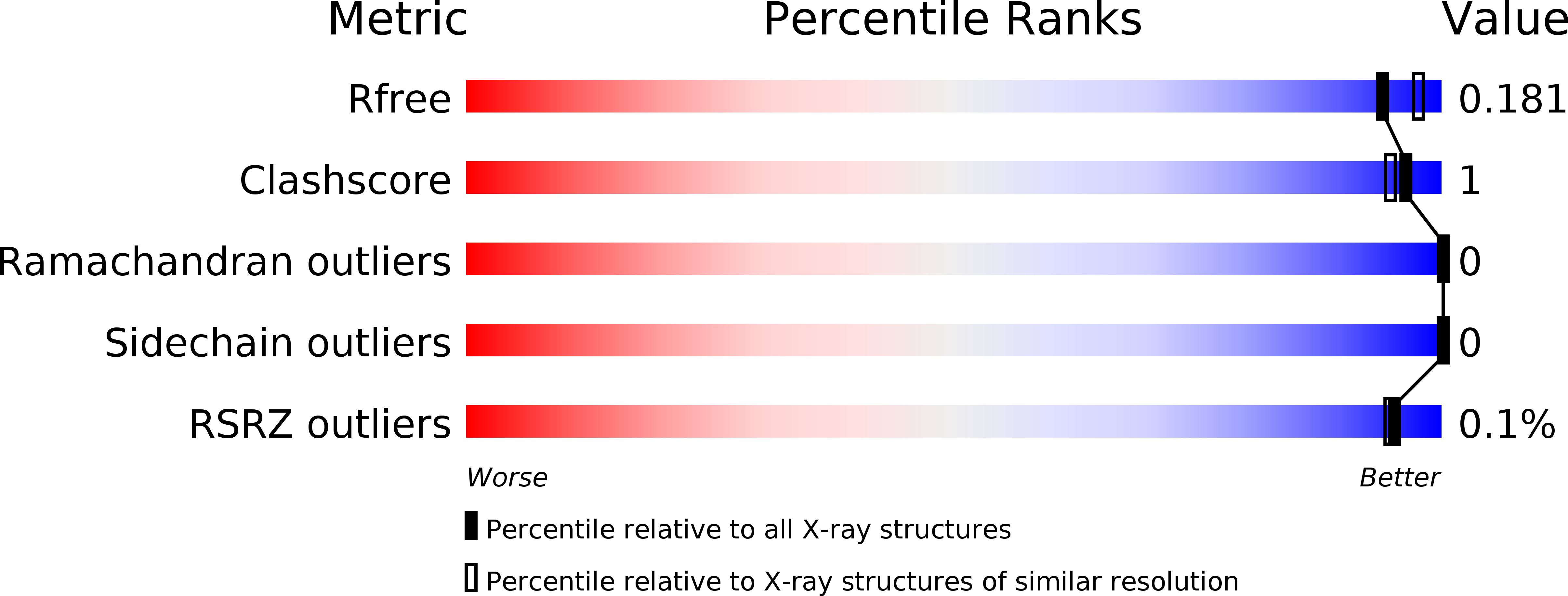
1.85 Å
R-Value Free:
0.17
R-Value Work:
0.14
R-Value Observed:
0.14
Space Group:
I 2 2 2
Macromolecular Entities
Structures with similar UniProt ID
Protein Blast
Polymer Type:polypeptide(L)
Molecule:Phosphoribosylaminoimidazole carboxylase catalytic subunit
Gene (Uniprot):purE
Chain IDs:A, B, C, D
Chain Length:173
Number of Molecules:4
Biological Source:Burkholderia cenocepacia
Primary Citation
Structure-Guided Discovery of N 5 -CAIR Mutase Inhibitors.
Biochemistry 62 2587 2596 (2023)
PMID: 37552766 DOI: 10.1021/acs.biochem.2c00705

Abstact

Because purine nucleotides are essential for all life, differences between how microbes and humans metabolize purines can be exploited for the development of antimicrobial therapies. While humans biosynthesize purine nucleotides in a 10-step pathway, most microbes utilize an additional 11th enzymatic activity. The human enzyme, aminoimidazole ribonucleotide (AIR) carboxylase generates the product 4-carboxy-5-aminoimidazole ribonucleotide (CAIR) directly. Most microbes, however, require two separate enzymes, a synthetase (PurK) and a mutase (PurE), and proceed through the intermediate, N5-CAIR. Toward the development of therapeutics that target these differences, we have solved crystal structures of the N5-CAIR mutase of the human pathogens Legionella pneumophila (LpPurE) and Burkholderia cenocepacia (BcPurE) and used a structure-guided approach to identify inhibitors. Analysis of the structures reveals a highly conserved fold and active site architecture. Using this data, and three additional structures of PurE enzymes, we screened a library of FDA-approved compounds in silico and identified a set of 25 candidates for further analysis. Among these, we identified several new PurE inhibitors with micromolar IC50 values. Several of these compounds, including the α1-blocker Alfuzosin, inhibit the microbial PurE enzymes much more effectively than the human homologue. These structures and the newly described PurE inhibitors are valuable tools to aid in further studies of this enzyme and provide a foundation for the development of compounds that target differences between human and microbial purine metabolism.

Legend

Protein

Chemical

Disease

Primary Citation of related structures
Feedback Form
Name
Email
Institute
Feedback