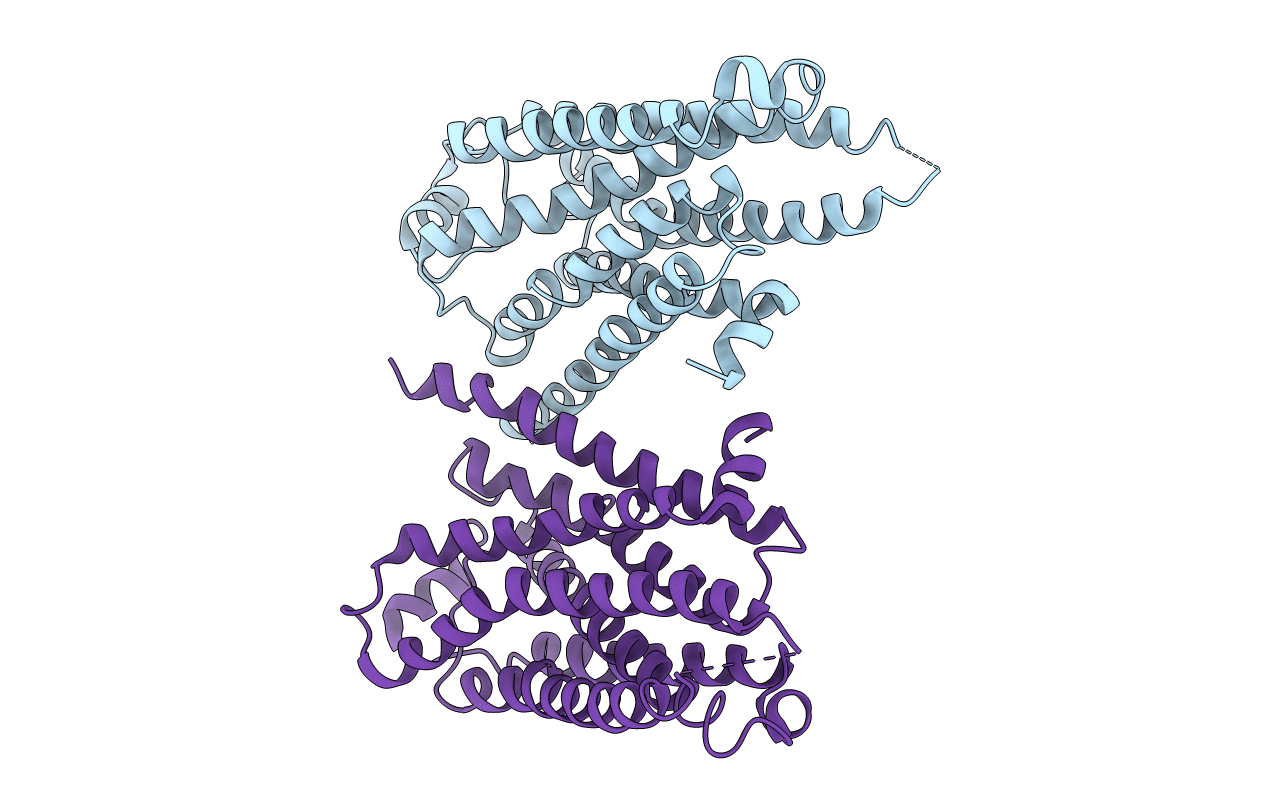
4GPO image
Deposition Date 2012-08-21
Release Date 2013-02-27
Last Version Date 2024-11-20
Entry Detail
PDB ID:
4GPO
Keywords:
Title:
Oligomeic Turkey Beta1-Adrenergic G Protein-Coupled Receptor
Biological Source:
Source Organism(s):
Expression System(s):
Method Details:
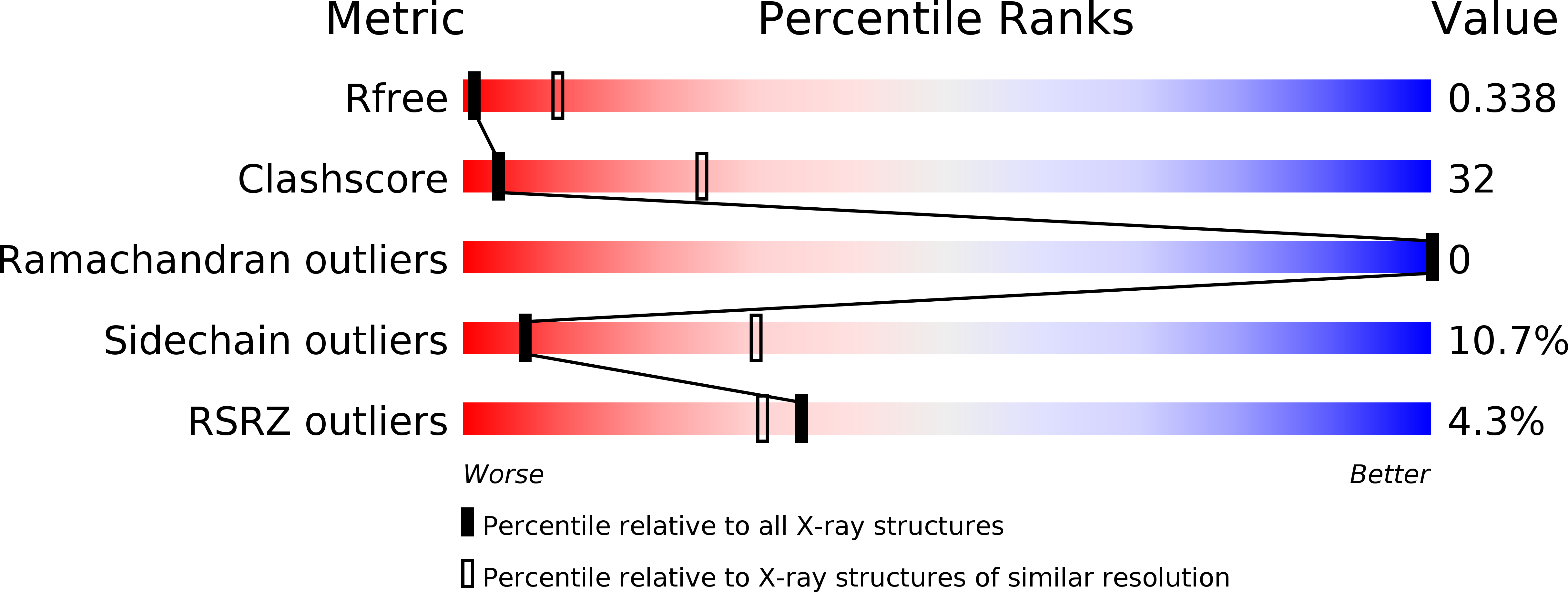
Experimental Method:
Resolution:
3.50 Å
R-Value Free:
0.35
R-Value Work:
0.30
R-Value Observed:
0.31
Space Group:
C 1 2 1
Macromolecular Entities
Structures with similar UniProt ID
Protein Blast
Polymer Type:polypeptide(L)
Molecule:Beta-1 adrenergic receptor
Gene (Uniprot):ADRB1
Mutagens:STABILISING MUTATIONS
Chain IDs:A, B
Chain Length:313
Number of Molecules:2
Biological Source:Meleagris gallopavo
Ligand Molecules
Primary Citation
Crystal structure of oligomeric beta-1-adrenergic G protein-coupled receptors in ligand-free basal state.
Nat.Struct.Mol.Biol. 20 419 425 (2013)
PMID: 23435379 DOI: 10.1038/nsmb.2504

Abstact

G protein-coupled receptors (GPCRs) mediate transmembrane signaling. Before ligand binding, GPCRs exist in a basal state. Crystal structures of several GPCRs bound with antagonists or agonists have been solved. However, the crystal structure of the ligand-free basal state of a GPCR, the starting point of GPCR activation and function, had not yet been determined. Here we report the X-ray crystal structure of the ligand-free basal state of a GPCR in a lipid membrane-like environment. Oligomeric turkey β1-adrenergic receptors display two dimer interfaces. One interface involves the transmembrane domain (TM) 1, TM2, the C-terminal H8 and extracellular loop 1. The other interface engages residues from TM4, TM5, intracellular loop 2 and extracellular loop 2. Structural comparisons show that this ligand-free state is in an inactive conformation. This provides the structural basis of GPCR dimerization and oligomerization.

Legend

Protein

Chemical

Disease

Primary Citation of related structures
Feedback Form
Name
Email
Institute
Feedback