4GL2 image
Deposition Date 2012-08-13
Release Date 2013-01-09
Last Version Date 2024-10-30
Entry Detail
PDB ID:
4GL2
Title:
Structural Basis for dsRNA duplex backbone recognition by MDA5
Biological Source:
Source Organism:
Homo sapiens (Taxon ID: 9606)
Host Organism:
Method Details:
Experimental Method:
Resolution:
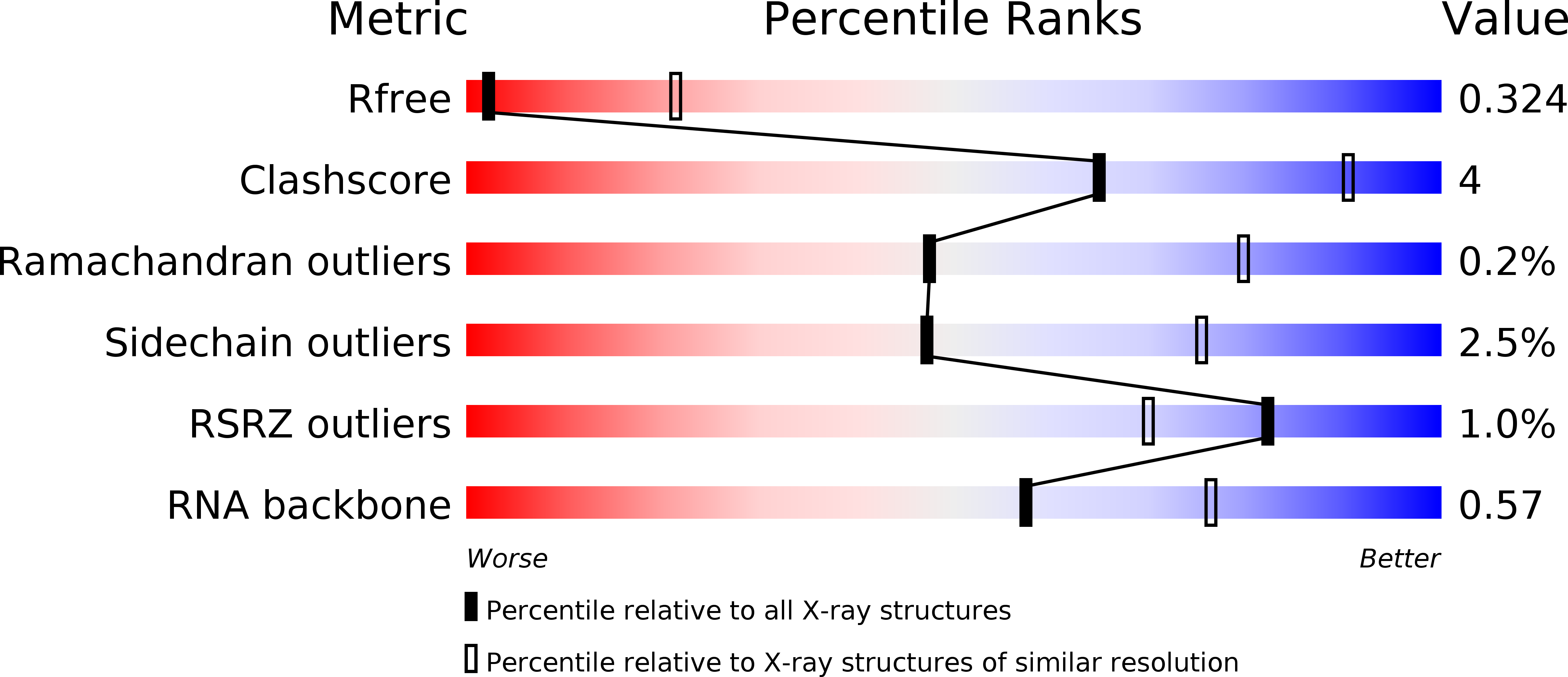
3.56 Å
R-Value Free:
0.32
R-Value Work:
0.27
R-Value Observed:
0.27
Space Group:
P 21 21 21
Macromolecular Entities
Structures with similar UniProt ID
Protein Blast
Polymer Type:polypeptide(L)
Molecule:Interferon-induced helicase C domain-containing protein 1
Gene (Uniprot):IFIH1
Chain IDs:A, B
Chain Length:699
Number of Molecules:2
Biological Source:Homo sapiens
Primary Citation
Structural Basis for dsRNA Recognition, Filament Formation, and Antiviral Signal Activation by MDA5.
Cell(Cambridge,Mass.) 152 276 289 (2013)
PMID: 23273991 DOI: 10.1016/j.cell.2012.11.048

Abstact

MDA5, a viral double-stranded RNA (dsRNA) receptor, shares sequence similarity and signaling pathways with RIG-I yet plays essential functions in antiviral immunity through distinct specificity for viral RNA. Revealing the molecular basis for the functional divergence, we report here the crystal structure of MDA5 bound to dsRNA, which shows how, using the same domain architecture, MDA5 recognizes the internal duplex structure, whereas RIG-I recognizes the terminus of dsRNA. We further show that MDA5 uses direct protein-protein contacts to stack along dsRNA in a head-to-tail arrangement, and that the signaling domain (tandem CARD), which decorates the outside of the core MDA5 filament, also has an intrinsic propensity to oligomerize into an elongated structure that activates the signaling adaptor, MAVS. These data support a model in which MDA5 uses long dsRNA as a signaling platform to cooperatively assemble the core filament, which in turn promotes stochastic assembly of the tandem CARD oligomers for signaling.

Legend

Protein

Chemical

Disease

Primary Citation of related structures
Feedback Form
Name
Email
Institute
Feedback