4GAO image
Deposition Date 2012-07-25
Release Date 2012-11-28
Last Version Date 2025-03-26
Entry Detail
PDB ID:
4GAO
Keywords:
Title:
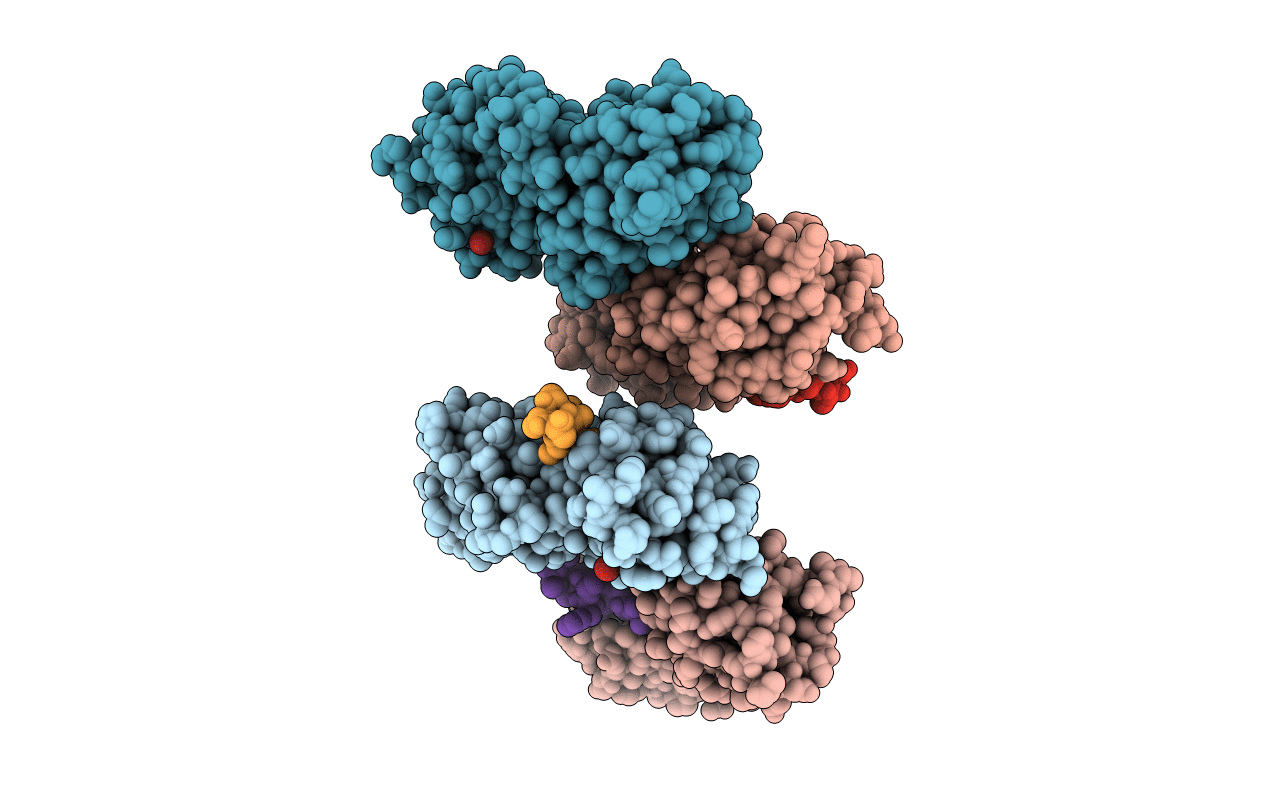
DCNL complex with N-terminally acetylated NEDD8 E2 peptide
Biological Source:
Source Organism:
Homo sapiens (Taxon ID: 9606)
Host Organism:
Method Details:
Experimental Method:
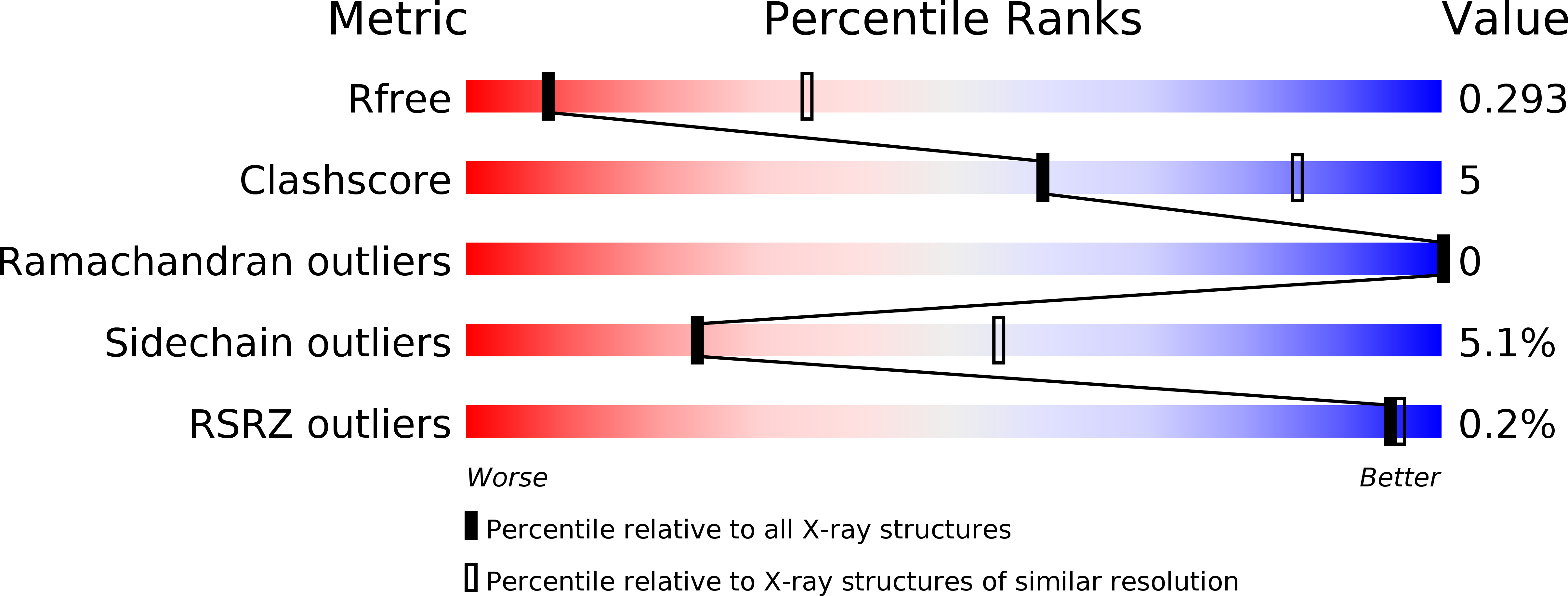
Resolution:
3.28 Å
R-Value Free:
0.29
R-Value Work:
0.25
R-Value Observed:
0.25
Space Group:
P 1 21 1
Macromolecular Entities
Structures with similar UniProt ID
Protein Blast
Polymer Type:polypeptide(L)
Molecule:DCN1-like protein 2
Gene (Uniprot):DCUN1D2
Chain IDs:A, B, D, G
Chain Length:200
Number of Molecules:4
Biological Source:Homo sapiens
Structures with similar UniProt ID
Protein Blast
Polymer Type:polypeptide(L)
Molecule:NEDD8-conjugating enzyme Ubc12
Gene (Uniprot):UBE2M
Chain IDs:C, E, F, H
Chain Length:12
Number of Molecules:4
Biological Source:Homo sapiens
Ligand Molecules
Primary Citation
Structural Conservation of Distinctive N-terminal Acetylation-Dependent Interactions across a Family of Mammalian NEDD8 Ligation Enzymes.
Structure 21 42 53 (2013)
PMID: 23201271 DOI: 10.1016/j.str.2012.10.013

Abstact

Little is known about molecular recognition of acetylated N termini, despite prevalence of this modification among eukaryotic cytosolic proteins. We report that the family of human DCN-like (DCNL) co-E3s, which promote ligation of the ubiquitin-like protein NEDD8 to cullin targets, recognizes acetylated N termini of the E2 enzymes UBC12 and UBE2F. Systematic biochemical and biophysical analyses reveal 40- and 10-fold variations in affinities among different DCNL-cullin and DCNL-E2 complexes, contributing to varying efficiencies of different NEDD8 ligation cascades. Structures of DCNL2 and DCNL3 complexes with N-terminally acetylated peptides from UBC12 and UBE2F illuminate a common mechanism by which DCNL proteins recognize N-terminally acetylated E2s and how selectivity for interactions dependent on N-acetyl-methionine are established through side chains recognizing distal residues. Distinct preferences of UBC12 and UBE2F peptides for inhibiting different DCNLs, including the oncogenic DCNL1 protein, suggest it may be possible to develop small molecules blocking specific N-acetyl-methionine-dependent protein interactions.

Legend

Protein

Chemical

Disease

Primary Citation of related structures
Feedback Form
Name
Email
Institute
Feedback