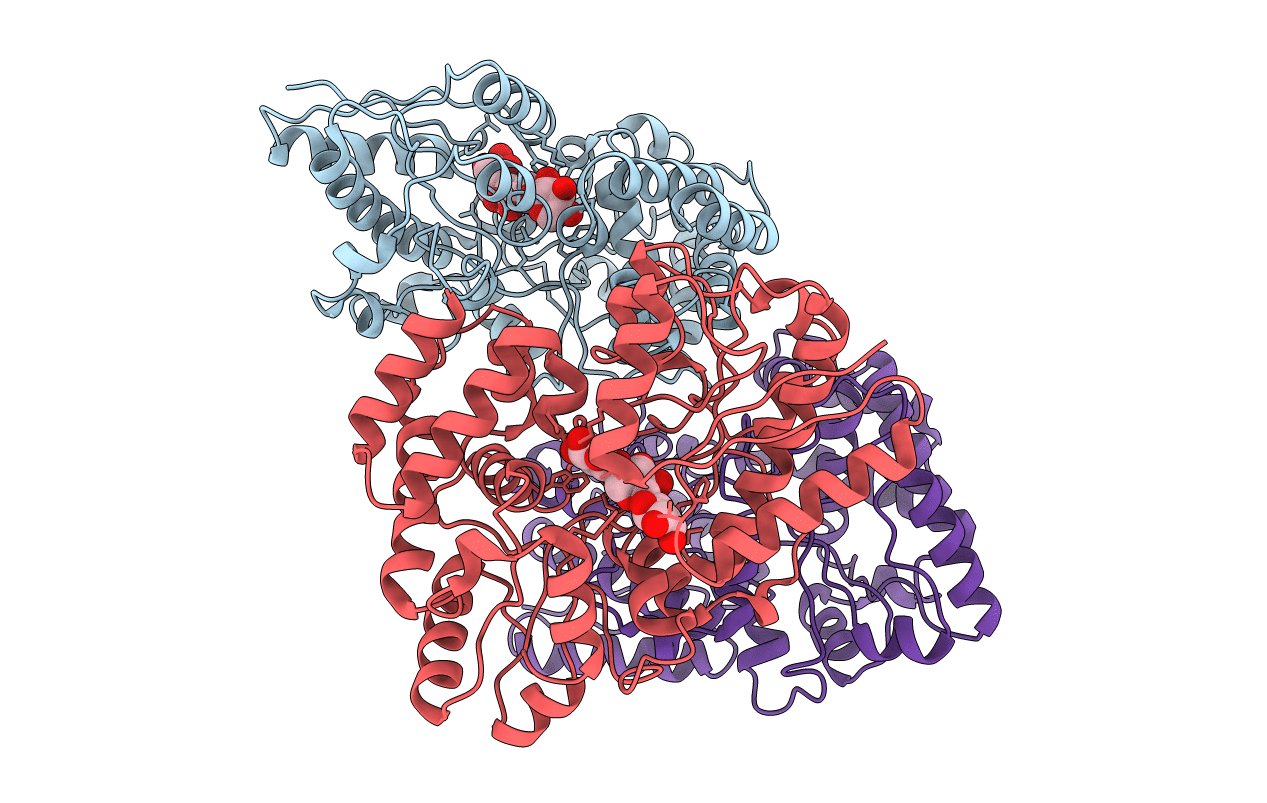
4G68 image
Deposition Date 2012-07-18
Release Date 2012-08-22
Last Version Date 2024-11-27
Entry Detail
PDB ID:
4G68
Title:
Biochemical and structural insights into xylan utilization by the thermophilic bacteriumcaldanaerobius polysaccharolyticus
Biological Source:
Source Organism:
Host Organism:
Method Details:
Experimental Method:
Resolution:
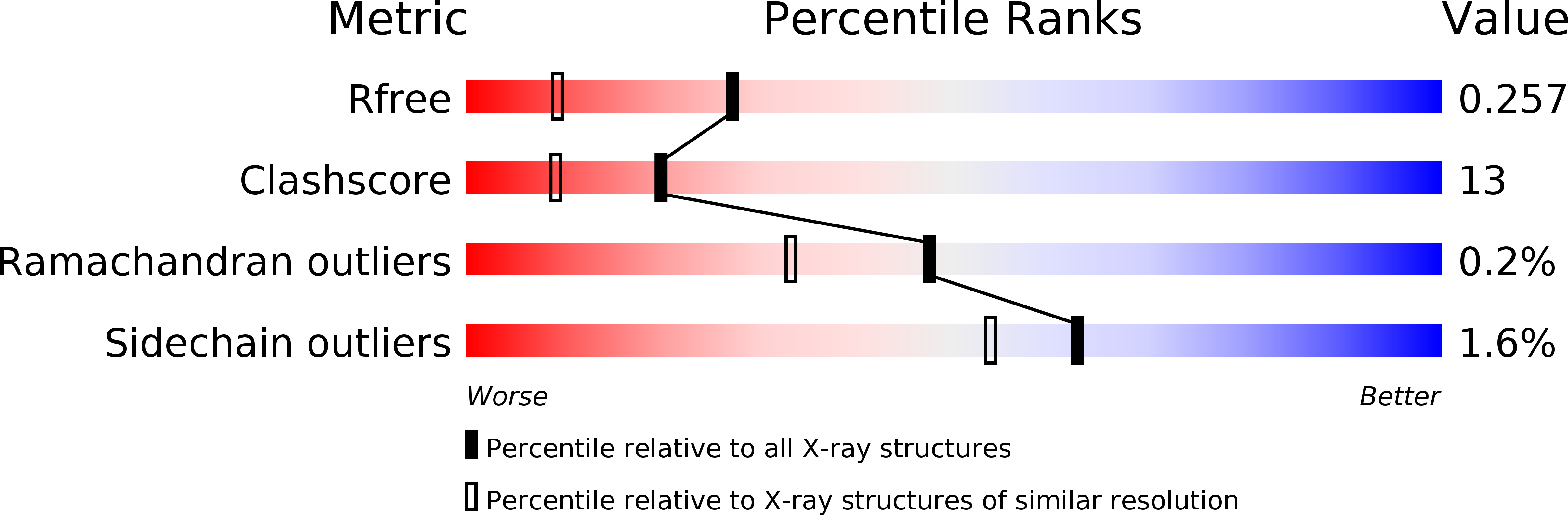
1.80 Å
R-Value Free:
0.26
R-Value Work:
0.22
R-Value Observed:
0.23
Space Group:
P 21 21 21
Macromolecular Entities
Structures with similar UniProt ID
Protein Blast
Polymer Type:polypeptide(L)
Molecule:ABC transporter
Chain IDs:A
Chain Length:456
Number of Molecules:1
Biological Source:Caldanaerobius
Structures with similar UniProt ID
Protein Blast
Polymer Type:polypeptide(L)
Molecule:ABC transporter
Chain IDs:B
Chain Length:432
Number of Molecules:1
Biological Source:Caldanaerobius
Structures with similar UniProt ID
Protein Blast
Polymer Type:polypeptide(L)
Molecule:ABC transporter
Chain IDs:C
Chain Length:432
Number of Molecules:1
Biological Source:Caldanaerobius
Modified Residue
Compound ID Chain ID Parent Comp ID Details 2D Image
MSE A MET SELENOMETHIONINE
Primary Citation
Biochemical and Structural Insights into Xylan Utilization by the Thermophilic Bacterium Caldanaerobius polysaccharolyticus.
J.Biol.Chem. 287 34946 34960 (2012)
PMID: 22918832 DOI: 10.1074/jbc.M112.391532

Abstact

Hemicellulose is the next most abundant plant cell wall component after cellulose. The abundance of hemicellulose such as xylan suggests that their hydrolysis and conversion to biofuels can improve the economics of bioenergy production. In an effort to understand xylan hydrolysis at high temperatures, we sequenced the genome of the thermophilic bacterium Caldanaerobius polysaccharolyticus. Analysis of the partial genome sequence revealed a gene cluster that contained both hydrolytic enzymes and also enzymes key to the pentose-phosphate pathway. The hydrolytic enzymes in the gene cluster were demonstrated to convert products from a large endoxylanase (Xyn10A) predicted to anchor to the surface of the bacterium. We further use structural and calorimetric studies to demonstrate that the end products of Xyn10A hydrolysis of xylan are recognized and bound by XBP1, a putative solute-binding protein, likely for transport into the cell. The XBP1 protein showed preference for xylo-oligosaccharides as follows: xylotriose > xylobiose > xylotetraose. To elucidate the structural basis for the oligosaccharide preference, we solved the co-crystal structure of XBP1 complexed with xylotriose to a 1.8-Å resolution. Analysis of the biochemical data in the context of the co-crystal structure reveals the molecular underpinnings of oligosaccharide length specificity.

Legend

Protein

Chemical

Disease

Primary Citation of related structures
Feedback Form
Name
Email
Institute
Feedback