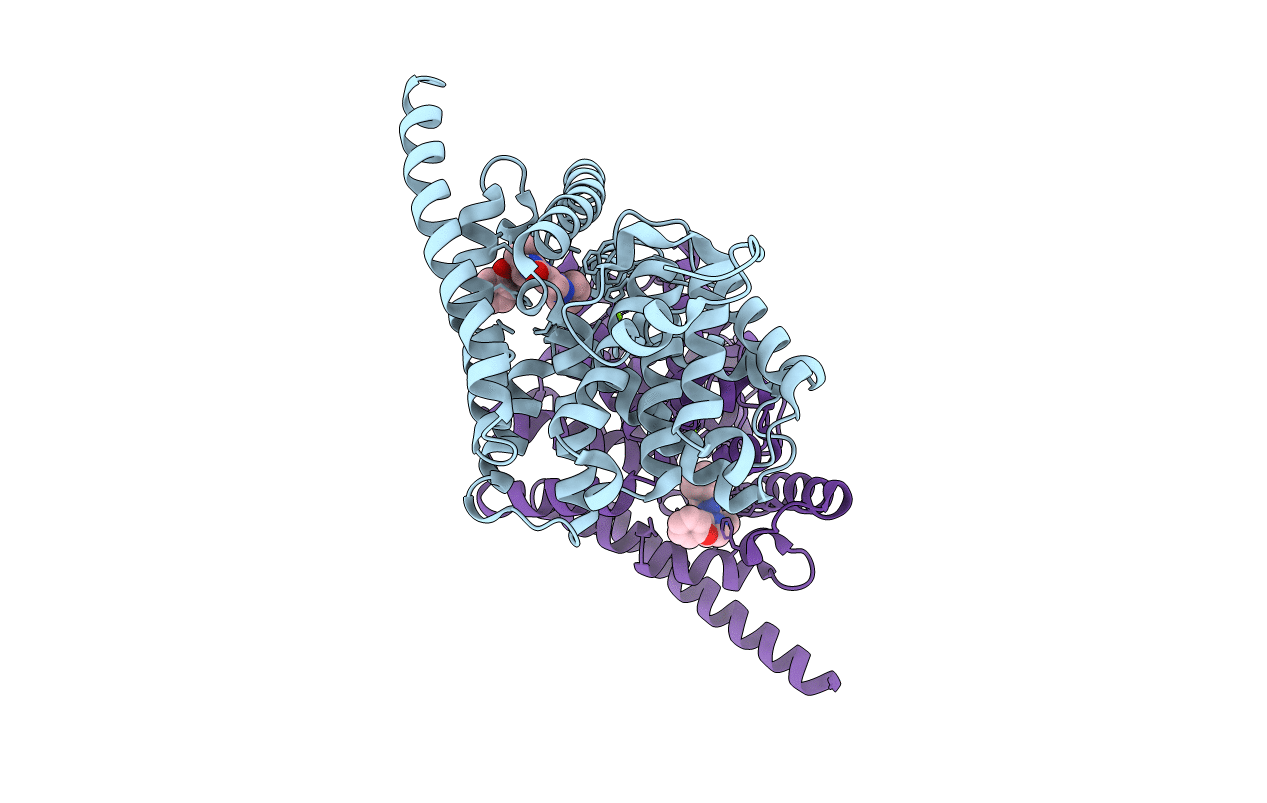
4G2J image
Deposition Date 2012-07-12
Release Date 2013-05-29
Last Version Date 2024-02-28
Entry Detail
PDB ID:
4G2J
Title:
Human pde9 in complex with selective compound
Biological Source:
Source Organism:
Homo sapiens (Taxon ID: 9606)
Method Details:
Experimental Method:
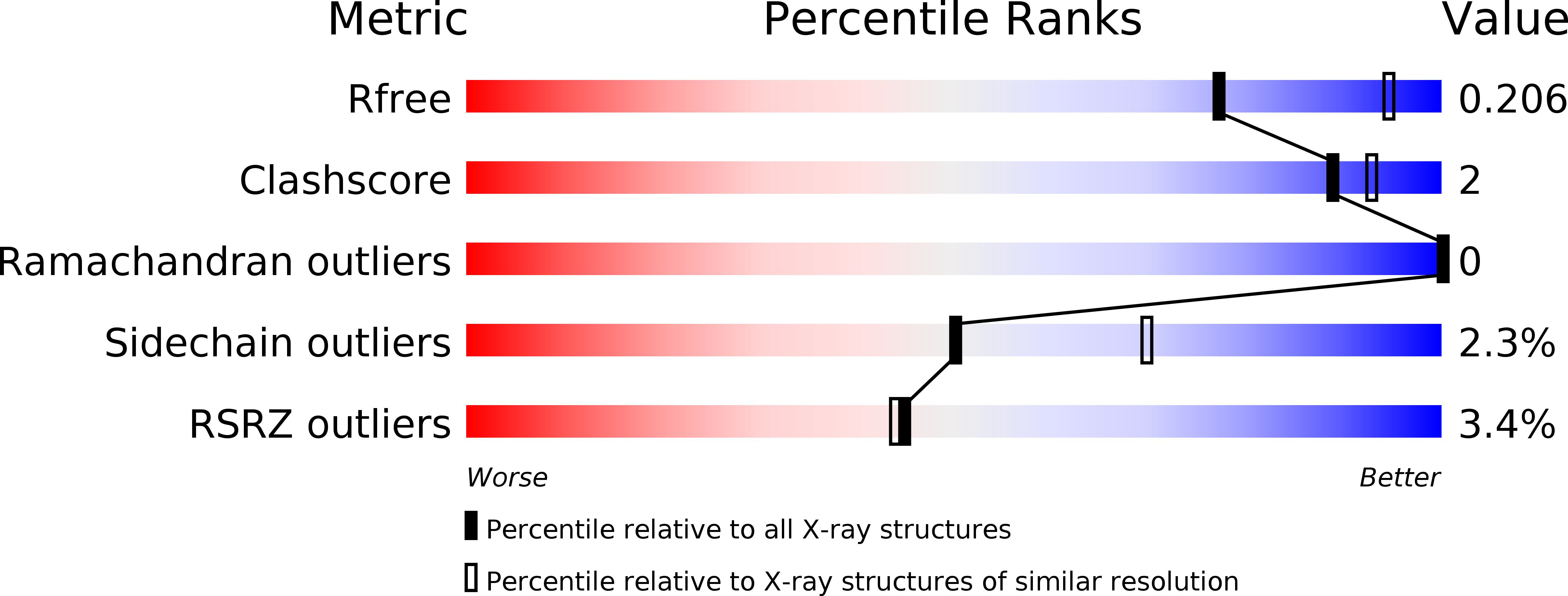
Resolution:
2.40 Å
R-Value Free:
0.21
R-Value Work:
0.20
R-Value Observed:
0.20
Space Group:
P 41 21 2
Macromolecular Entities
Structures with similar UniProt ID
Protein Blast
Polymer Type:polypeptide(L)
Molecule:High affinity cGMP-specific 3',5'-cyclic phosphodiesterase 9A
Gene (Uniprot):PDE9A
Chain IDs:A, B
Chain Length:329
Number of Molecules:2
Biological Source:Homo sapiens
Primary Citation
Application of structure-based drug design and parallel chemistry to identify selective, brain penetrant, in vivo active phosphodiesterase 9A inhibitors.
J.Med.Chem. 55 9055 9068 (2012)
PMID: 23025719 DOI: 10.1021/jm3009635

Abstact

Phosphodiesterase 9A inhibitors have shown activity in preclinical models of cognition with potential application as novel therapies for treating Alzheimer's disease. Our clinical candidate, PF-04447943 (2), demonstrated acceptable CNS permeability in rats with modest asymmetry between central and peripheral compartments (free brain/free plasma = 0.32; CSF/free plasma = 0.19) yet had physicochemical properties outside the range associated with traditional CNS drugs. To address the potential risk of restricted CNS penetration with 2 in human clinical trials, we sought to identify a preclinical candidate with no asymmetry in rat brain penetration and that could advance into development. Merging the medicinal chemistry strategies of structure-based design with parallel chemistry, a novel series of PDE9A inhibitors was identified that showed improved selectivity over PDE1C. Optimization afforded preclinical candidate 19 that demonstrated free brain/free plasma ≥ 1 in rat and reduced microsomal clearance along with the ability to increase cyclic guanosine monophosphosphate levels in rat CSF.

Legend

Protein

Chemical

Disease

Primary Citation of related structures
Feedback Form
Name
Email
Institute
Feedback