4G28 image
Deposition Date 2012-07-11
Release Date 2012-09-12
Last Version Date 2024-02-28
Entry Detail
PDB ID:
4G28
Title:
Calcium-calmodulin complexed with the calmodulin binding domain from a small conductance potassium channel splice variant and EBIO-1
Biological Source:
Source Organism:
Host Organism:
Method Details:
Experimental Method:
Resolution:
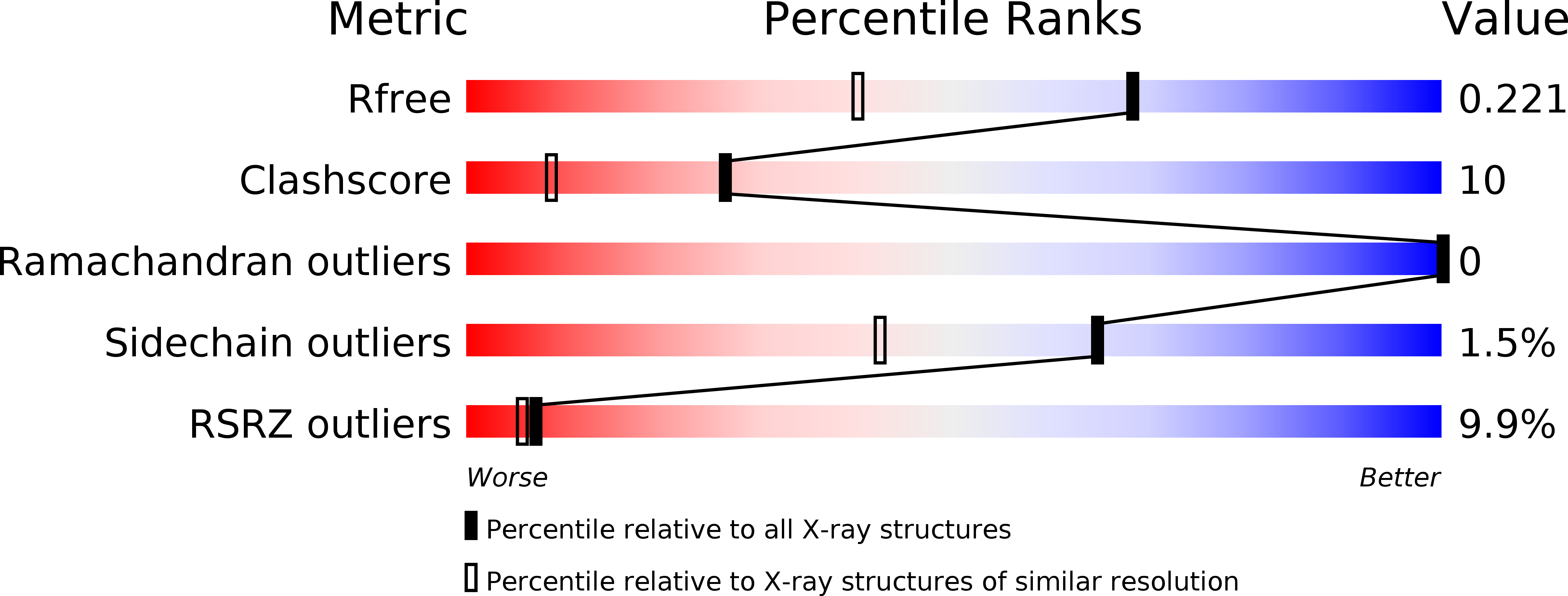
1.63 Å
R-Value Free:
0.22
R-Value Work:
0.19
R-Value Observed:
0.19
Space Group:
C 1 2 1
Macromolecular Entities
Structures with similar UniProt ID
Protein Blast
Polymer Type:polypeptide(L)
Molecule:Small conductance calcium-activated potassium channel protein 2
Gene (Uniprot):Kcnn2
Chain IDs:A (auth: B)
Chain Length:102
Number of Molecules:1
Biological Source:Rattus norvegicus
Structures with similar UniProt ID
Protein Blast
Polymer Type:polypeptide(L)
Molecule:Calmodulin
Chain IDs:B (auth: R)
Chain Length:149
Number of Molecules:1
Biological Source:Rattus norvegicus
Primary Citation
Identification of the functional binding pocket for compounds targeting small-conductance Ca(2+)-activated potassium channels.
Nat Commun 3 1021 1021 (2012)
PMID: 22929778 DOI: 10.1038/ncomms2017

Abstact

Small- and intermediate-conductance Ca(2+)-activated potassium channels, activated by Ca(2+)-bound calmodulin, have an important role in regulating membrane excitability. These channels are also linked to clinical abnormalities. A tremendous amount of effort has been devoted to developing small molecule compounds targeting these channels. However, these compounds often suffer from low potency and lack of selectivity, hindering their potential for clinical use. A key contributing factor is the lack of knowledge of the binding site(s) for these compounds. Here we demonstrate by X-ray crystallography that the binding pocket for the compounds of the 1-ethyl-2-benzimidazolinone (1-EBIO) class is located at the calmodulin-channel interface. We show that, based on structure data and molecular docking, mutations of the channel can effectively change the potency of these compounds. Our results provide insight into the molecular nature of the binding pocket and its contribution to the potency and selectivity of the compounds of the 1-EBIO class.

Legend

Protein

Chemical

Disease

Primary Citation of related structures
Feedback Form
Name
Email
Institute
Feedback