4G0S image
Deposition Date 2012-07-10
Release Date 2013-05-01
Last Version Date 2024-11-27
Entry Detail
PDB ID:
4G0S
Title:
Crystal Structure of Epiphyas postvittana Takeout 1 expressed in Sf9 cells
Biological Source:
Source Organism:
Host Organism:
Method Details:
Experimental Method:
Resolution:
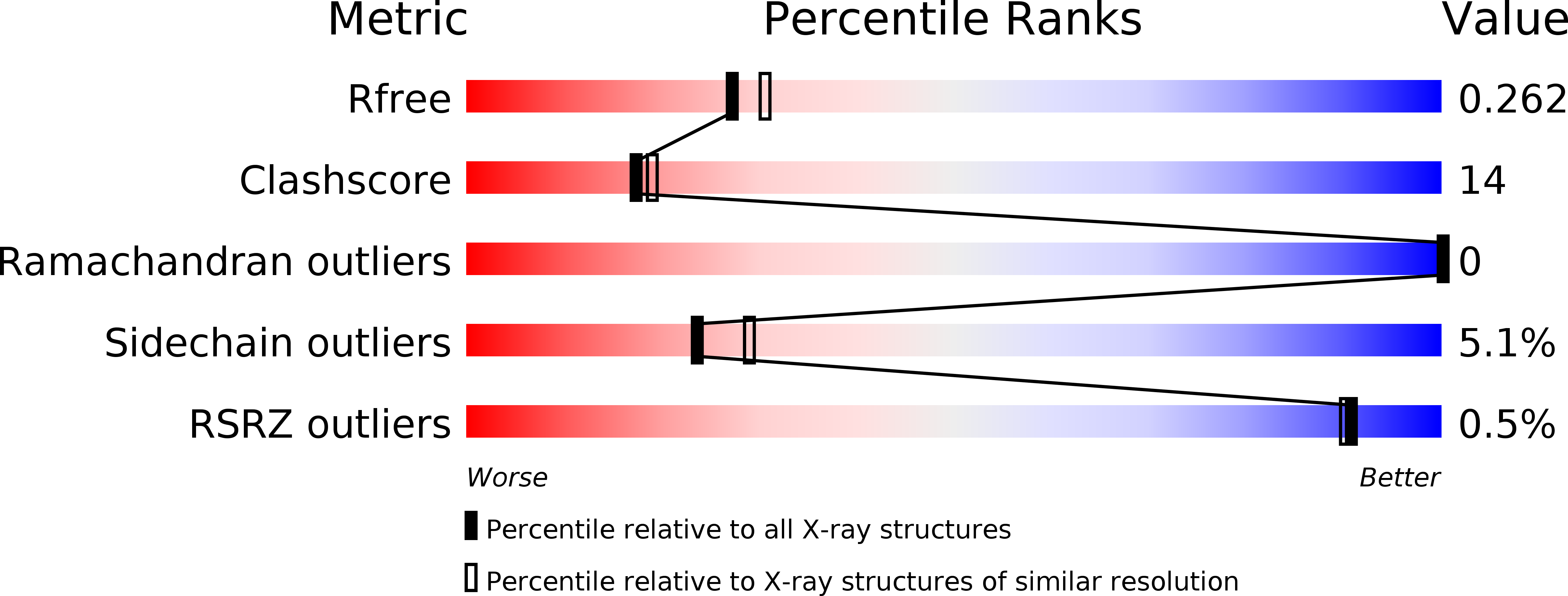
2.19 Å
R-Value Free:
0.27
R-Value Work:
0.19
R-Value Observed:
0.19
Space Group:
P 1 21 1
Macromolecular Entities
Structures with similar UniProt ID
Protein Blast
Polymer Type:polypeptide(L)
Molecule:Takeout-like protein 1
Chain IDs:A, B
Chain Length:220
Number of Molecules:2
Biological Source:Epiphyas postvittana
Ligand Molecules
Primary Citation
Ligand promiscuity within the internal cavity of Epiphyas postvittana Takeout 1 protein.
J.Struct.Biol. 182 259 263 (2013)
PMID: 23563188 DOI: 10.1016/j.jsb.2013.03.013

Abstact

Takeout proteins are found across a diverse range of insect species and are thought to be involved in important aspects of insect physiology and behavior. These proteins act as ligand carriers, but the nature of their endogenous ligands remains unknown. The crystal structure of Epiphyas postvittana Takeout 1 (EpTo1), the only structure for any Takeout protein to date, revealed an α/β-wrap fold with a purely hydrophobic internal cavity of tubular shape. When recombinantly expressed in Escherichia coli, we previously showed that a surrogate ubiquinone-8 ligand binds within the internal cavity of EpTo1 with excellent shape complementarity. We have now expressed EpTo1 in an insect cell expression system devoid of ubiquinone-8, and solved its crystal structure at 2.2Å resolution. Using combined information from crystallography and mass spectrometry, we identify a mixture of fatty acid moieties, mostly myristic and palmitic acid, bound inside the EpTo1 cavity, mimicking the structure of the longer ubiquinone-8 compound. No significant alteration of the internal cavity was observed regardless of the bound ligands, ubiquinone-8 or fatty acids, suggesting that the internal cavity of EpTo1 forms a rigid scaffold that imposes strict structural constraints for selectivity and specificity of ligand(s) in vivo.

Legend

Protein

Chemical

Disease

Primary Citation of related structures
Feedback Form
Name
Email
Institute
Feedback