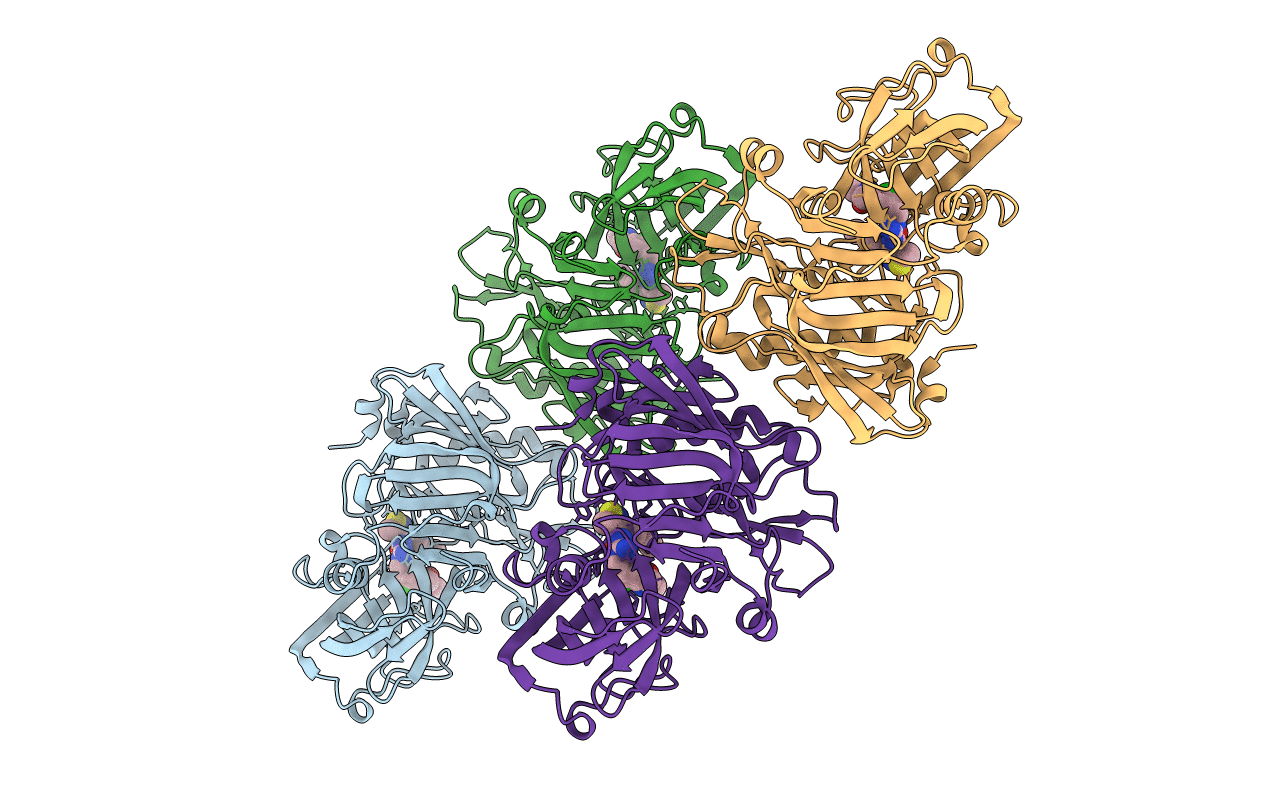
4FSL image
Deposition Date 2012-06-27
Release Date 2012-10-10
Last Version Date 2024-10-16
Entry Detail
PDB ID:
4FSL
Title:
Crystal structure of beta-site app-cleaving enzyme 1 (BACE-DB-MUT) complex with N-(N-(4- acetamido-3-chloro-5-methylbenzyl)carbamimidoyl)-3-(4- methoxyphenyl)-5-methyl-4-isothiazolecarboxamide
Biological Source:
Source Organism:
Homo sapiens (Taxon ID: 9606)
Host Organism:
Method Details:
Experimental Method:
Resolution:
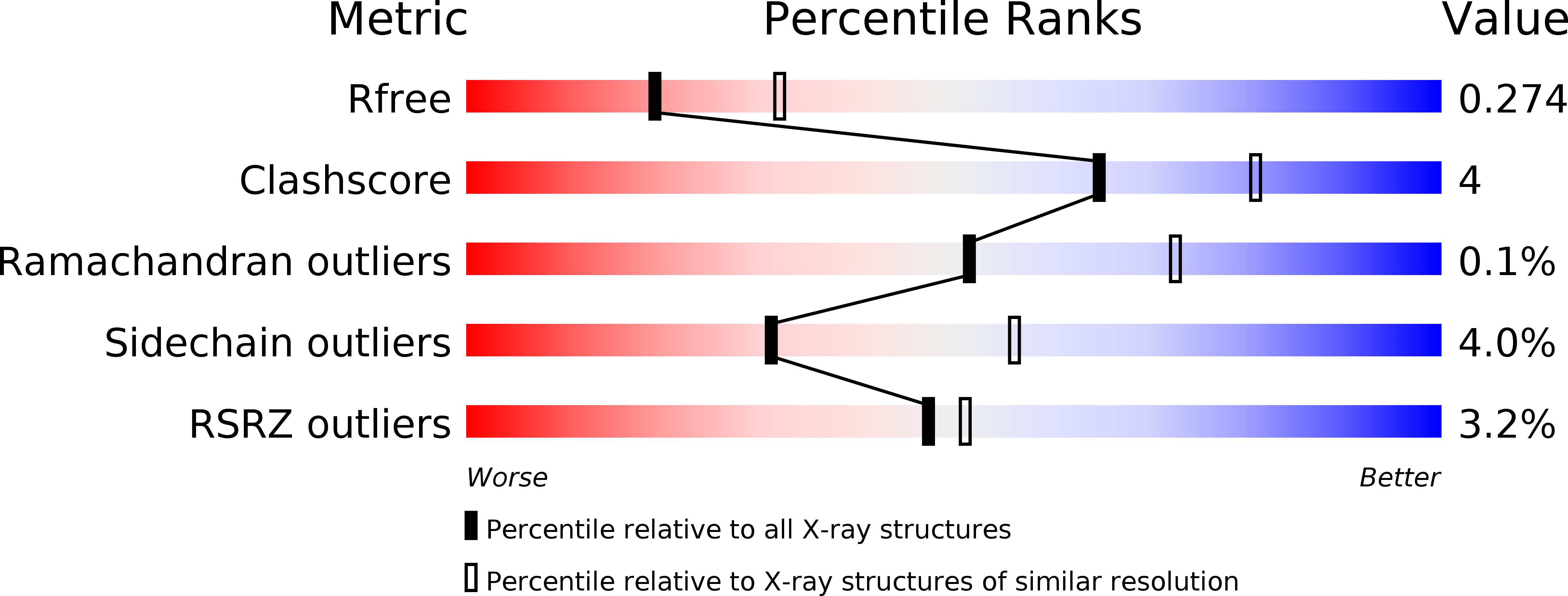
2.50 Å
R-Value Free:
0.27
R-Value Work:
0.22
R-Value Observed:
0.22
Space Group:
P 1 21 1
Macromolecular Entities
Structures with similar UniProt ID
Protein Blast
Polymer Type:polypeptide(L)
Molecule:Beta-secretase 1
Gene (Uniprot):BACE1
Chain IDs:A, B, C (auth: D), D (auth: E)
Chain Length:412
Number of Molecules:4
Biological Source:Homo sapiens
Primary Citation
Acyl Guanidine Inhibitors of beta-Secretase (BACE-1): Optimization of a Micromolar Hit to a Nanomolar Lead via Iterative Solid- and Solution-Phase Library Synthesis
J.Med.Chem. 55 9208 9223 (2012)
PMID: 23030502 DOI: 10.1021/jm300931y

Abstact

This report describes the discovery and optimization of a BACE-1 inhibitor series containing an unusual acyl guanidine chemotype that was originally synthesized as part of a 6041-membered solid-phase library. The synthesis of multiple follow-up solid- and solution-phase libraries facilitated the optimization of the original micromolar hit into a single-digit nanomolar BACE-1 inhibitor in both radioligand binding and cell-based functional assay formats. The X-ray structure of representative inhibitors bound to BACE-1 revealed a number of key ligand:protein interactions, including a hydrogen bond between the side chain amide of flap residue Gln73 and the acyl guanidine carbonyl group, and a cation-π interaction between Arg235 and the isothiazole 4-methoxyphenyl substituent. Following subcutaneous administration in rats, an acyl guanidine inhibitor with single-digit nanomolar activity in cells afforded good plasma exposures and a dose-dependent reduction in plasma Aβ levels, but poor brain exposure was observed (likely due to Pgp-mediated efflux), and significant reductions in brain Aβ levels were not obtained.

Legend

Protein

Chemical

Disease

Primary Citation of related structures
Feedback Form
Name
Email
Institute
Feedback