4FKK image
Deposition Date 2012-06-13
Release Date 2012-10-17
Last Version Date 2024-11-27
Entry Detail
PDB ID:
4FKK
Title:
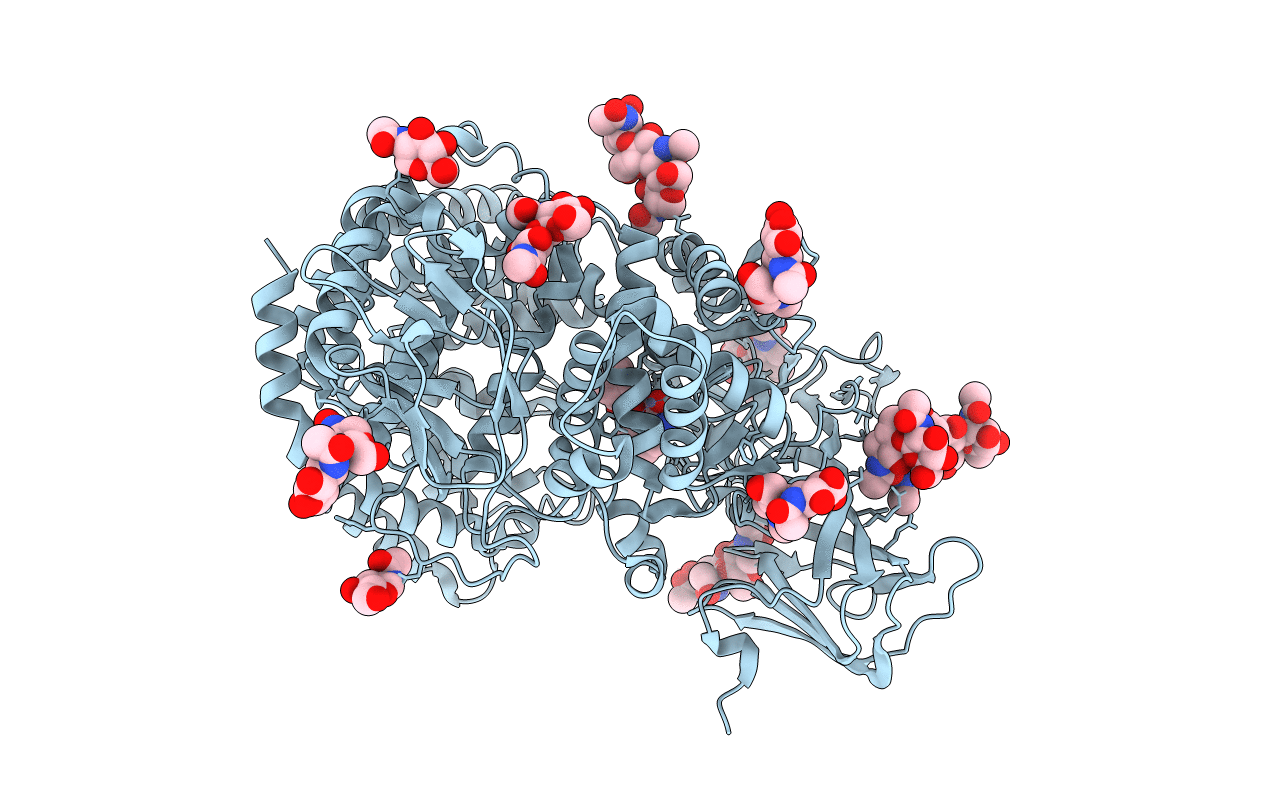
Crystal structure of porcine aminopeptidase-N complexed with bestatin
Biological Source:
Source Organism(s):
Sus scrofa (Taxon ID: 9823)
Expression System(s):
Method Details:
Experimental Method:
Resolution:
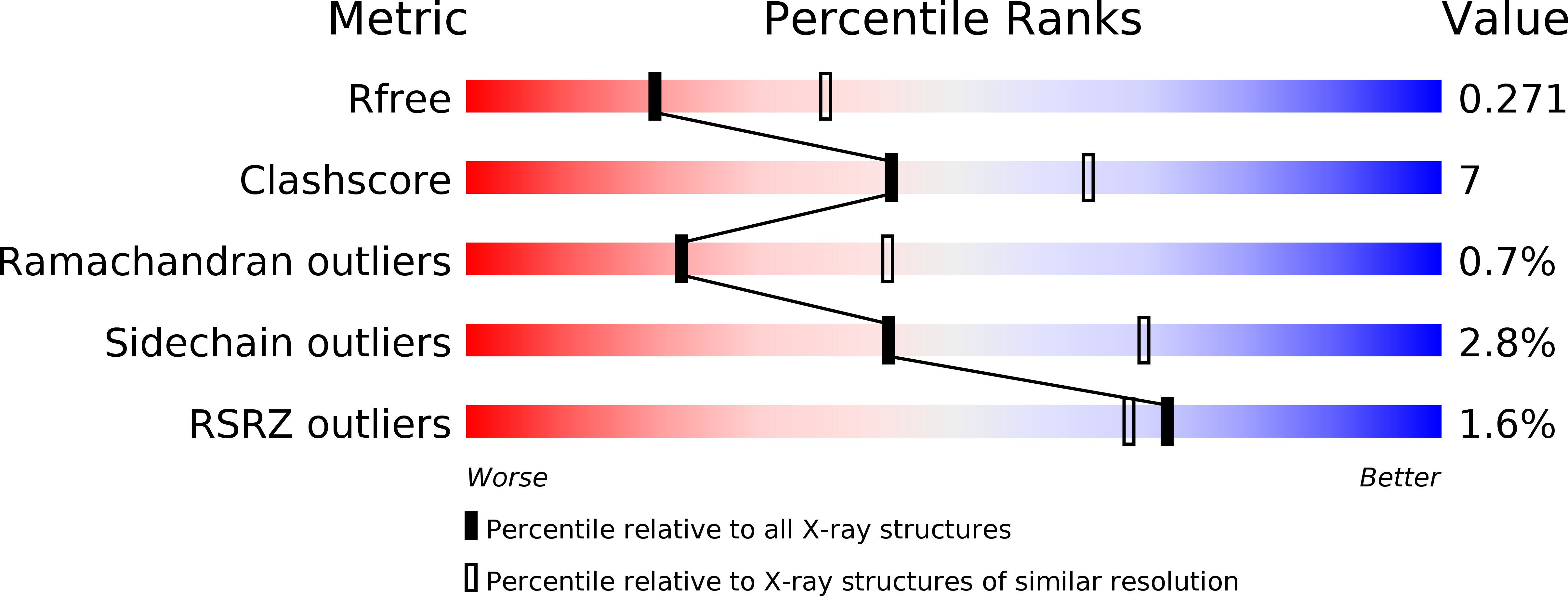
2.60 Å
R-Value Free:
0.27
R-Value Work:
0.16
R-Value Observed:
0.16
Space Group:
C 1 2 1
Macromolecular Entities
Structures with similar UniProt ID
Protein Blast
Polymer Type:polypeptide(L)
Molecule:Aminopeptidase N
Gene (Uniprot):ANPEP
Chain IDs:A
Chain Length:909
Number of Molecules:1
Biological Source:Sus scrofa
Modified Residue
Compound ID Chain ID Parent Comp ID Details 2D Image
ASN A ASN GLYCOSYLATION SITE
Peptide-like Molecules
PRD_900017
Primary Citation
Structural basis for multifunctional roles of mammalian aminopeptidase N.
Proc.Natl.Acad.Sci.USA 109 17966 17971 (2012)
PMID: 23071329 DOI: 10.1073/pnas.1210123109

Abstact

Mammalian aminopeptidase N (APN) plays multifunctional roles in many physiological processes, including peptide metabolism, cell motility and adhesion, and coronavirus entry. Here we determined crystal structures of porcine APN at 1.85 Å resolution and its complexes with a peptide substrate and a variety of inhibitors. APN is a cell surface-anchored and seahorse-shaped zinc-aminopeptidase that forms head-to-head dimers. Captured in a catalytically active state, these structures of APN illustrate a detailed catalytic mechanism for its aminopeptidase activity. The active site and peptide-binding channel of APN reside in cavities with wide openings, allowing easy access to peptides. The cavities can potentially open up further to bind the exposed N terminus of proteins. The active site anchors the N-terminal neutral residue of peptides/proteins, and the peptide-binding channel binds the remainder of the peptides/proteins in a sequence-independent fashion. APN also provides an exposed outer surface for coronavirus binding, without its physiological functions being affected. These structural features enable APN to function ubiquitously in peptide metabolism, interact with other proteins to mediate cell motility and adhesion, and serve as a coronavirus receptor. This study elucidates multifunctional roles of APN and can guide therapeutic efforts to treat APN-related diseases.

Legend

Protein

Chemical

Disease

Primary Citation of related structures
Feedback Form
Name
Email
Institute
Feedback