4FIY image
Deposition Date 2012-06-11
Release Date 2012-06-20
Last Version Date 2023-09-13
Entry Detail
PDB ID:
4FIY
Keywords:
Title:
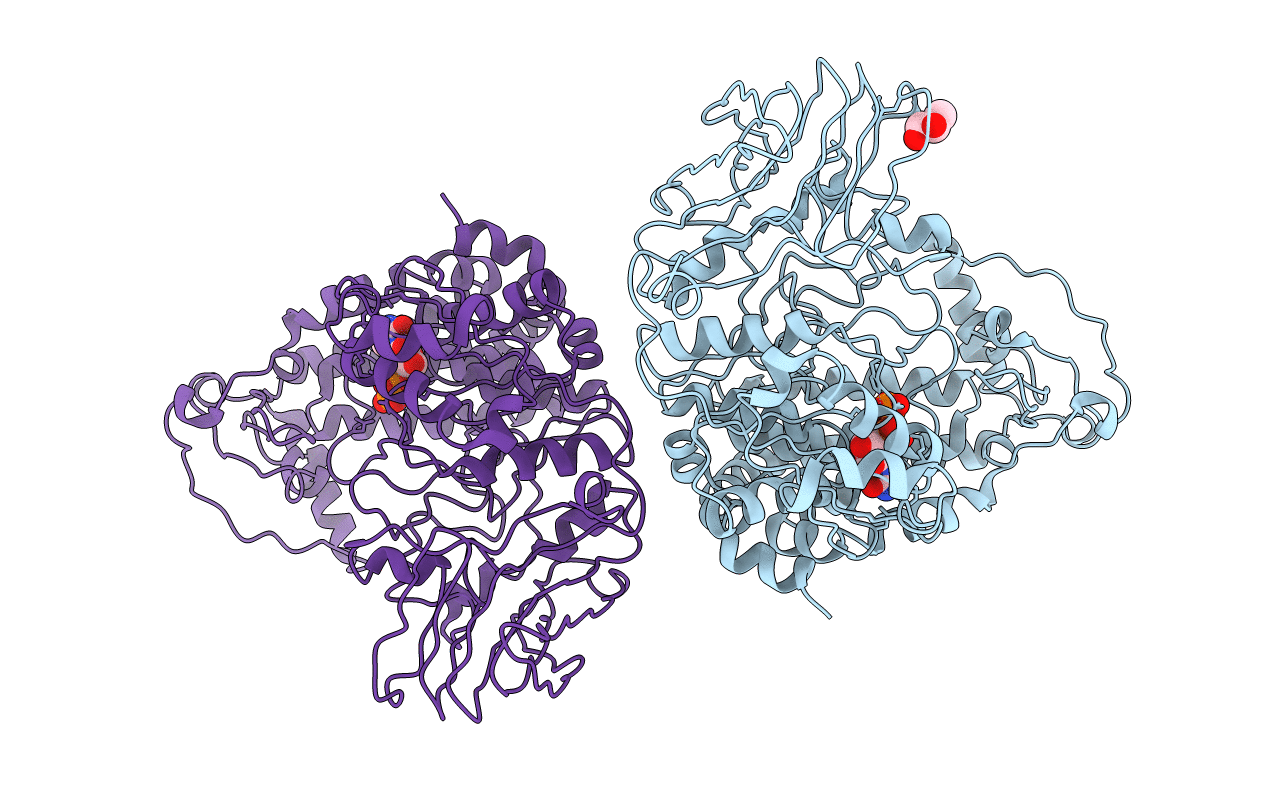
Crystal Structure of GlfT2 Complexed with UDP
Biological Source:
Source Organism:
Host Organism:
Method Details:
Experimental Method:
Resolution:
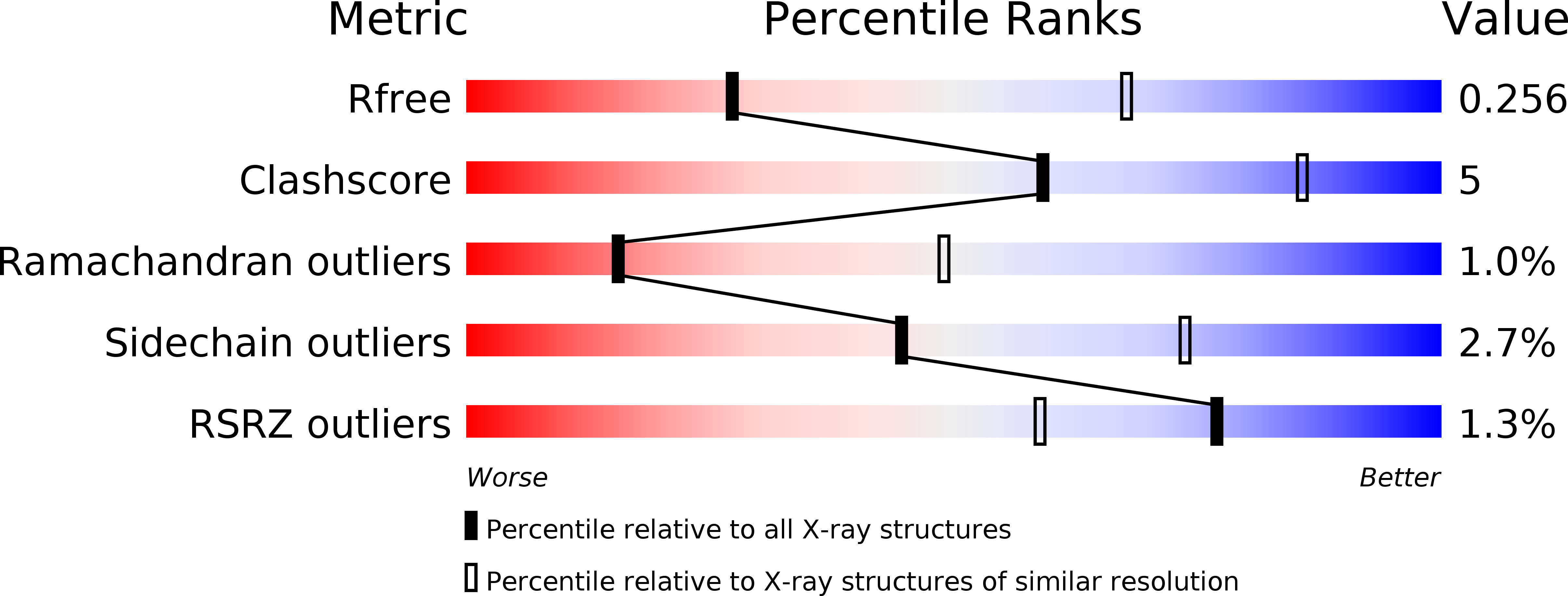
3.10 Å
R-Value Free:
0.28
R-Value Work:
0.20
R-Value Observed:
0.21
Space Group:
P 4 21 2
Macromolecular Entities
Structures with similar UniProt ID
Protein Blast
Polymer Type:polypeptide(L)
Molecule:UDP-galactofuranosyl transferase GlfT2
Gene (Uniprot):glfT2
Chain IDs:A, B
Chain Length:657
Number of Molecules:2
Biological Source:Mycobacterium tuberculosis
Primary Citation
Tetrameric Structure of the GlfT2 Galactofuranosyltransferase Reveals a Scaffold for the Assembly of Mycobacterial Arabinogalactan.
J.Biol.Chem. 287 28132 28143 (2012)
PMID: 22707726 DOI: 10.1074/jbc.M112.347484

Abstact

Biosynthesis of the mycobacterial cell wall relies on the activities of many enzymes, including several glycosyltransferases (GTs). The polymerizing galactofuranosyltransferase GlfT2 (Rv3808c) synthesizes the bulk of the galactan portion of the mycolyl-arabinogalactan complex, which is the largest component of the mycobacterial cell wall. We used x-ray crystallography to determine the 2.45-Å resolution crystal structure of GlfT2, revealing an unprecedented multidomain structure in which an N-terminal β-barrel domain and two primarily α-helical C-terminal domains flank a central GT-A domain. The kidney-shaped protomers assemble into a C(4)-symmetric homotetramer with an open central core and a surface containing exposed hydrophobic and positively charged residues likely involved with membrane binding. The structure of a 3.1-Å resolution complex of GlfT2 with UDP reveals a distinctive mode of nucleotide recognition. In addition, models for the binding of UDP-galactofuranose and acceptor substrates in combination with site-directed mutagenesis and kinetic studies suggest a mechanism that explains the unique ability of GlfT2 to generate alternating β-(1→5) and β-(1→6) glycosidic linkages using a single active site. The topology imposed by docking a tetrameric assembly onto a membrane bilayer also provides novel insights into aspects of processivity and chain length regulation in this and possibly other polymerizing GTs.

Legend

Protein

Chemical

Disease

Primary Citation of related structures
Feedback Form
Name
Email
Institute
Feedback