4FGQ image
Deposition Date 2012-06-04
Release Date 2012-06-20
Last Version Date 2024-04-03
Entry Detail
PDB ID:
4FGQ
Keywords:
Title:
Legionella pneumophila LapG
Biological Source:
Host Organism:
Method Details:
Experimental Method:
Resolution:
1.65 Å
R-Value Free:
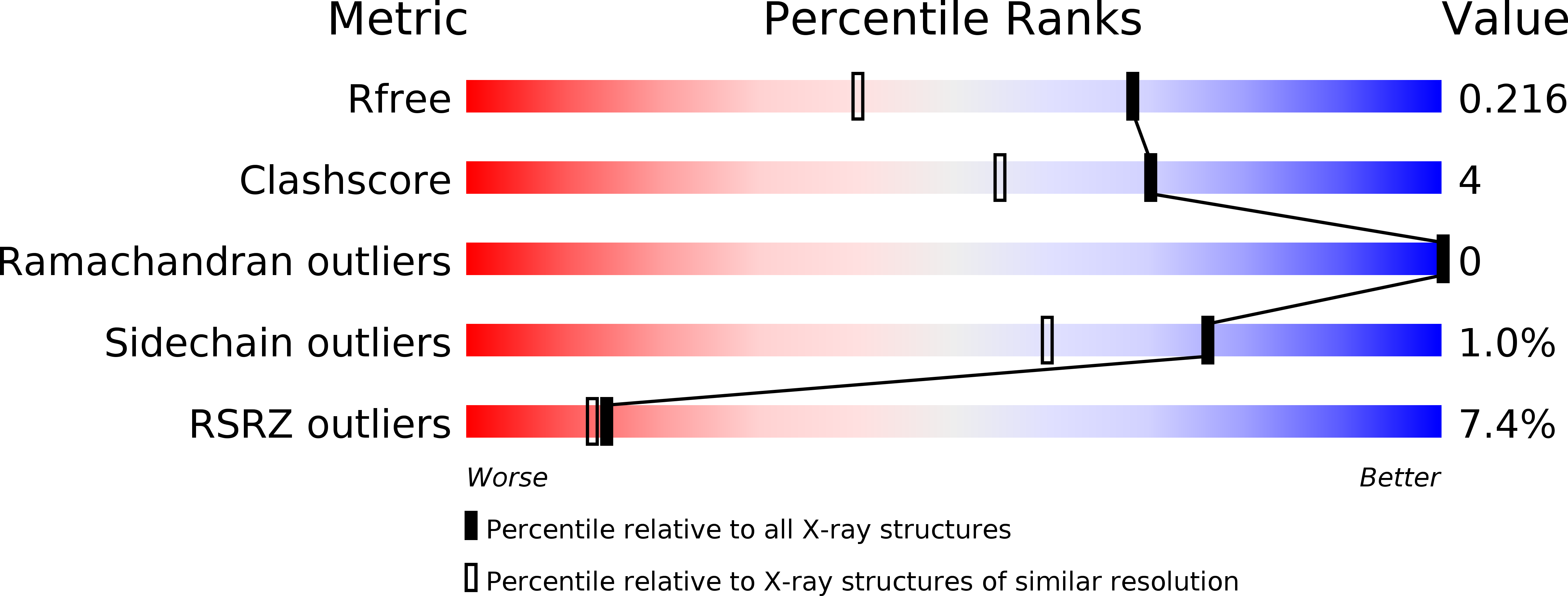
0.22
R-Value Work:
0.18
R-Value Observed:
0.19
Space Group:
P 21 21 2
Macromolecular Entities
Structures with similar UniProt ID
Protein Blast
Polymer Type:polypeptide(L)
Molecule:Periplasmic protein
Gene (Uniprot):lpg0828
Chain IDs:A, B
Chain Length:193
Number of Molecules:2
Biological Source:Legionella pneumophila subsp. pneumophila
Primary Citation
Structural characterization of a conserved, calcium-dependent periplasmic protease from Legionella pneumophila.
J.Bacteriol. 194 4415 4425 (2012)
PMID: 22707706 DOI: 10.1128/JB.00640-12

Abstact

The bacterial dinucleotide second messenger c-di-GMP has emerged as a central molecule in regulating bacterial behavior, including motility and biofilm formation. Proteins for the synthesis and degradation of c-di-GMP and effectors for its signal transmission are widely used in the bacterial domain. Previous work established the GGDEF-EAL domain-containing receptor LapD as a central switch in Pseudomonas fluorescens cell adhesion. LapD senses c-di-GMP inside the cytosol and relays this signal to the outside by the differential recruitment of the periplasmic protease LapG. Here we identify the core components of an orthologous system in Legionella pneumophila. Despite only moderate sequence conservation at the protein level, key features concerning the regulation of LapG are retained. The output domain of the LapD-like receptor from L. pneumophila, CdgS9, binds the LapG ortholog involving a strictly conserved surface tryptophan residue. While the endogenous substrate for L. pneumophila LapG is unknown, the enzyme processed the corresponding P. fluorescens substrate, indicating a common catalytic mechanism and substrate recognition. Crystal structures of L. pneumophila LapG provide the first atomic models of bacterial proteases of the DUF920 family and reveal a conserved calcium-binding site important for LapG function.

Legend

Protein

Chemical

Disease

Primary Citation of related structures
Feedback Form
Name
Email
Institute
Feedback