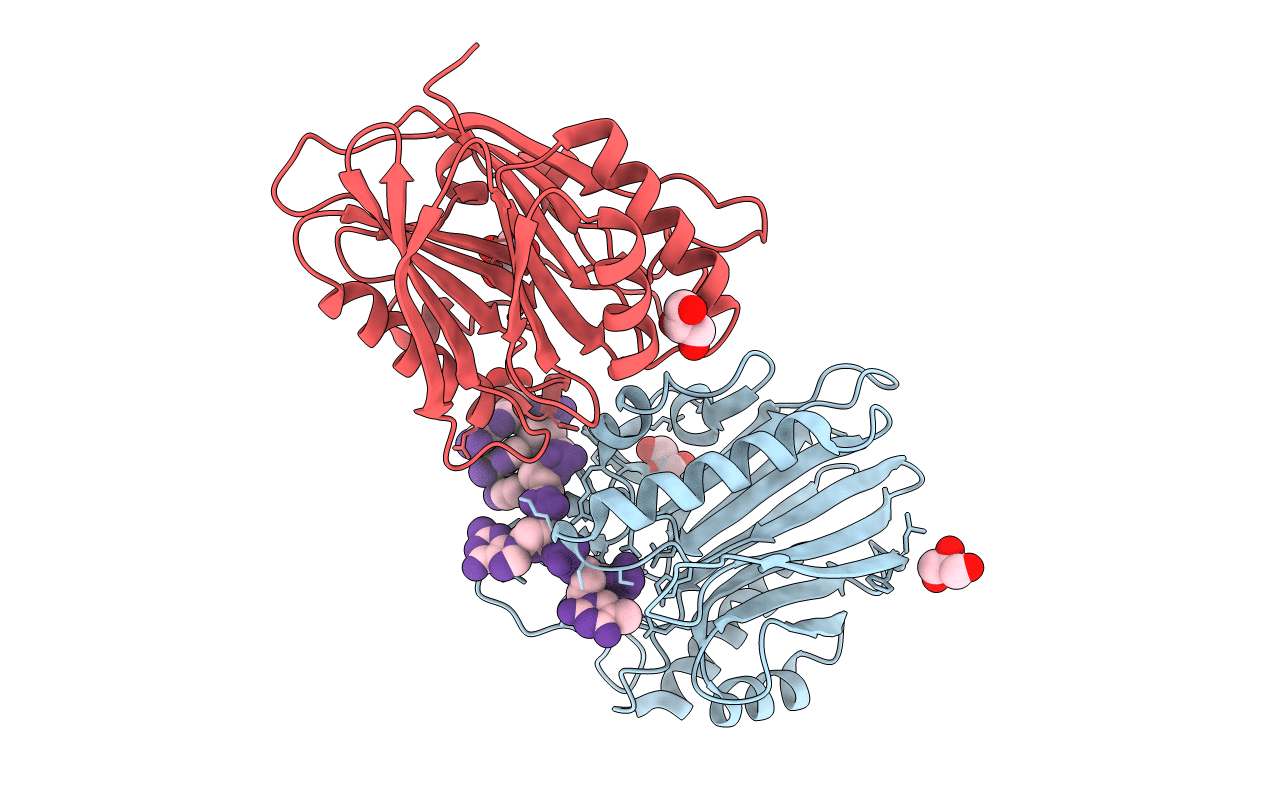
4F1H image
Deposition Date 2012-05-06
Release Date 2012-10-31
Last Version Date 2024-02-28
Entry Detail
PDB ID:
4F1H
Keywords:
Title:
Crystal structure of TDP2 from Danio rerio complexed with a single strand DNA
Biological Source:
Source Organism:
Danio rerio (Taxon ID: 7955)
Host Organism:
Method Details:
Experimental Method:
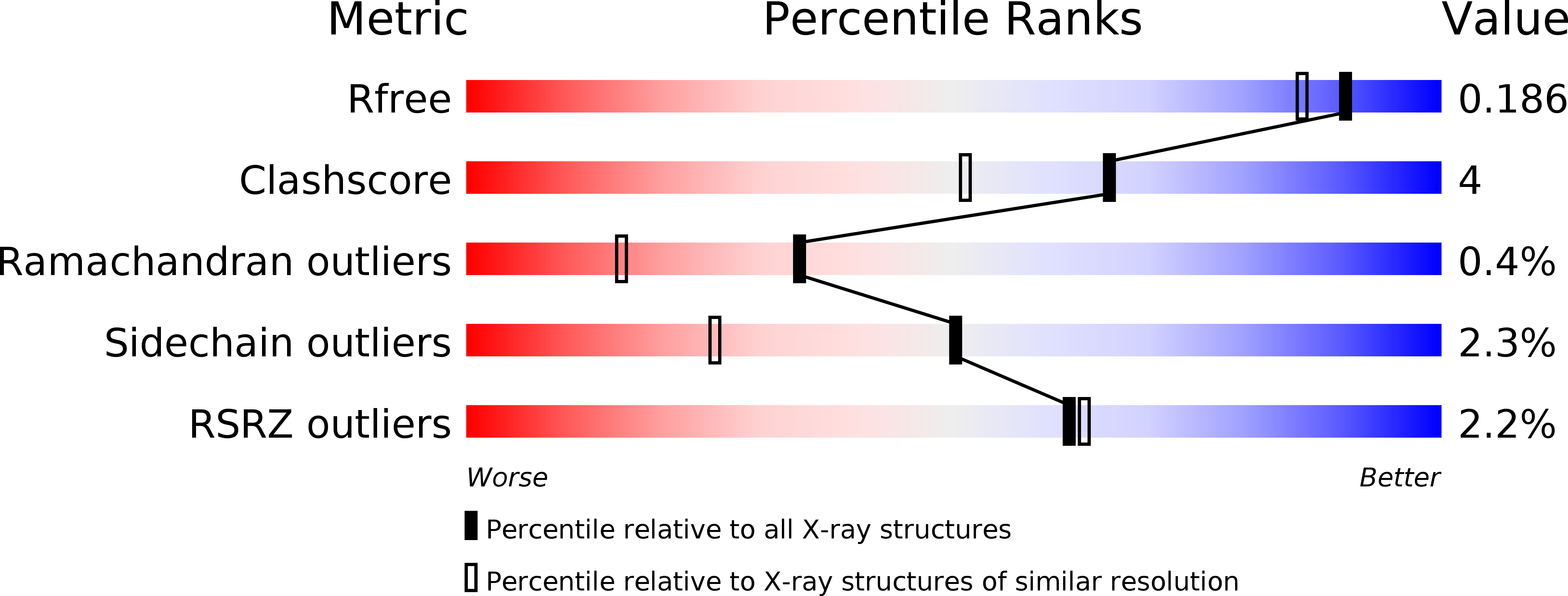
Resolution:
1.66 Å
R-Value Free:
0.19
R-Value Work:
0.16
R-Value Observed:
0.16
Space Group:
P 21 21 21
Macromolecular Entities
Structures with similar UniProt ID
Protein Blast
Polymer Type:polypeptide(L)
Molecule:Tyrosyl-DNA phosphodiesterase 2
Gene (Uniprot):tdp2
Chain IDs:B (auth: A)
Chain Length:250
Number of Molecules:1
Biological Source:Danio rerio
Structures with similar UniProt ID
Protein Blast
Polymer Type:polypeptide(L)
Molecule:Tyrosyl-DNA phosphodiesterase 2
Gene (Uniprot):tdp2
Chain IDs:C (auth: B)
Chain Length:251
Number of Molecules:1
Biological Source:Danio rerio
Primary Citation
Structural basis for recognition of 5'-phosphotyrosine adducts by Tdp2.
Nat.Struct.Mol.Biol. 19 1372 1377 (2012)
PMID: 23104058 DOI: 10.1038/nsmb.2423

Abstact

The DNA-repair enzyme Tdp2 resolves 5'-phosphotyrosyl DNA adducts and mediates resistance to anticancer drugs that target covalent topoisomerase-DNA complexes. Tdp2 also participates in key signaling pathways during development and tumorigenesis and cleaves a protein-RNA linkage during picornavirus replication. The crystal structure of zebrafish Tdp2 bound to DNA reveals a deep, narrow basic groove that selectively accommodates the 5' end of single-stranded DNA in a stretched conformation. The crystal structure of the full-length Caenorhabditis elegans Tdp2 shows that this groove can also accommodate an acidic peptide stretch in vitro, with glutamate and aspartate side chains occupying the DNA backbone phosphate-binding sites. This extensive molecular mimicry suggests a potential mechanism for autoregulation and interaction of Tdp2 with phosphorylated proteins in signaling. Our study provides a framework to interrogate functions of Tdp2 and develop inhibitors for chemotherapeutic and antiviral applications.

Legend

Protein

Chemical

Disease

Primary Citation of related structures
Feedback Form
Name
Email
Institute
Feedback