4EZA image
Deposition Date 2012-05-02
Release Date 2012-05-16
Last Version Date 2024-02-28
Entry Detail
PDB ID:
4EZA
Title:
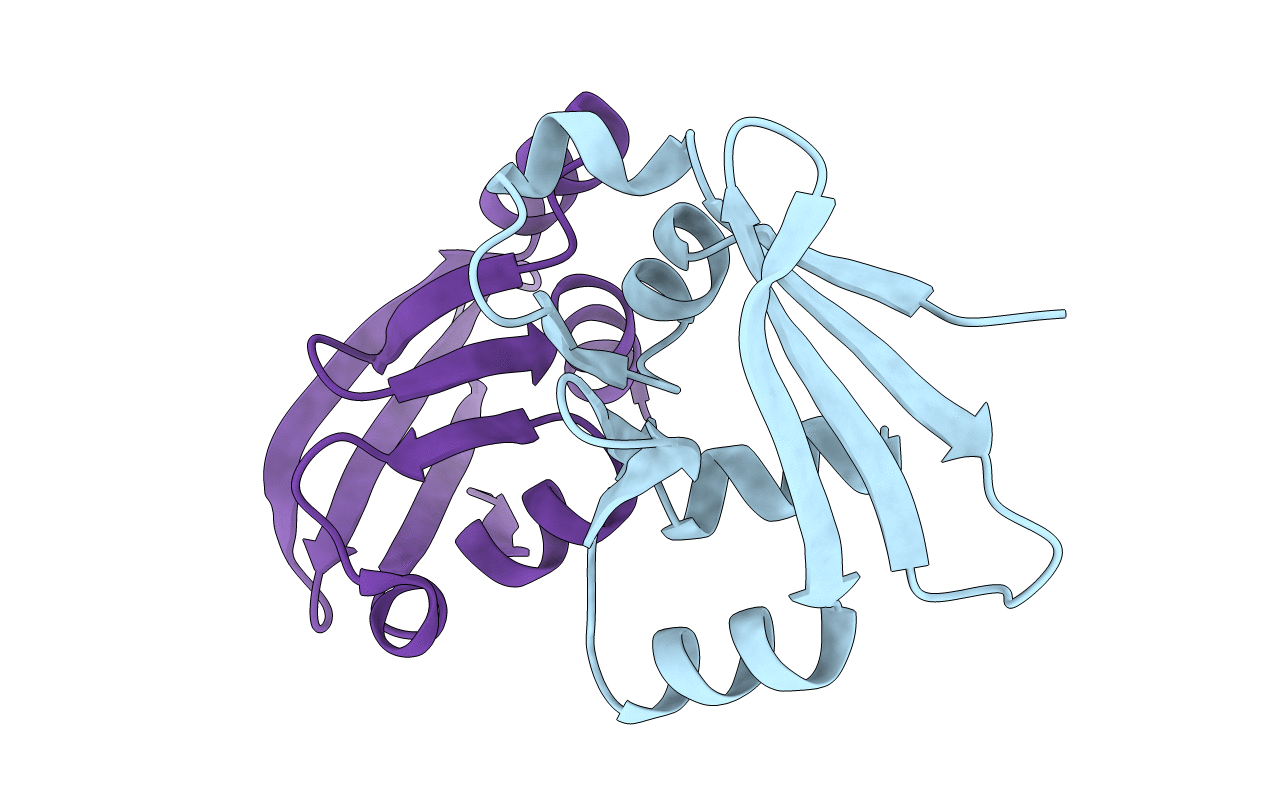
Crystal structure of the atypical phosphoinositide (aPI) binding domain of IQGAP2
Biological Source:
Source Organism:
Homo sapiens (Taxon ID: 9606)
Host Organism:
Method Details:
Experimental Method:
Resolution:
1.50 Å
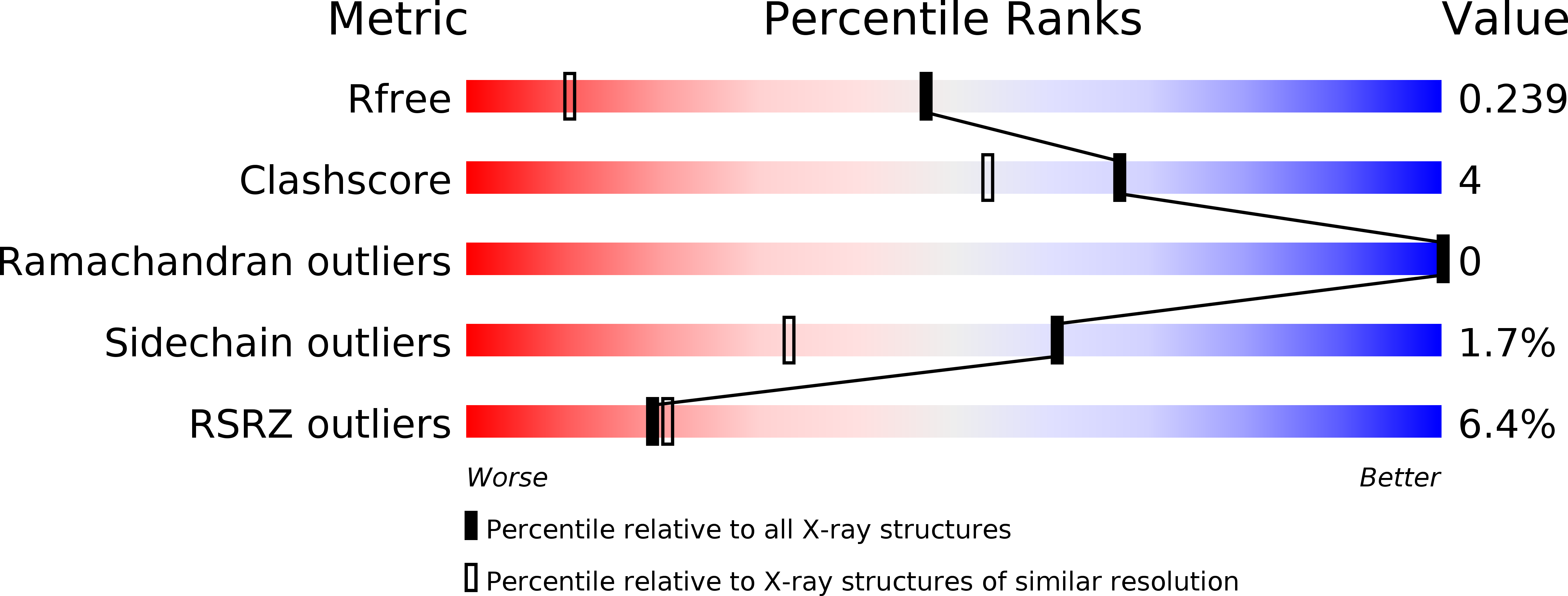
R-Value Free:
0.23
R-Value Work:
0.20
R-Value Observed:
0.21
Space Group:
P 1 21 1
Macromolecular Entities
Structures with similar UniProt ID
Protein Blast
Polymer Type:polypeptide(L)
Molecule:Ras GTPase-activating-like protein IQGAP2
Gene (Uniprot):IQGAP2
Chain IDs:A, B
Chain Length:114
Number of Molecules:2
Biological Source:Homo sapiens
Primary Citation
IQGAP Proteins Reveal an Atypical Phosphoinositide (aPI) Binding Domain with a Pseudo C2 Domain Fold.
J.Biol.Chem. 287 22483 22496 (2012)
PMID: 22493426 DOI: 10.1074/jbc.M112.352773

Abstact

Class I phosphoinositide (PI) 3-kinases act through effector proteins whose 3-PI selectivity is mediated by a limited repertoire of structurally defined, lipid recognition domains. We describe here the lipid preferences and crystal structure of a new class of PI binding modules exemplified by select IQGAPs (IQ motif containing GTPase-activating proteins) known to coordinate cellular signaling events and cytoskeletal dynamics. This module is defined by a C-terminal 105-107 amino acid region of which IQGAP1 and -2, but not IQGAP3, binds preferentially to phosphatidylinositol 3,4,5-trisphosphate (PtdInsP(3)). The binding affinity for PtdInsP(3), together with other, secondary target-recognition characteristics, are comparable with those of the pleckstrin homology domain of cytohesin-3 (general receptor for phosphoinositides 1), an established PtdInsP(3) effector protein. Importantly, the IQGAP1 C-terminal domain and the cytohesin-3 pleckstrin homology domain, each tagged with enhanced green fluorescent protein, were both re-localized from the cytosol to the cell periphery following the activation of PI 3-kinase in Swiss 3T3 fibroblasts, consistent with their common, selective recognition of endogenous 3-PI(s). The crystal structure of the C-terminal IQGAP2 PI binding module reveals unexpected topological similarity to an integral fold of C2 domains, including a putative basic binding pocket. We propose that this module integrates select IQGAP proteins with PI 3-kinase signaling and constitutes a novel, atypical phosphoinositide binding domain that may represent the first of a larger group, each perhaps structurally unique but collectively dissimilar from the known PI recognition modules.

Legend

Protein

Chemical

Disease

Primary Citation of related structures
Feedback Form
Name
Email
Institute
Feedback