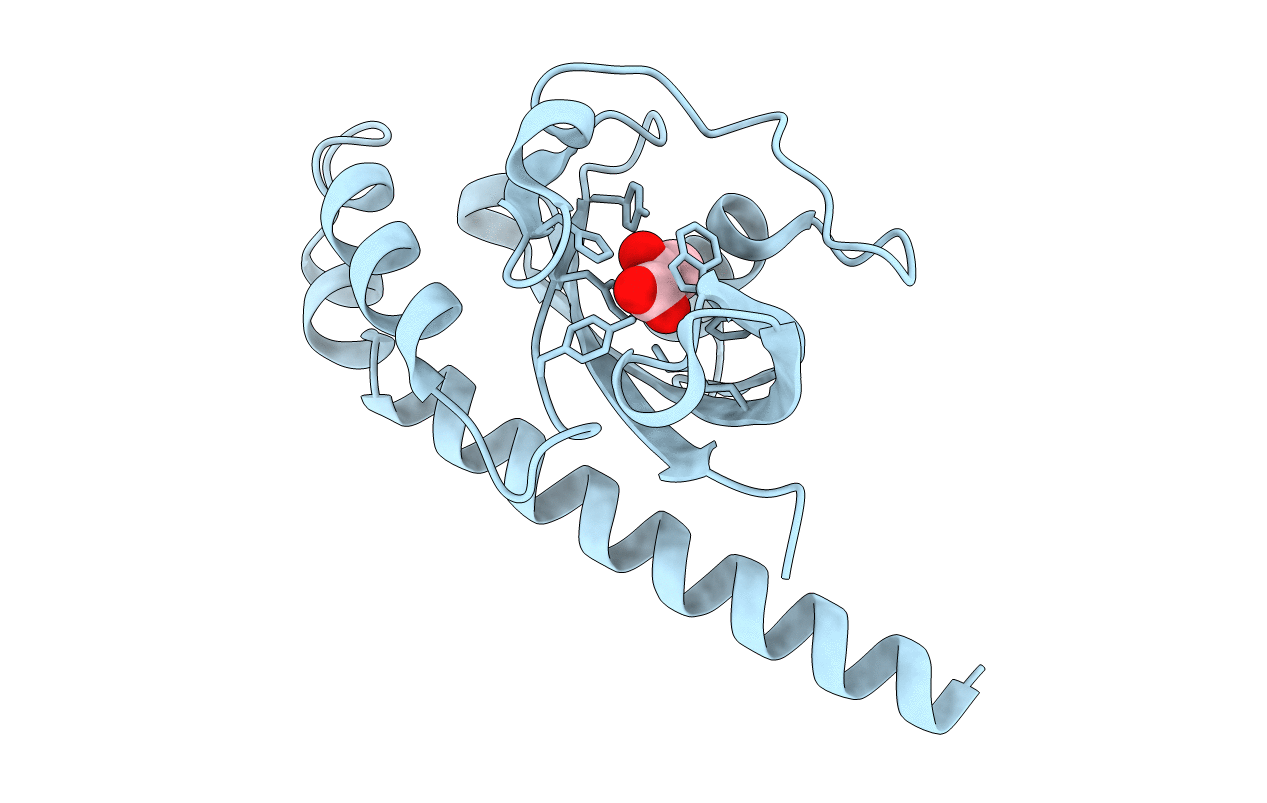
4EXO image
Deposition Date 2012-04-30
Release Date 2012-05-30
Last Version Date 2024-11-06
Entry Detail
PDB ID:
4EXO
Title:
Revised, rerefined crystal structure of PDB entry 2QHK, methyl accepting chemotaxis protein
Biological Source:
Source Organism:
Host Organism:
Method Details:
Experimental Method:
Resolution:
1.90 Å
R-Value Free:
0.20
R-Value Work:
0.15
R-Value Observed:
0.15
Space Group:
I 4 2 2

Macromolecular Entities
Structures with similar UniProt ID
Protein Blast
Polymer Type:polypeptide(L)
Molecule:Methyl-accepting chemotaxis protein
Gene (Uniprot):VP0183
Chain IDs:A
Chain Length:146
Number of Molecules:1
Biological Source:Vibrio parahaemolyticus
Modified Residue
Compound ID Chain ID Parent Comp ID Details 2D Image
MSE A MET SELENOMETHIONINE
Ligand Molecules
Primary Citation
Structure and Proposed Mechanism for the pH-Sensing Helicobacter pylori Chemoreceptor TlpB.
Structure 20 1177 1188 (2012)
PMID: 22705207 DOI: 10.1016/j.str.2012.04.021

Abstact

pH sensing is crucial for survival of most organisms, yet the molecular basis of such sensing is poorly understood. Here, we present an atomic resolution structure of the periplasmic portion of the acid-sensing chemoreceptor, TlpB, from the gastric pathogen Helicobacter pylori. The structure reveals a universal signaling fold, a PAS domain, with a molecule of urea bound with high affinity. Through biophysical, biochemical, and in vivo mutagenesis studies, we show that urea and the urea-binding site residues play critical roles in the ability of H. pylori to sense acid. Our signaling model predicts that protonation events at Asp114, affected by changes in pH, dictate the stability of TlpB through urea binding.

Legend

Protein

Chemical

Disease

Primary Citation of related structures
Feedback Form
Name
Email
Institute
Feedback