4EWP image
Deposition Date 2012-04-27
Release Date 2012-10-03
Last Version Date 2024-02-28
Entry Detail
PDB ID:
4EWP
Keywords:
Title:
Crystal structure of FabH from Micrococcus luteus
Biological Source:
Source Organism:
Host Organism:
Method Details:
Experimental Method:
Resolution:
2.20 Å
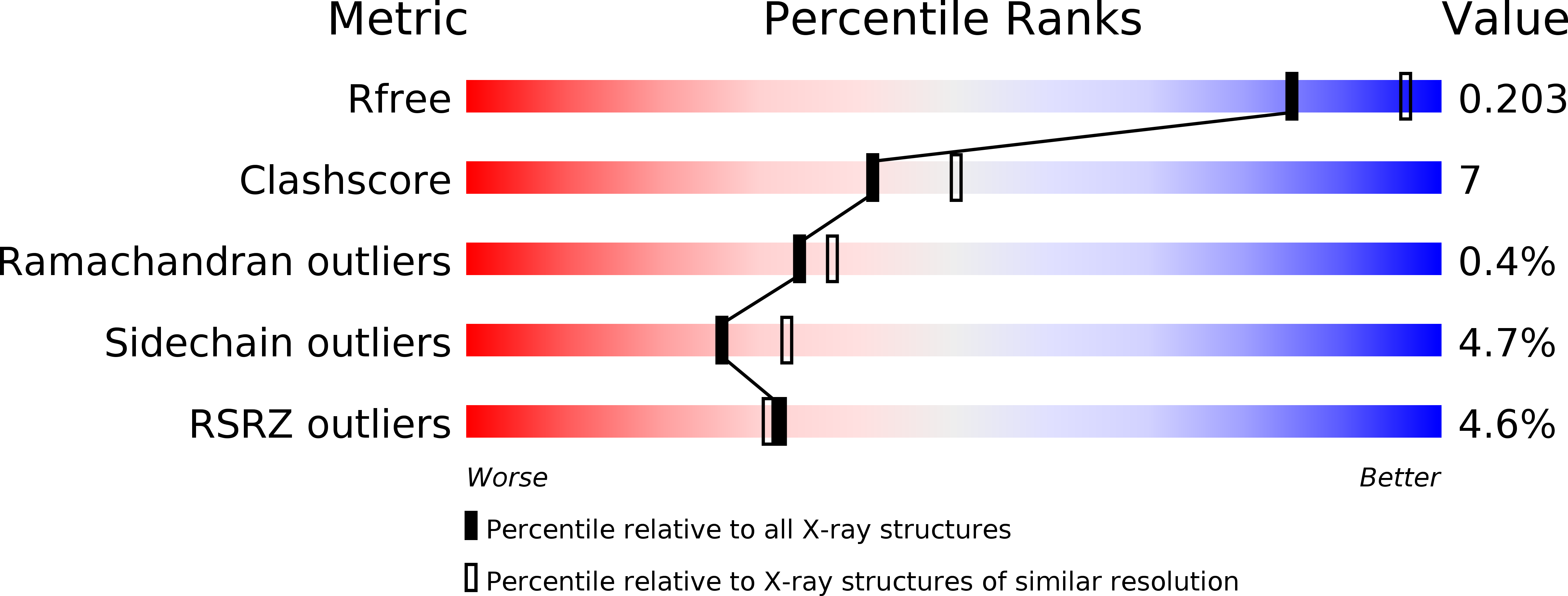
R-Value Free:
0.20
R-Value Work:
0.16
R-Value Observed:
0.17
Space Group:
P 1
Macromolecular Entities
Structures with similar UniProt ID
Protein Blast
Polymer Type:polypeptide(L)
Molecule:3-oxoacyl-[acyl-carrier-protein] synthase 3
Gene (Uniprot):fabH_1
Chain IDs:A, B, C, D, E, F
Chain Length:350
Number of Molecules:6
Biological Source:Micrococcus luteus NCTC 2665
Primary Citation
Structure of FabH and factors affecting the distribution of branched fatty acids in Micrococcus luteus.
Acta Crystallogr.,Sect.D 68 1320 1328 (2012)
PMID: 22993086 DOI: 10.1107/S0907444912028351

Abstact

Micrococcus luteus is a Gram-positive bacterium that produces iso- and anteiso-branched alkenes by the head-to-head condensation of fatty-acid thioesters [coenzyme A (CoA) or acyl carrier protein (ACP)]; this activity is of interest for the production of advanced biofuels. In an effort to better understand the control of the formation of branched fatty acids in M. luteus, the structure of FabH (MlFabH) was determined. FabH, or β-ketoacyl-ACP synthase III, catalyzes the initial step of fatty-acid biosynthesis: the condensation of malonyl-ACP with an acyl-CoA. Analysis of the MlFabH structure provides insights into its substrate selectivity with regard to length and branching of the acyl-CoA. The most structurally divergent region of FabH is the L9 loop region located at the dimer interface, which is involved in the formation of the acyl-binding channel and thus limits the substrate-channel size. The residue Phe336, which is positioned near the catalytic triad, appears to play a major role in branched-substrate selectivity. In addition to structural studies of MlFabH, transcriptional studies of M. luteus were also performed, focusing on the increase in the ratio of anteiso:iso-branched alkenes that was observed during the transition from early to late stationary phase. Gene-expression microarray analysis identified two genes involved in leucine and isoleucine metabolism that may explain this transition.

Legend

Protein

Chemical

Disease

Primary Citation of related structures
Feedback Form
Name
Email
Institute
Feedback