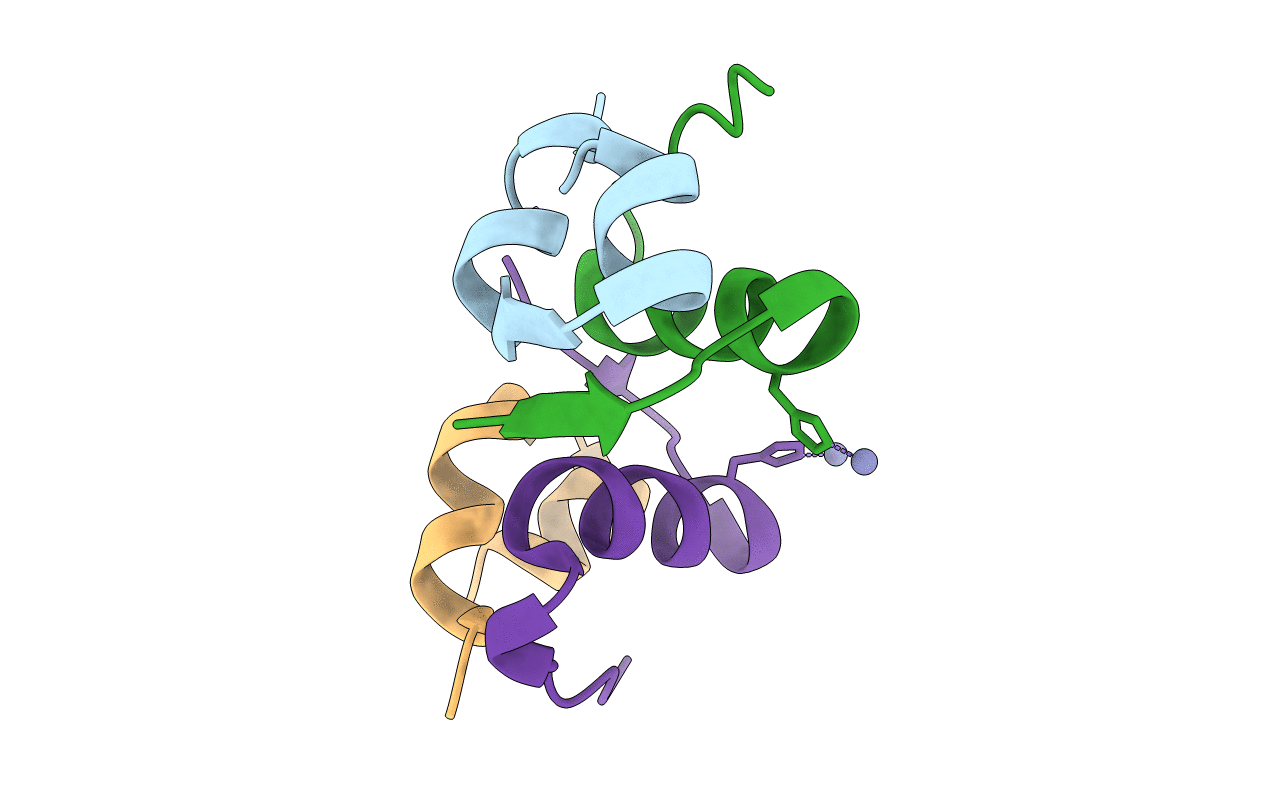
4EFX image
Deposition Date 2012-03-30
Release Date 2013-03-06
Last Version Date 2024-11-20
Entry Detail
PDB ID:
4EFX
Keywords:
Title:
Highly biologically active insulin with additional disulfide bond
Biological Source:
Source Organism:
Homo sapiens (Taxon ID: 9606)
Method Details:
Experimental Method:
Resolution:
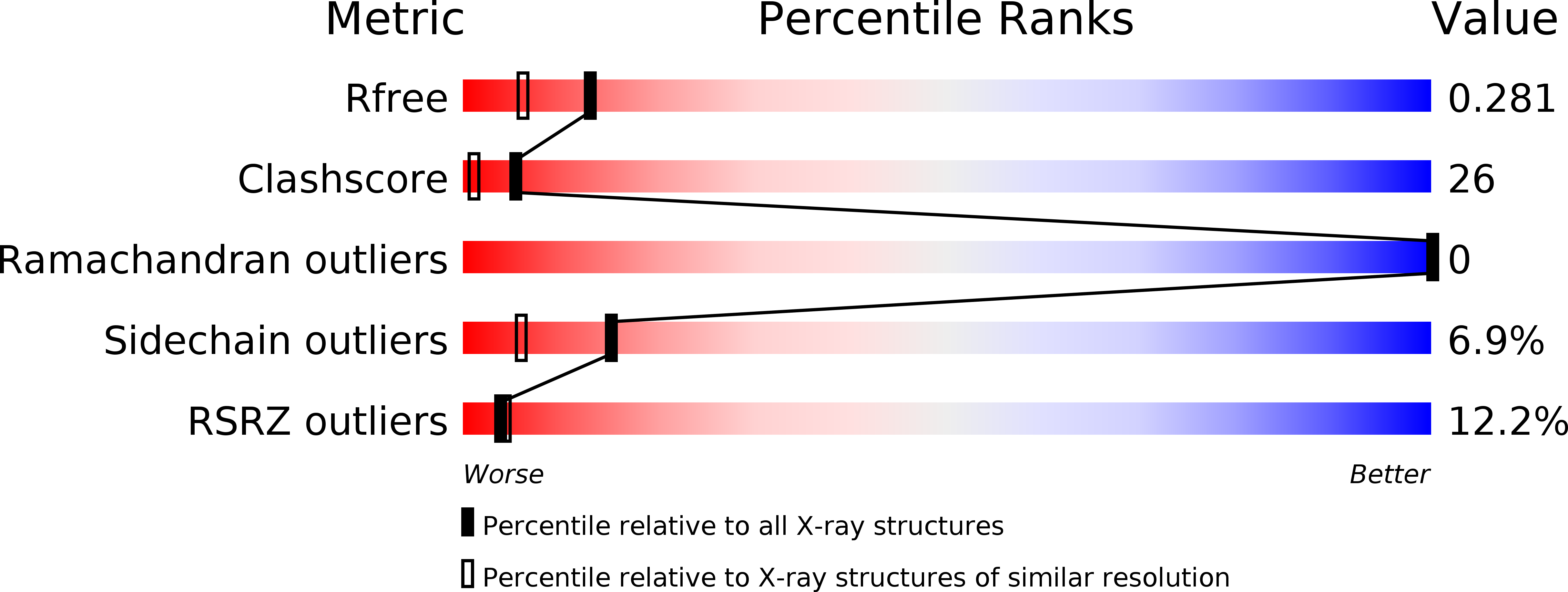
1.98 Å
R-Value Free:
0.27
R-Value Work:
0.20
R-Value Observed:
0.21
Space Group:
H 3
Macromolecular Entities
Structures with similar UniProt ID
Protein Blast
Polymer Type:polypeptide(L)
Molecule:Insulin
Gene (Uniprot):INS
Mutagens:A10C, B4C
Chain IDs:A, C
Chain Length:21
Number of Molecules:2
Biological Source:Homo sapiens
Structures with similar UniProt ID
Protein Blast
Polymer Type:polypeptide(L)
Molecule:Insulin
Gene (Uniprot):INS
Chain IDs:B, D
Chain Length:28
Number of Molecules:2
Biological Source:Homo sapiens
Ligand Molecules
Primary Citation
Insulin analog with additional disulfide bond has increased stability and preserved activity.
Protein Sci. 22 296 305 (2013)
PMID: 23281053 DOI: 10.1002/pro.2211

Abstact

Insulin is a key hormone controlling glucose homeostasis. All known vertebrate insulin analogs have a classical structure with three 100% conserved disulfide bonds that are essential for structural stability and thus the function of insulin. It might be hypothesized that an additional disulfide bond may enhance insulin structural stability which would be highly desirable in a pharmaceutical use. To address this hypothesis, we designed insulin with an additional interchain disulfide bond in positions A10/B4 based on Cα-Cα distances, solvent exposure, and side-chain orientation in human insulin (HI) structure. This insulin analog had increased affinity for the insulin receptor and apparently augmented glucodynamic potency in a normal rat model compared with HI. Addition of the disulfide bond also resulted in a 34.6°C increase in melting temperature and prevented insulin fibril formation under high physical stress even though the C-terminus of the B-chain thought to be directly involved in fibril formation was not modified. Importantly, this analog was capable of forming hexamer upon Zn addition as typical for wild-type insulin and its crystal structure showed only minor deviations from the classical insulin structure. Furthermore, the additional disulfide bond prevented this insulin analog from adopting the R-state conformation and thus showing that the R-state conformation is not a prerequisite for binding to insulin receptor as previously suggested. In summary, this is the first example of an insulin analog featuring a fourth disulfide bond with increased structural stability and retained function.

Legend

Protein

Chemical

Disease

Primary Citation of related structures
Feedback Form
Name
Email
Institute
Feedback