4EA3 image
Deposition Date 2012-03-22
Release Date 2012-04-25
Last Version Date 2024-11-20
Entry Detail
PDB ID:
4EA3
Title:
Structure of the N/OFQ Opioid Receptor in Complex with a Peptide Mimetic
Biological Source:
Source Organism:
Escherichia coli (Taxon ID: 562)
Homo Sapiens (Taxon ID: 9606)
Host Organism:
Method Details:
Experimental Method:
Resolution:
3.01 Å
R-Value Free:
0.28
R-Value Work:
0.24
R-Value Observed:
0.25
Space Group:
P 1 21 1
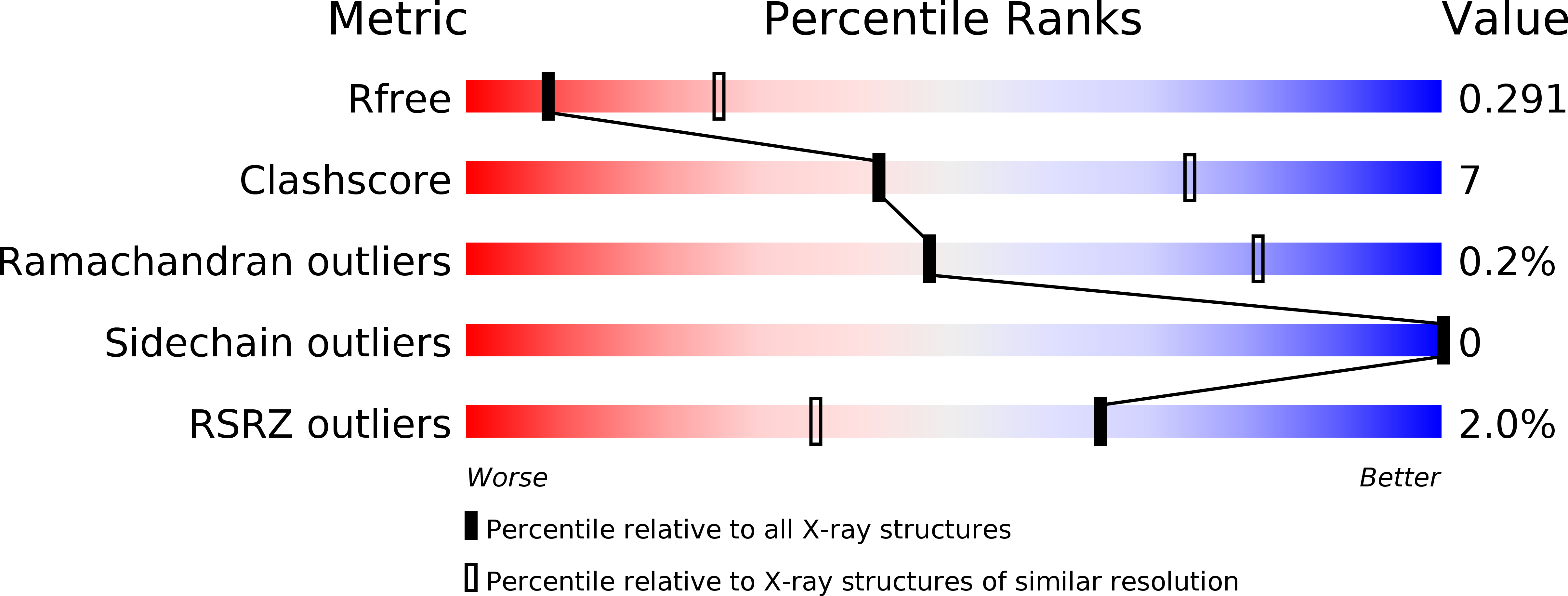
Macromolecular Entities
Protein Blast
Polymer Type:polypeptide(L)
Molecule:Fusion protein of Nociceptin receptor and cytochrome b562
Gene (Uniprot):cybC, OPRL1
Mutagens:M29W, H124I, K128L
Chain IDs:A, B
Chain Length:434
Number of Molecules:2
Biological Source:Escherichia coli, Homo Sapiens
Primary Citation
Structure of the nociceptin/orphanin FQ receptor in complex with a peptide mimetic.
Nature 485 395 399 (2012)
PMID: 22596163 DOI: 10.1038/nature11085

Abstact

Members of the opioid receptor family of G-protein-coupled receptors (GPCRs) are found throughout the peripheral and central nervous system, where they have key roles in nociception and analgesia. Unlike the 'classical' opioid receptors, δ, κ and μ (δ-OR, κ-OR and μ-OR), which were delineated by pharmacological criteria in the 1970s and 1980s, the nociceptin/orphanin FQ (N/OFQ) peptide receptor (NOP, also known as ORL-1) was discovered relatively recently by molecular cloning and characterization of an orphan GPCR. Although it shares high sequence similarity with classical opioid GPCR subtypes (∼60%), NOP has a markedly distinct pharmacology, featuring activation by the endogenous peptide N/OFQ, and unique selectivity for exogenous ligands. Here we report the crystal structure of human NOP, solved in complex with the peptide mimetic antagonist compound-24 (C-24) (ref. 4), revealing atomic details of ligand-receptor recognition and selectivity. Compound-24 mimics the first four amino-terminal residues of the NOP-selective peptide antagonist UFP-101, a close derivative of N/OFQ, and provides important clues to the binding of these peptides. The X-ray structure also shows substantial conformational differences in the pocket regions between NOP and the classical opioid receptors κ (ref. 5) and μ (ref. 6), and these are probably due to a small number of residues that vary between these receptors. The NOP-compound-24 structure explains the divergent selectivity profile of NOP and provides a new structural template for the design of NOP ligands.

Legend

Protein

Chemical

Disease

Primary Citation of related structures
Feedback Form
Name
Email
Institute
Feedback