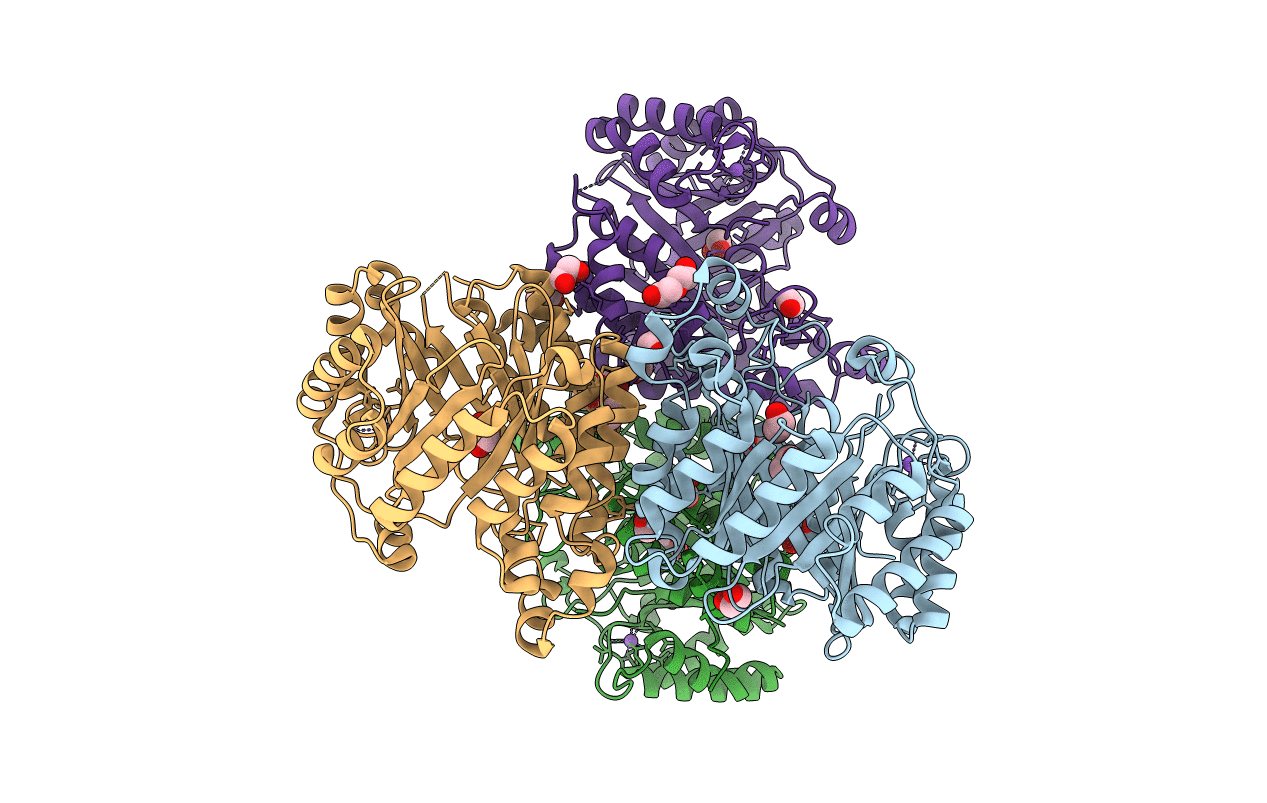
4E0T image
Deposition Date 2012-03-05
Release Date 2012-05-30
Last Version Date 2023-09-13
Entry Detail
PDB ID:
4E0T
Keywords:
Title:
Crystal structure of CdpNPT in its unbound state
Biological Source:
Source Organism:
Host Organism:
Method Details:
Experimental Method:
Resolution:
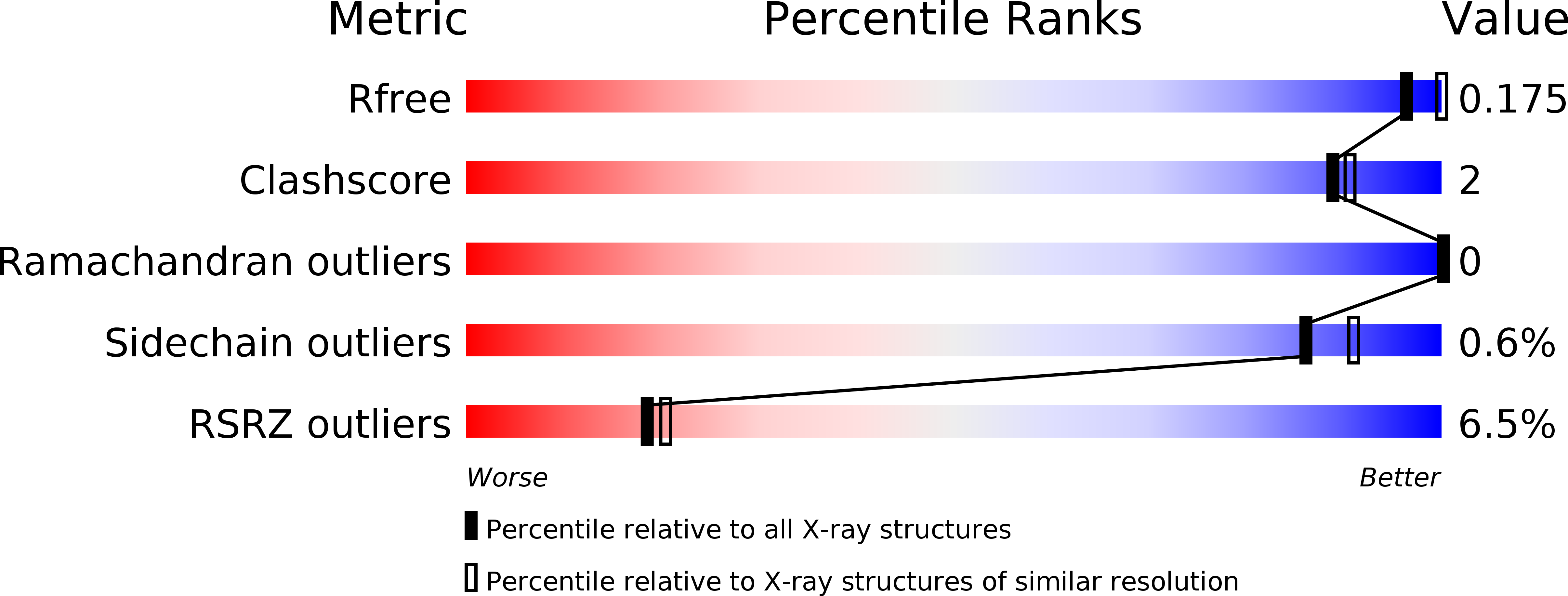
2.25 Å
R-Value Free:
0.19
R-Value Work:
0.16
R-Value Observed:
0.16
Space Group:
P 21 21 21
Macromolecular Entities
Structures with similar UniProt ID
Protein Blast
Polymer Type:polypeptide(L)
Molecule:Cyclic dipeptide N-prenyltransferase
Gene (Uniprot):cdpNPT
Chain IDs:A, B, C, D
Chain Length:428
Number of Molecules:4
Biological Source:Aspergillus fumigatus
Primary Citation
Structure and catalytic mechanism of a cyclic dipeptide prenyltransferase with broad substrate promiscuity.
J.Mol.Biol. 422 87 99 (2012)
PMID: 22683356 DOI: 10.1016/j.jmb.2012.05.033

Abstact

Fungal indole prenyltransferases (PTs) typically act on specific substrates, and they are able to prenylate their target compounds with remarkably high regio- and stereoselectivity. Similar to several indole PTs characterized to date, the cyclic dipeptide N-prenyltransferase (CdpNPT) is able to prenylate a range of diverse substrates, thus exhibiting an unusually broad substrate promiscuity. To define the structural basis for this promiscuity, we have determined crystal structures of unliganded CdpNPT and of a ternary complex of CdpNPT bound to (S)-benzodiazepinedione and thiolodiphosphate. Analysis of the structures reveals a limited number of specific interactions with (S)-benzodiazepinedione, which projects into a largely hydrophobic surface. This surface can also accommodate other substrates, explaining the ability of the enzyme to prenylate a range of compounds. The location of the bound substrates suggests a likely reaction mechanism for the conversion of (S)-benzodiazepinedione. Structure-guided mutagenesis experiments confirm that, in addition to (S)-benzodiazepinedione, CdpNPT can also act on (R)-benzodiazepinedione and several cyclic dipeptides, albeit with relaxed specificity. Finally, nuclear magnetic resonance spectroscopy demonstrates that CdpNPT is a C-3 reverse PT that catalyzes the formation of C-3β prenylated indolines from diketopiperazines of tryptophan-containing cyclic dipeptides.

Legend

Protein

Chemical

Disease

Primary Citation of related structures
Feedback Form
Name
Email
Institute
Feedback