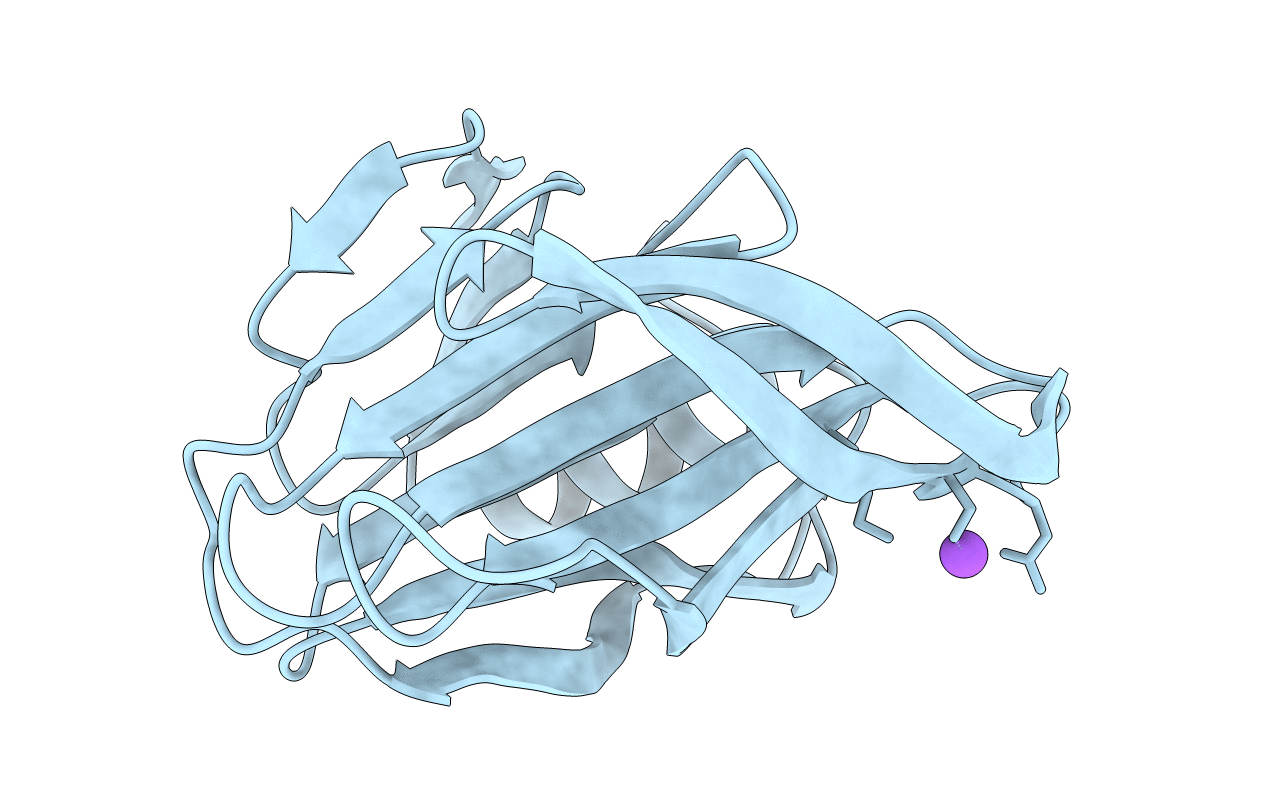
4DRR image
Deposition Date 2012-02-17
Release Date 2012-04-11
Last Version Date 2023-09-13
Entry Detail
PDB ID:
4DRR
Keywords:
Title:
Cell attachment protein VP8* of a human rotavirus specifically interacts with A-type histo-blood group antigen
Biological Source:
Source Organism:
Rotavirus sp. (Taxon ID: 10970)
Host Organism:
Method Details:
Experimental Method:
Resolution:
1.50 Å
R-Value Free:
0.21
R-Value Work:
0.17
R-Value Observed:
0.18
Space Group:
P 1 21 1

Macromolecular Entities
Structures with similar UniProt ID
Protein Blast
Polymer Type:polypeptide(L)
Molecule:Outer capsid protein VP4
Chain IDs:A
Chain Length:163
Number of Molecules:1
Biological Source:Rotavirus sp.
Ligand Molecules
Primary Citation
Cell attachment protein VP8* of a human rotavirus specifically interacts with A-type histo-blood group antigen.
Nature 485 256 259 (2012)
PMID: 22504179 DOI: 10.1038/nature10996

Abstact

As with many other viruses, the initial cell attachment of rotaviruses, which are the major causative agent of infantile gastroenteritis, is mediated by interactions with specific cellular glycans. The distally located VP8* domain of the rotavirus spike protein VP4 (ref. 5) mediates such interactions. The existing paradigm is that 'sialidase-sensitive' animal rotavirus strains bind to glycans with terminal sialic acid (Sia), whereas 'sialidase-insensitive' human rotavirus strains bind to glycans with internal Sia such as GM1 (ref. 3). Although the involvement of Sia in the animal strains is firmly supported by crystallographic studies, it is not yet known how VP8* of human rotaviruses interacts with Sia and whether their cell attachment necessarily involves sialoglycans. Here we show that VP8* of a human rotavirus strain specifically recognizes A-type histo-blood group antigen (HBGA) using a glycan array screen comprised of 511 glycans, and that virus infectivity in HT-29 cells is abrogated by anti-A-type antibodies as well as significantly enhanced in Chinese hamster ovary cells genetically modified to express the A-type HBGA, providing a novel paradigm for initial cell attachment of human rotavirus. HBGAs are genetically determined glycoconjugates present in mucosal secretions, epithelia and on red blood cells, and are recognized as susceptibility and cell attachment factors for gastric pathogens like Helicobacter pylori and noroviruses. Our crystallographic studies show that the A-type HBGA binds to the human rotavirus VP8* at the same location as the Sia in the VP8* of animal rotavirus, and suggest how subtle changes within the same structural framework allow for such receptor switching. These results raise the possibility that host susceptibility to specific human rotavirus strains and pathogenesis are influenced by genetically controlled expression of different HBGAs among the world's population.

Legend

Protein

Chemical

Disease

Primary Citation of related structures
Feedback Form
Name
Email
Institute
Feedback