4DKL image
Deposition Date 2012-02-03
Release Date 2012-03-21
Last Version Date 2024-11-27
Entry Detail
PDB ID:
4DKL
Title:
Crystal structure of the mu-opioid receptor bound to a morphinan antagonist
Biological Source:
Source Organism:
Host Organism:
Method Details:
Experimental Method:
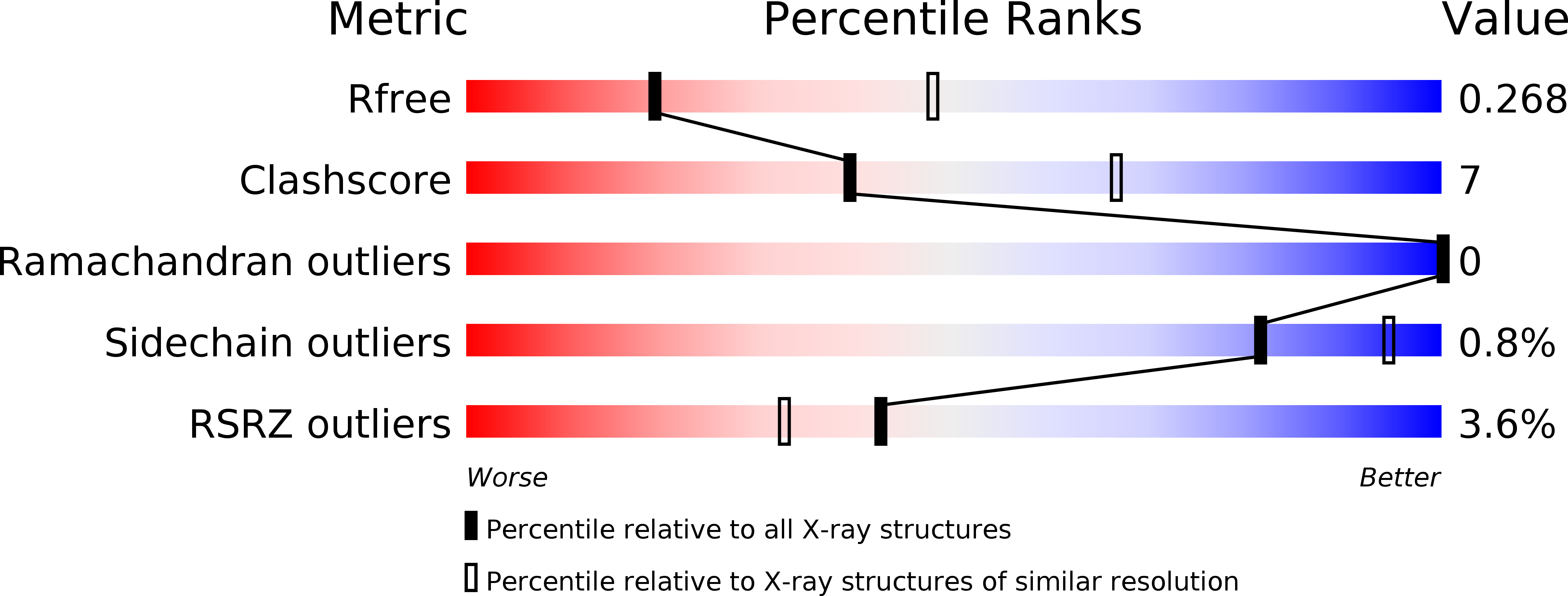
Resolution:
2.80 Å
R-Value Free:
0.27
R-Value Work:
0.23
R-Value Observed:
0.23
Space Group:
C 1 2 1
Macromolecular Entities
Protein Blast
Polymer Type:polypeptide(L)
Molecule:Mu-type opioid receptor, lysozyme chimera
Gene (Uniprot):E, Oprm1
Mutagens:D1020N, C1054T, C1097A
Chain IDs:A
Chain Length:464
Number of Molecules:1
Biological Source:Mus musculus, Enterobacteria phage T4
Primary Citation
Crystal structure of the {mu}-opioid receptor bound to a morphinan antagonist.
Nature 485 321 326 (2012)
PMID: 22437502 DOI: 10.1038/nature10954

Abstact

Opium is one of the world's oldest drugs, and its derivatives morphine and codeine are among the most used clinical drugs to relieve severe pain. These prototypical opioids produce analgesia as well as many undesirable side effects (sedation, apnoea and dependence) by binding to and activating the G-protein-coupled µ-opioid receptor (µ-OR) in the central nervous system. Here we describe the 2.8 Å crystal structure of the mouse µ-OR in complex with an irreversible morphinan antagonist. Compared to the buried binding pocket observed in most G-protein-coupled receptors published so far, the morphinan ligand binds deeply within a large solvent-exposed pocket. Of particular interest, the µ-OR crystallizes as a two-fold symmetrical dimer through a four-helix bundle motif formed by transmembrane segments 5 and 6. These high-resolution insights into opioid receptor structure will enable the application of structure-based approaches to develop better drugs for the management of pain and addiction.

Legend

Protein

Chemical

Disease

Primary Citation of related structures
Feedback Form
Name
Email
Institute
Feedback