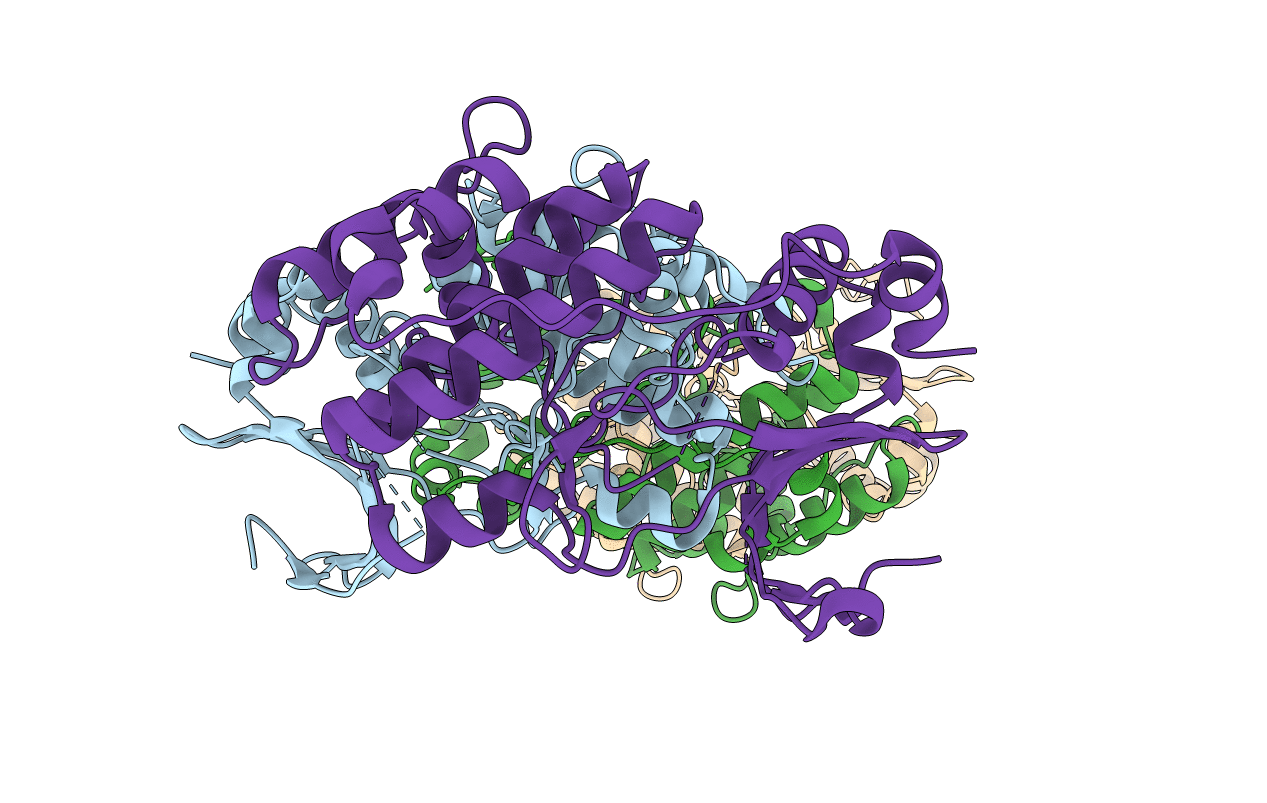
4D28 image
Deposition Date 2014-05-08
Release Date 2014-10-15
Last Version Date 2023-12-20
Entry Detail
PDB ID:
4D28
Keywords:
Title:
Crystal structure of the kinase domain of CIPK24/SOS2
Biological Source:
Source Organism:
Host Organism:
Method Details:
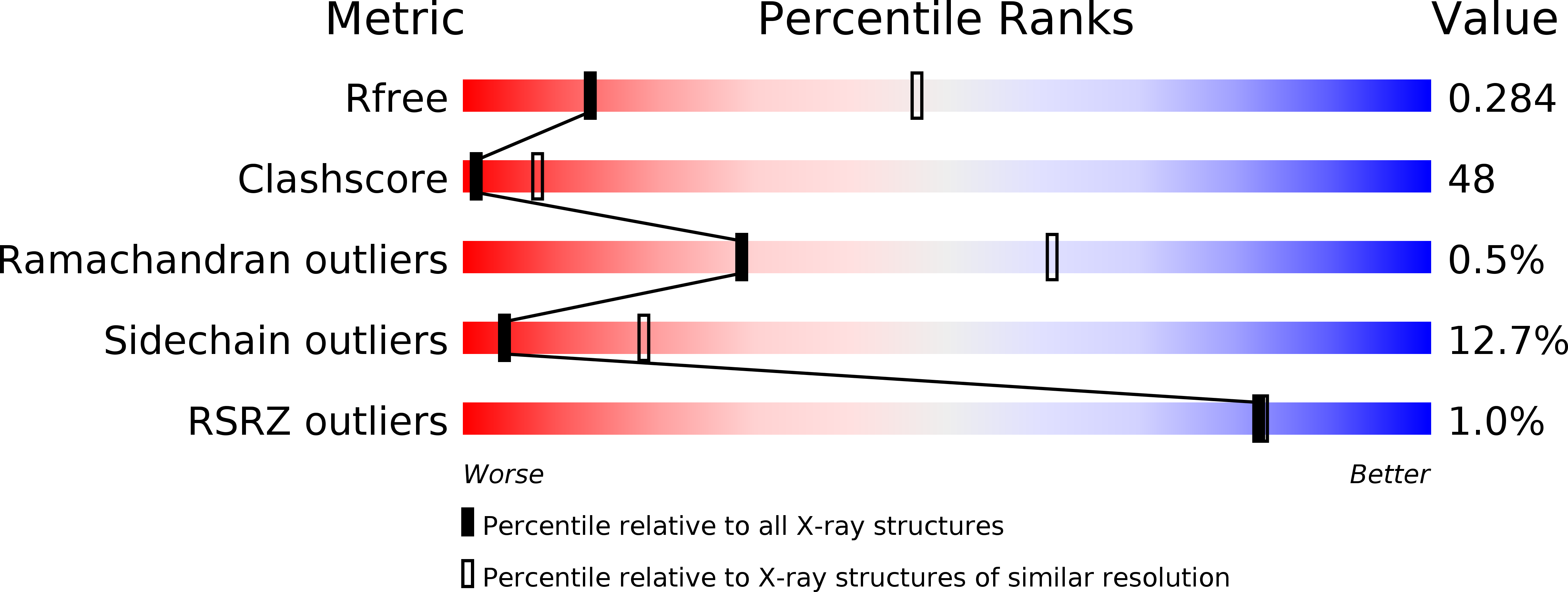
Experimental Method:
Resolution:
3.30 Å
R-Value Free:
0.28
R-Value Work:
0.27
R-Value Observed:
0.27
Space Group:
P 1
Macromolecular Entities
Structures with similar UniProt ID
Protein Blast
Polymer Type:polypeptide(L)
Molecule:CBL-INTERACTING SERINE/THREONINE-PROTEIN KINASE 24
Gene (Uniprot):CIPK24
Mutagens:YES
Chain IDs:A, B, C, D
Chain Length:446
Number of Molecules:4
Biological Source:ARABIDOPSIS THALIANA
Ligand Molecules
Primary Citation
Structural Basis of the Regulatory Mechanism of the Plant Cipk Family of Protein Kinases Controlling Ion Homeostasis and Abiotic Stress
Proc.Natl.Acad.Sci.USA 111 E4532 ? (2014)
PMID: 25288725 DOI: 10.1073/PNAS.1407610111

Abstact

Plant cells have developed specific protective molecular machinery against environmental stresses. The family of CBL-interacting protein kinases (CIPK) and their interacting activators, the calcium sensors calcineurin B-like (CBLs), work together to decode calcium signals elicited by stress situations. The molecular basis of biological activation of CIPKs relies on the calcium-dependent interaction of a self-inhibitory NAF motif with a particular CBL, the phosphorylation of the activation loop by upstream kinases, and the subsequent phosphorylation of the CBL by the CIPK. We present the crystal structures of the NAF-truncated and pseudophosphorylated kinase domains of CIPK23 and CIPK24/SOS2. In addition, we provide biochemical data showing that although CIPK23 is intrinsically inactive and requires an external stimulation, CIPK24/SOS2 displays basal activity. This data correlates well with the observed conformation of the respective activation loops: Although the loop of CIPK23 is folded into a well-ordered structure that blocks the active site access to substrates, the loop of CIPK24/SOS2 protrudes out of the active site and allows catalysis. These structures together with biochemical and biophysical data show that CIPK kinase activity necessarily requires the coordinated releases of the activation loop from the active site and of the NAF motif from the nucleotide-binding site. Taken all together, we postulate the basis for a conserved calcium-dependent NAF-mediated regulation of CIPKs and a variable regulation by upstream kinases.

Legend

Protein

Chemical

Disease

Primary Citation of related structures
Feedback Form
Name
Email
Institute
Feedback