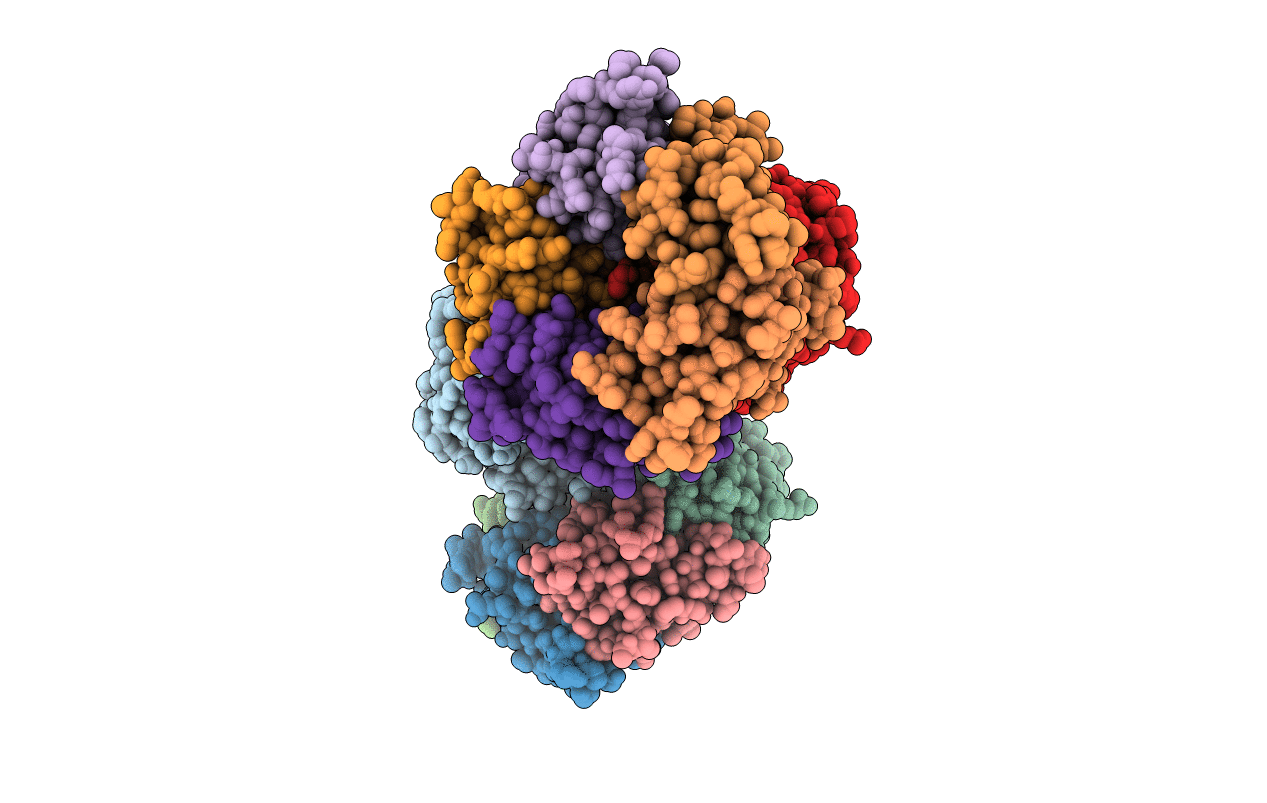
4BWG image
Deposition Date 2013-07-02
Release Date 2013-08-14
Last Version Date 2024-10-23
Entry Detail
PDB ID:
4BWG
Keywords:
Title:
Structural basis of subtilase cytotoxin SubAB assembly
Biological Source:
Source Organism:
Host Organism:
Method Details:
Experimental Method:
Resolution:
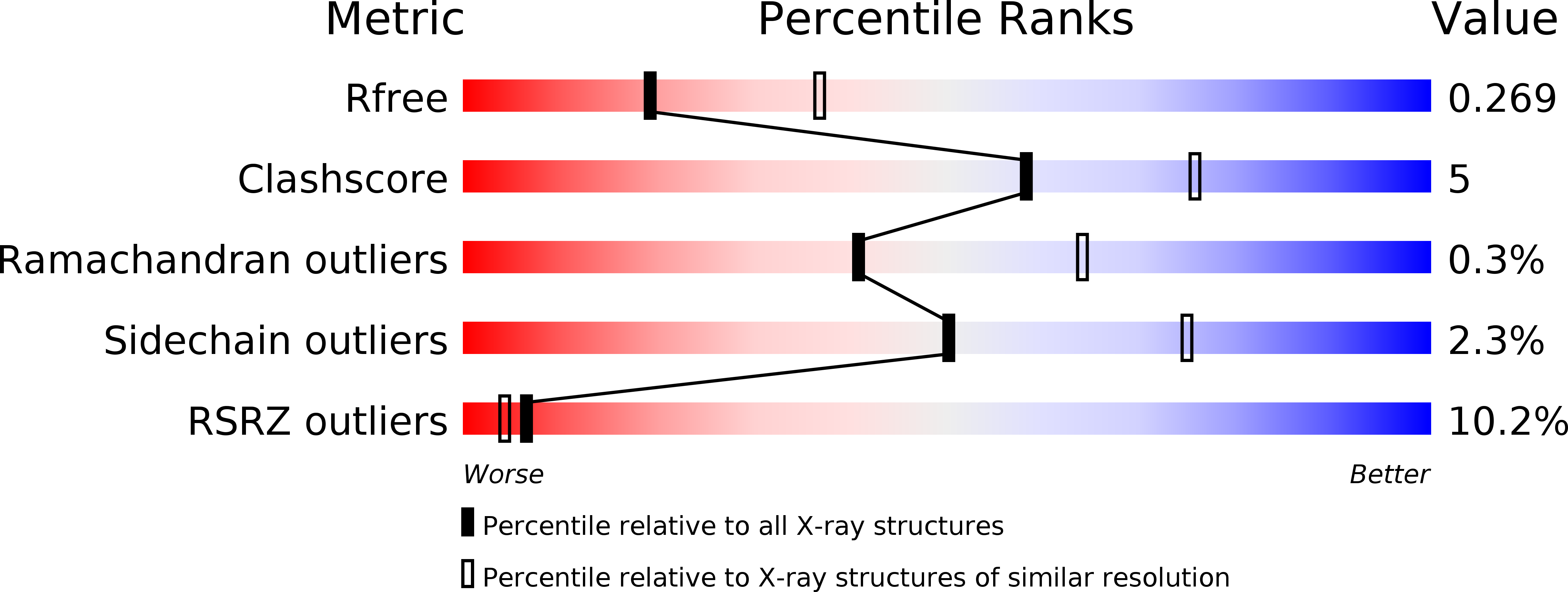
2.60 Å
R-Value Free:
0.24
R-Value Work:
0.21
R-Value Observed:
0.22
Space Group:
P 1 21 1
Macromolecular Entities
Structures with similar UniProt ID
Protein Blast
Polymer Type:polypeptide(L)
Molecule:SUBA
Gene (Uniprot):subA
Chain IDs:A, G
Chain Length:347
Number of Molecules:2
Biological Source:ESCHERICHIA COLI
Structures with similar UniProt ID
Protein Blast
Polymer Type:polypeptide(L)
Molecule:SUBTILASE CYTOTOXIN, SUBUNIT B
Gene (Uniprot):subB
Chain IDs:B, C, D, E, F, H, I, J, K, L
Chain Length:120
Number of Molecules:10
Biological Source:ESCHERICHIA COLI
Primary Citation
Structural Basis of Subtilase Cytotoxin Subab Assembly.
J.Biol.Chem. 288 27505 ? (2013)
PMID: 23921389 DOI: 10.1074/JBC.M113.462622

Abstact

Pathogenic strains of Escherichia coli produce a number of toxins that belong to the AB5 toxin family, which comprise a catalytic A-subunit that induces cellular dysfunction and a B-pentamer that recognizes host glycans. Although the molecular actions of many of the individual subunits of AB5 toxins are well understood, how they self-associate and the effect of this association on cytotoxicity are poorly understood. Here we have solved the structure of the holo-SubAB toxin that, in contrast to other AB5 toxins whose molecular targets are located in the cytosol, cleaves the endoplasmic reticulum chaperone BiP. SubA interacts with SubB in a similar manner to other AB5 toxins via the A2 helix and a conserved disulfide bond that joins the A1 domain with the A2 helix. The structure revealed that the active site of SubA is not occluded by the B-pentamer, and the B-pentamer does not enhance or inhibit the activity of SubA. Structure-based sequence comparisons with other AB5 toxin family members, combined with extensive mutagenesis studies on SubB, show how the hydrophobic patch on top of the B-pentamer plays a dominant role in binding the A-subunit. The structure of SubAB and the accompanying functional characterization of various mutants of SubAB provide a framework for understanding the important role of the B-pentamer in the assembly and the intracellular trafficking of this AB5 toxin.

Legend

Protein

Chemical

Disease

Primary Citation of related structures
Feedback Form
Name
Email
Institute
Feedback