4BDX image
Deposition Date 2012-10-08
Release Date 2013-02-13
Last Version Date 2024-11-06
Entry Detail
PDB ID:
4BDX
Keywords:
Title:
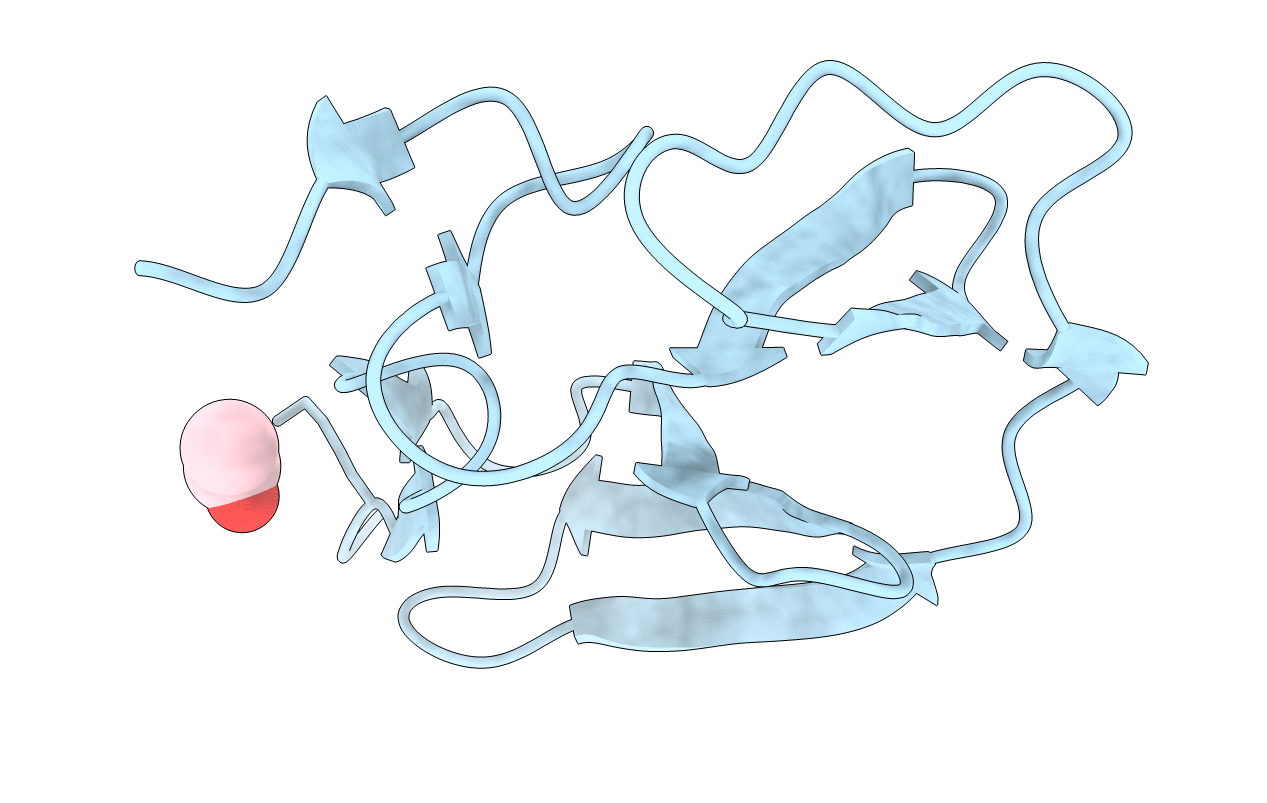
The structure of the FnI-EGF tandem domain of coagulation factor XII
Biological Source:
Source Organism:
HOMO SAPIENS (Taxon ID: 9606)
Host Organism:
Method Details:
Experimental Method:
Resolution:
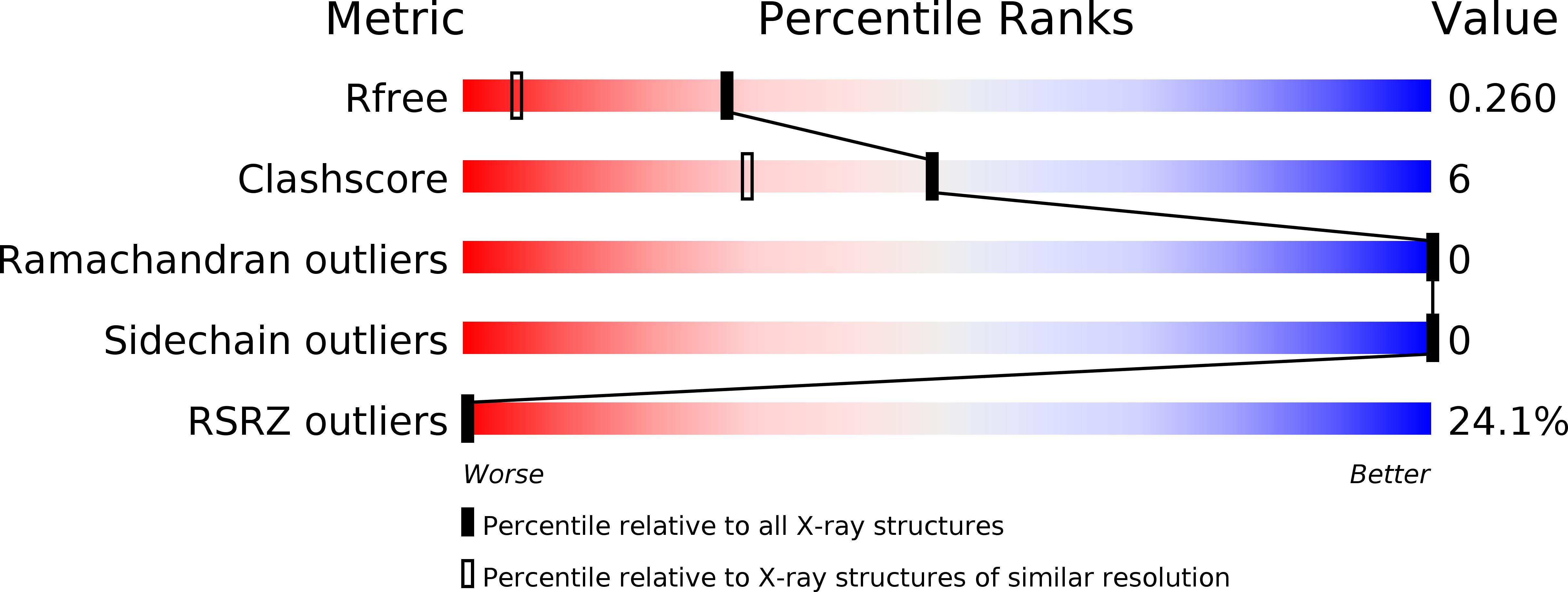
1.62 Å
R-Value Free:
0.24
R-Value Work:
0.21
R-Value Observed:
0.21
Space Group:
I 41 2 2
Macromolecular Entities
Structures with similar UniProt ID
Protein Blast
Polymer Type:polypeptide(L)
Molecule:COAGULATION FACTOR XIIA HEAVY CHAIN
Gene (Uniprot):F12
Chain IDs:A
Chain Length:85
Number of Molecules:1
Biological Source:HOMO SAPIENS
Ligand Molecules
Primary Citation
The Structure of the Fni-Egf-Like Tandem Domain of Coagulation Factor Xii Solved Using Siras.
Acta Crystallogr.,Sect.F 69 94 ? (2013)
PMID: 23385745 DOI: 10.1107/S1744309113000286

Abstact

Coagulation factor XII (FXII) is a key protein in the intrinsic coagulation and kallikrein-kinin pathways. It has been found that negative surfaces and amyloids, such as Aβ fibrils, can activate FXII. Additionally, it has been suggested that FXII simulates cells and that it plays an important role in thrombosis. To date, no structural data on FXII have been deposited, which makes it difficult to support any hypothesis on the mechanism of FXII function. The crystal structure of the FnI-EGF-like tandem domain of FXII presented here was solved using experimental phases. To determine the phases, a SIRAS approach was used with a native and a holmium chloride-soaked data set. The holmium cluster was coordinated by the C-terminal tails of two symmetry-related molecules. Another observation was that the FnI domain was much more ordered than the EGF-like domain owing to crystal packing. Furthermore, the structure shows the same domain orientation as the homologous FnI-EGF-like tandem domain of tPA. The plausibility of several proposed interactions of these domains of FXII is discussed. Based on this FXII FnI-EGF-like structure, it could be possible that FXII binding to amyloid and negatively charged surfaces is mediated via this part of FXII.

Legend

Protein

Chemical

Disease

Primary Citation of related structures
Feedback Form
Name
Email
Institute
Feedback